



By Dr Adam Zubir
Over the past few months, something has quietly changed about how we get around in Malaysia.
For the longest time, owning a car felt like the obvious choice. It gave people freedom, flexibility and a sense of predictability. You roughly know what it would cost you month to month.
These days, getting from point A to point B feels more time-consuming and less straightforward. Traffic has significantly worsened. Fuel prices are unpredictable. Subsidies aren’t as fixed as they once were. Even routine things like servicing or replacing parts seem to cost more than before. On their own, these may seem like standalone pressures. But taken together, they create a kind of uncertainty that’s hard to ignore.
Uncertainty makes financial planning harder, and over time, it can also become costly. Naturally, people start looking for alternatives.
Electric vehicles (EVs) are one of the more visible examples right now. The thinking is fairly logical: If petrol prices are unpredictable, switching fuel types feels like a practical solution.
But EVs are still a major financial commitment. Beyond the upfront cost, there are considerations like charging facility, long-term maintenance and battery replacement that may not always be factored in early on.
This raises a broader question: Are we only adapting to rising transport costs in the short term, or are we beginning to rethink what sustainable mobility looks like financially over the long term?
The bigger shift may not be about replacing one mode of transport with another. It may instead be about Malaysians gradually having more viable ways to move depending on cost, distance, predictability and lifestyle needs. And that future may be closer than many of us think.
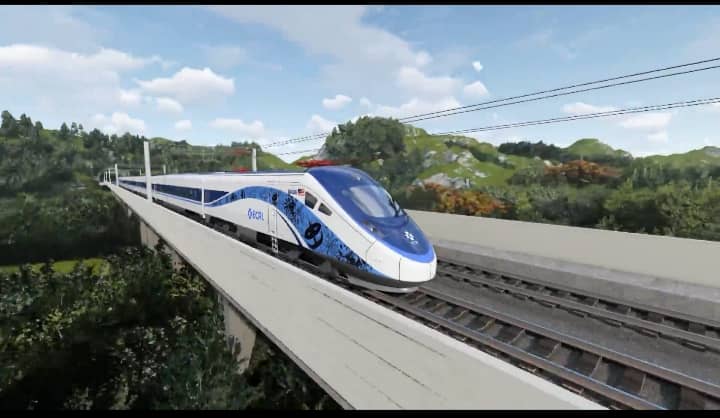
Malaysia’s transport system is gradually becoming more connected, especially when it comes to rail and intercity travel. Projects like the East Coast Rail Link (ECRL) are part of this broader transition. As a modern electrified rail network, it reflects how future mobility is increasingly being shaped around efficiency, connectivity and long-term sustainability. When completed, it will cut travel time between the Klang Valley and the East Coast by under 4 hours, turning what used to be a long, tiring drive into something much more manageable.
More importantly, it introduces something that hasn’t always been widely available before: a way to travel long distances that is more predictable and, in many ways, less physically demanding than driving for hours.
This does not mean people will suddenly stop using their cars. That is unlikely. Habits take time, and cars will continue to serve a purpose, especially for shorter or more flexible trips. But as public transport becomes more robust, particularly for intercity travel, the role of the car may gradually become more selective rather than automatic.
When people have more options, the way they think about cost, convenience and necessity begins to change too. For someone who travels between states regularly, predictability may start to matter more than flexibility. Some households may eventually reconsider whether multiple vehicles are necessary. Even balik kampung travel could slowly involve a different set of considerations over time.
Beyond individual choices, better connectivity opens other possibilities as well. It can make it easier for people to access jobs in different locations, bringing more activity to areas that were previously less connected. These things don’t happen overnight, but they do build up over time.
What’s emerging isn’t a situation where one option replaces another. Instead, Malaysia may be moving towards a more flexible transport landscape, where different options serve different needs.
In that context, it may no longer be about choosing one “best” mode of transport and sticking to it. It may be more about staying flexible, and adjusting as things evolve.
Rather than reacting to every short-term shift, whether fuel prices or new technology, it may be more useful to step back and look at the bigger picture: overall costs, predictability, flexibility and how the country’s transport system itself is evolving.
There may never be a single “best way” to move around. But one thing is becoming clearer – Malaysians are slowly gaining more ways to do it.


