Home Blog Page 4514

Study Finds CMS from SAP Delivers 68 Percent ROI Over Three Years

0

SAP has introduced new technologies, such as facial recognition, machine learning and Internet of Things (IoT), to enable targeted marketing campaigns and help consumers optimize their shopping experience.

With its SAP Hybris solutions, SAP continues to innovate and invest to drive the future of customer engagement and commerce.  The SAP Hybris Marketing Cloud solution now encompasses an array of solutions to help companies ensure they use the right messages to target customers who matter the most and ensure customers’ data and privacy are protected. Paired with the tools listed below, companies can create more transparency into their own marketing performance and spend.

Digital boardroom for the CMO: Based on SAP Digital Boardroom, the new marketing executive dashboard presents to chief marketing officers a view that includes reports gauging the success of campaigns and transparency to detect impending problems. It also shows and identifies new marketing opportunities.

Machine learning facial recognition: The SAP Leonardo digital innovation system now powers facial recognition technology within SAP Hybris Marketing Cloud, introducing a new way to engage in-store shoppers. Using facial analysis, the software connects shoppers’ genders and ages to a company or store’s available inventory and stock, enabling personalized product recommendations presented on large displays.

Embedded customer attribution: The SAP Hybris Customer Attribution solution (formerly Abakus) provides marketers with accurate measurements of marketing campaigns and activities that lead to a customer purchase. Data is collected across all touch points of the customer journey, giving insight into what’s driving customer conversions and where to reallocate activities and budget in real time.

Internet of Things (IoT) to trigger campaigns: Marketers can tap IoT devices to personalize offers. For example, brands can send a relevant marketing message when a consumer hits a new milestone on her fitness tracker.

Support for the General Data Protection Regulation (GDPR): Full support for the May 2018 global privacy regulation enables marketers to execute sophisticated targeting with consumer data protection as top priority.

WeChat integration: By supporting the Chinese social media application, SAP Hybris solutions are helping marketers expand their global footprint to more than 889 million users across China.

SAP Introduces Machine Learning Co-Innovation Program

Ten customers are joining SAP Hybris to embed machine learning capabilities into the SAP Hybris Sales Cloud and SAP Hybris Service Cloud portfolios. SAP Hybris solutions have access to customer and product data across the front office. With SAP software touching more than 76 percent of the world’s business transactions, SAP is uniquely positioned to access data at this level.

Several use cases are available covering marketing, sales, service and commerce. They include advanced personalization, contextual merchandizing, a shopping assistant bot, affinity scoring, sentiment analysis, service ticket text analysis and a customer service bot.

Additionally, labs run by SAP rely on machine learning for several of their prototypes, including Galaxy, Charly the Chatbot and Pepper Instore Assistance. Hear more about SAP’s perspective on the impact of machine learning on customer engagement in the blog: “Machine learning: Putting it into practice with customers.”

Breaking Barriers to Digital Business with Agile Microservices

Customer engagement expectations are rising to new heights in the digital era, and organizations understand the need to transform. This can only be done by introducing agility into the infrastructure. Of 285 marketing, line-of-business, and IT leaders surveyed, more than half said that by introducing a microservices-based software architecture, they could increase scalability, improve discovery and resolution, and reduce dependency on a single technology stack.

The problem is that while nine out of 10 digital strategy decision-makers would like to see their organizations accelerate digital business, only one third of organizations have a clearly defined digital strategy. More information can be found in the September 2017 SAP-commissioned thought leadership paper sponsored by Forrester Consulting titled “Leverage Agile Software Development to Deliver Business Flexibility.”


Munich Re Stamps Hyperloop as Insurable

0

Hyperloop Tranportation Technologies (HTT)’s Hyperloop Technology has been given the stamp of recognition as feasible and insurable.  A project team within Munich Re’s Special Enterprise Risks Unit had been set up to carry out risks and challenges analysis over the past year and has finally published the first Hyperloop Transportation Technologies Risk Report.

Hyperloop Transportation Technologies (PRNewsfoto/Hyperloop Transportation)

The risk reports forms the foundation for active strategic risk management. Over the past year, Risk landscapes were developed not only for HTT, but also for HTT’s Hyperloop technology itself. These risk landscapes shed light on enterprise and technological risk and document relevant external and internal influencing variables.


According to a press statement, the official line states that “Munich Re is of the opinion that the Hyperloop technology developed by HTT is both feasible and insurable in the medium term and that delivering the system demands a model represented by HTT’s innovative approach.”

Torsten Jeworrek, member of the Munich Re Board of Management, said, “The technology developed by HTT is set to fundamentally change the way we travel in the future. Such technological shifts give rise to new insurance needs that demand innovative solutions – which our Hyperloop team at Corporate Insurance Partner is happy to develop.”

Hyperloop Capsule interior (PRNewsfoto/Hyperloop Transportation)

Dirk Ahlborn, CEO and co-founder of HTT added, “Offering an insurable system is a massive milestone for this groundbreaking technology. As we move forward with commercialization of the system and our technology, our biggest challenge remains the creation of a new regulatory framework.”

Bibop Gresta, Chairman and co-founder of HTT said. “Now with further validation that our technologies and system are feasible and insurable, we are ready to build. We are delighted to have found an innovative partner in Munich Re that takes a constructive and cooperative approach to our very specific needs.”

As a risk carrier, Munich Re provides fundamental support for the corporate development of HTT and the commercial viability of Hyperloop technology. The cooperation demonstrates how Munich Re does not merely assume risks, but also supports companies with services that are tailored to their specific risks.

MAI-MIDF Partnership to Enhance Competitiveness of Automotive Vendors

0

Malaysia Automotive Institute (MAI) and Malaysian Industrial Development Finance Berhad (MIDF) enters into a strategic alliance to signify the launch of the MAI-MIDF Industry 4.0 Development Programme. This will further catalyse the development of automotive parts and components manufactures, towards supply chain excellence, efficient manufacturing, and higher value competitiveness.


The collaboration merges MAI’s capacity building programmes with MIDF’s industry funding capacities, to create a comprehensive development programme for the Malaysian automotive supply chain. MAI’s capacity building modules, namely the Automotive Supplier Excellence Programme (ASEP) and Lean Production System, (LPS) are designed to enhance productivity within the manufacturing operations of vendors. It focuses on creating world-class vendors for a more competitive and sustainable domestic automotive industry.

The ASEP programme begins with an overall assessment in key disciplines of automotive manufacturing, including management, technical and financial capabilities. The companies are then coached over a period of 10 months in identified improvement areas by coaches recognised by MAI.

Meanwhile, the LPS programme focuses on improving efficiency and productivity of manufacturing operations within automotive vendors, which will undergo a nine-month coaching programme led by industry-expert trainers recognised by MAI.

Vendors that completed the ASEP and LPS programmes would be eligible for funding for the implementation of Smart Manufacturing and Industry 4.0-related activities within their operations.

Dato’ Madani Sahari, CEO of MAI says: “Vehicles on our roads are rapidly evolving from mere mechanical equipment to becoming integrated machines that compliment our lifestyle, requiring diverse disciplines and specialisations. It is important that this same diversity is embedded into governance that are responsible to encourage competitiveness within our own industry.”
Meanwhile, Datuk Mohd Najib Hj Abdullah, Group Managing Director of MIDF adds: “With this MIDF-MAI strategic alliance, we are expecting to fund 120 companies with total financing assistance of up to RM200 million between 2018 and 2020. So far, MIDF has assisted companies in the automotive sector with financing amounting to RM544.8 million.”

 

MiER Announces 3Q2017: Good, But Not Too Good (continuation)

0

Even though the first half of the 3Q2017 economic outlook report turned out to reach above expectations, not all is well. Although in most aspects, the economy is looking positive, but there are still some areas that needs to be kept under close watch.

MiER’s Business Conditions Index (BCI) for 3Q2017 shows that businesses are optimistic about the near-term prospect as well as on the export demand. The better-than-expected growth in the first half of 2017 exerts positive sentiments, reflected by several indicators.

Among others, the domestic financial market recorded positive inflows of portfolio investment amounting to RM16.0bn for 2Q2017. The portfolio inflows also resulted from measures to develop the domestic financial market. Given the development in the financial market and good macroeconomic indicators, Ringgit rallied strongly against the USD during the first nine months of 2017, where Ringgit has appreciated by 6.3% against the USD.

Notwithstanding the above-expectation economic performance of the 1H2017, consumer confidence remains weak as MiER’s 3Q Consumer Sentiments Index (CSI) continues to be below the demarcation level of 100 points. Nonetheless, consumers remain optimistic about the economy since the index is still above the 4Q2016’s index. Consumers also appear to be optimistic about the employment outlook for 3Q2017.

Crude oil prices increased moderately this year, after hitting the lowest in 1Q2017. The accord made by the Organisation of the Petroleum Exporting Countries (OPEC) to cut oil outputs and combat the global supply glut, witnessed more favourable prices in 2017. The compliance rate on the agreed quotas among OPEC members was quite high in 1Q2017. Total world production began to upsurge when OPEC’s production rose 6.5% above the quota, contributed by the two member countries exempted from the quota (Nigeria and Libya).

OPEC production continues to rise and concurrently the non-OPEC productions are also rising, which will exert a downward pressure on prices. Crude oil prices are expected to average out at US$55 per barrel in 2017 and will further improve to US$60 per barrel in 2018.

As for the agriculture commodity, crude palm oil (CPO) started with better prices earlier this year due to stronger demand and weather-related supply disruption last year. However, better harvest this year saw production on the rise and simultaneously, prices are sliding down. Not only that, the imposition of tariff on edible oils by India worsen the outlook for the industry.

What this means…

Taking into consideration the current development in the world economy as well as on the domestic front, the Malaysian economy is projected to grow at 5.4% this year, which is an upward revision by 0.6 percentage points from MiER’s July forecast. The growth is expected to primarily be driven by domestic demand and reinforced by stronger external demand. Domestic demand is expected to grow by 4.8%, which is also an upward revision from July’s forecast, by 0.2 percentage points.

Private consumption is expected to grow faster at 6.1% (0.1 percentage point upward revision), while the growth projection for public consumption maintains at 1.0%, and gross fixed capital formation to grow by 3.9% (0.2 percentage point upward revision). The growth in exports of goods and services as well as the growth in imports for this year are also revised upwards to 13.4% and 13.6% respectively.

The growth projection for 2018 is maintained at a range of 4.7% to 5.3%, as of now. The current account balances for 2017 and 2018 maintains as per July forecast, which are estimated to be 1.8% and 1.6% of GNI respectively. Balances on good account for 2017 and 2018 are also maintained at 8.4% and 8.2%, respectively.

Despite all this, there will always be a number of risks that might alter the results of the forecast, including:

  • Unexpectedly aggressive monetary policy normalisation
  • Less expansionary than expected fiscal stimulus
  • Insufficient investment among larger emerging and low income economies impeding growth potentials
  • Larger than expected fiscal stimulus in major economies
  • Contagious effect on Brexit
  • The return of protectionism
  • Slower than expected slowdown in China and emerging economies weaken global demand
  • Unresponsive/less sensitive fiscal and monetary expansionary measures in major developed economies
  • Upward stickiness of oil prices slows down the recovery of oil-exporting countries
  • Slower than expected recovery in the advanced economies
  • Prolonged geopolitical conflicts
  • Prolong undervalued Ringgit
  • Rising of public and private debts
  • Unresponsive/less responsive fiscal and monetary expansionary policy

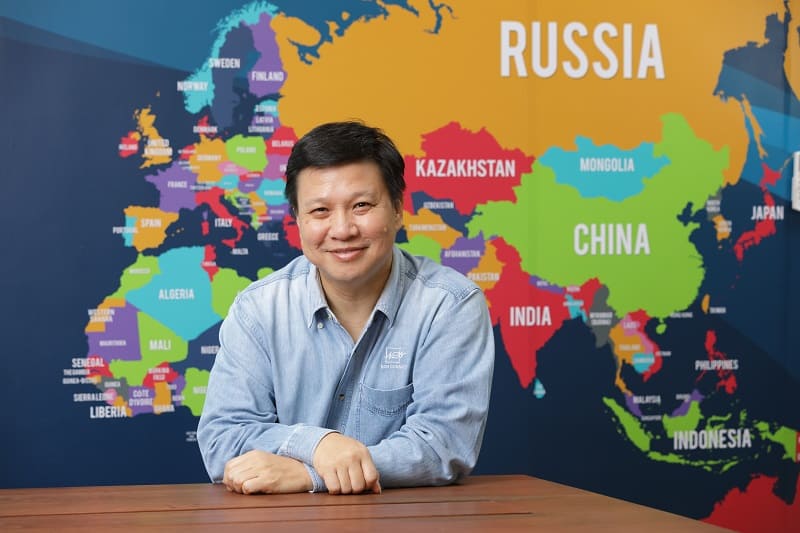
N2N Connect Berhad: Now Asia, Next Global

0

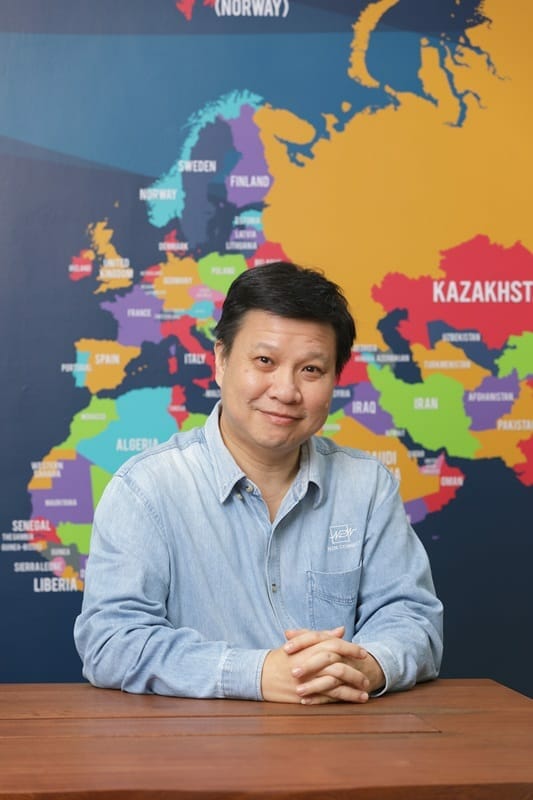
N2N Connect Berhad’s Andrew Tiang shows what great strategising can achieve

N2N Connect Berhad Side Stories: Advanced Beyond Their Years

0

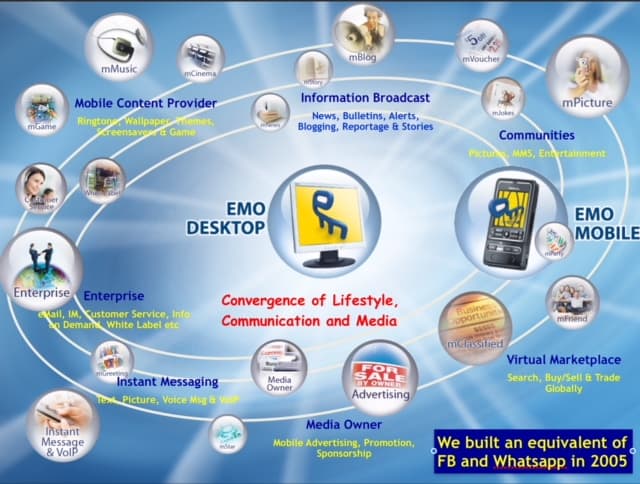
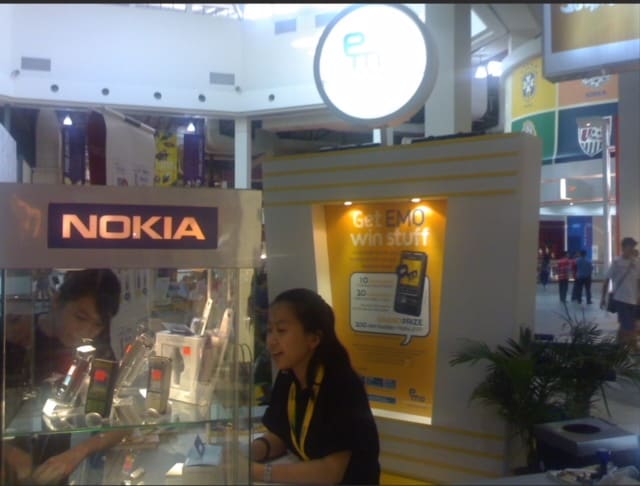
Back in 2004, N2N’s focus wasn’t in online stock broking – in fact it was a system that we all use today. Named EMOChat, Tiang said it did “everything you see on Whatsapp today, back in 2004”. When the product first launched in the market, demand was high. Unfortunately, their vision and capabilities surpassed what devices and telcos at that time could support; the chat application ultimately couldn’t take off.

While Tiang isn’t looking to start the chat business again, he told us they are working on some projects venturing into consumer markets.


“We believe that when you’ve made your successes, you can take a certain percentage of the successes to invest in other ventures. To us it’s not about industry, but a business model. If you can use the same technology, implement in a similar business model, but in a totally different industry; it’s still aligned t o our business. It’s still a technology powered business,” he shares.

N2N Connect Berhad Side Stories: Humble Beginnings

0

N2N recently completed the acquisition for Hong Kong based AFE Solutions, previously owned by Reuters International Holdings SARL, for US$11.5million. While investors were initially sceptical, they soon gained confidence after seeing N2N’s efforts in growing the Hong Kong market.

This is reflected in their financials. In their latest financial results for quarter three (Q3) for 2017, the company saw RM30,096,000 in revenue, an increase of over three folds year-on-year from RM10,670,000. However, based on the financials for the first half of this year, the company only raked in RM11,364,000. Comparatively in the same period last year, N2N earned RM10,106,000.

Based on those numbers, it’s safe to say N2N has always been a consistent performer – and they aren’t stopping there. If the latest financial numbers are to be of any indication, N2N’s sights are higher, and investors are increasingly putting faith in the company’s appetite for growth.

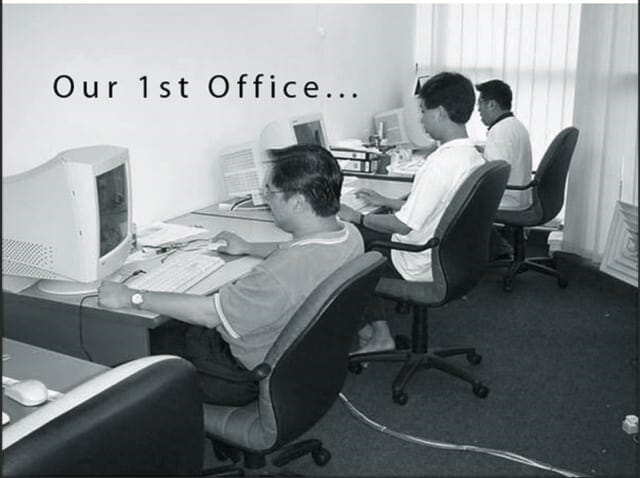
However, it wasn’t always that smooth going. N2N started in a 600sqft office located in Jalan Sungai Besi. In the early days, the company operated with only a six-man team. Tiang shared with us some interesting snippets of their beginnings: “We were so excited to move into our office. There was no carpet, no tables or chairs – so the PC packaging box became our table and we sat on the floor. Two weeks later when the carpet came in, all of us were so excited. It was a cheap, thin carpet with no underlining; that was good enough for us!”

This sounds exactly like the garage start-up story we see and love on the TV. Tiang joked: “I always said – why Malaysia didn’t have many successful companies – because we don’t have enough garages!

“Our conference room was the mamak stall next to the tree in front of our office. When we said let’s have a conference, it means going there, have teh tarik, roti canai. But we can’t have conference when it rains – there’s no roof!”

Today’s startup scene is a much different story. With strong venture capital backing from angel investors, and an extensive network of support available – today’s startups could afford to look at setting up shop in a decent enough office, with furniture to spare. For Tiang however, the struggles of a self-funded company hit home.

“I always say you need to spend wisely, you need to outlast other people.”

MiER Announces 3Q2017 Results: Better Than Expected

The Malaysian Institute of Economic Research (MiER) have announced results of the third quarter of 2017 (3Q2017), which turned out to be better than expected. Real GDP grew by 5.6% year-on-year (y-o-y) basis in the first quarter and further expanded to 5.8% in the second quarter. The growth was supported by stronger domestic demand, due to the improvement in both investment and consumption, reinforced by upbeat export demand.

Meanwhile, the external sector continued to show progress as world trade activities strengthened. The global economy is predicted to grow stronger than expected, underpinning by faster growth in the advanced economies as well as the continued improvement in the emerging market and developing economies.

Global trade flows intensified as most major economies are growing faster than expected, causing Malaysia’s external sector to benefit from stronger performance of its major trading partners, coupled by the undervalued Ringgit.

For the first seven months of 2017, gross exports of goods grew substantially by an average of 22.6%, as compared to 1.1% of the same period last year, while gross imports grew at a stronger rate of 23.4%. This will prove beneficial to the economy in the medium to longer run.

Indirectly, high growth in capital goods will contribute to capital accumulation or investment in the economy, which will be good for the long-term growth. In fact, imports of capital goods grew by 42.0% a year in the 1Q2017 and 6.9% in the 2Q2017, while intermediate goods grew by 27.8% (1Q2017) and 23.9% (2Q2017). On the other hand, imports of consumption goods grew by only 4.0% (1Q2017) and 1.5% (2Q2017)

Strength from external sectors

The latest release of the Purchasing Managers’ Index (PMI) for September 2017 indicates that global economic growth remains broad-based, both for the manufacturing and services factor.

Advanced economies are positively growing beyond expectations this year, except for the United Kingdom, which is still growing as expected. The US economy continues to grow on track but subject to a greater risk dispersion due to uncertainties on Trump’s policy administration.

The euro area is seeing stronger growth (particularly for Germany, Spain, Italy and France), supported by strong domestic demand that has been gaining momentum since the last two quarters. In a way, this contributes to the unemployment rate for the region that recorded an eight year low of 9.1%.

In the meantime, China’s growth has been supported by strong investments and strong credit growth, seeing as the bilateral trade between China and Malaysia improving due to the positively unexpected demand from China. Total trade between the two countries from January to August 2017 has increased up to 30.6% in terms of market share, as well as values compared to the same period of last year – from RM148.9 billion (bn) in 2016 to RM194.4bn in 2017.

On the domestic front, the first half of 2017 growth was primarily driven by domestic demand, which was growing by 7.7% y-o-y in the first quarter and 5.7% in the second quarter. This is underpinned by strong growth in both consumption and investment. Furthermore, private consumption continued to grow at a faster pace of 6.6% in 1Q2017 to 7.1% in 2Q2017, while public spending rebounded from a negative growth in the fourth quarter of last year (7.5% in 1Q2017 and 3.3% in 2Q2017).

The private sector also dominated investments with a double digit growth of 12.9% in 1Q2017 and moderated to 7.4% in 2Q2017, while public investments decelerated to 5.0% in 2Q2017 after growing at 3.2% in the previous quarter.

The manufacturing index that grew by 6.0% in 1H2017 substantially supported the strong domestic demand derived from external demand on the improved performance of the Industrial Production Index (IPI). The average growth of the index for export oriented industries for the 1H2017 was 6.5% and continued to grow strongly at 8.2% in July, mainly supported by major export-oriented subsectors, namely electrical and electronic products and petroleum, chemical, rubber and plastic products.

Black, White and Brown

0

For the first time, OMEGA is selling a new timepiece exclusively online: the Speedmaster ‘Speedy Tuesday’ Limited Edition. Created to celebrate the five-year anniversary of the #SpeedyTuesday hashtag that celebrates all things Speedmaster, the limited run of 2,012 watches was inspired by OMEGA’s Speedmaster ‘Alaska Project III’ model, devised for NASA in 1978.

The ‘Reverse Panda’ dial, dating back to 1966, makes a rare appearance with white opaline-silvery sub-dials set against a black dial, encircled with a bezel ring and tachymeter scale in matte black aluminium.

Transport to Timepiece

0

Translating transport to timepieces, the BR 03-94 AeroGT Orange by Bell and Ross features a skeleton dial with metal applique Superluminova-filled indices on an anodised orange movement bridge. Being a limited edition model, the BR 03-94 AeroGT Orange is only available in 500 pieces.

Its case is 42mm in diameter with satin-polished steel and is water resistant for up to 100 metres. The watch also has perforated black calfskin straps with orange piping and ultra-resilient black synthetic fabric.

Flying High

0

Adding a new model in the Pilot’s Watch collection, the Big Pilot’s Watch Annual Calendar Edition ‘Antoine de Saint Exupéry’ was created in honour of the French pilot and author. The Big Pilot’s Watch Heritage is available with a case of either titanium or bronze and inspired by the historical Big Pilot’s Watch (Calibre 52 T.S.C).

Being limited to only 250 pieces, the Antoine de Saint Exupéry is made in 18-carat red gold with a brown dial and gold-plated hands. The tobacco brown dial and the brown calfskin strap with decorative white stitching are reminiscent of the pilot suits from the era of Antoine de Saint-Exupéry himself.

The Big Pilot’s Watch Heritage is available in two different models:

  • Titanium with a black dial and blue hands coated with luminescent material
  • Bronze with a black dial and blue hands coated with luminescent material

MAMSB Named Most Outstanding Islamic Asset Management Company in Malaysia

0

Manulife Asset Management Services Berhad (MAMSB) has been named the Most Outstanding Islamic Asset Management Company in Malaysia by the Kuala Lumpur Islamic Finance Forum (KLIFF). This award acknowledges and honours the efforts and contributions by MAMSB in developing the Islamic finance industry.

The award was presented by Dato’ Wira Othman Aziz, Deputy Finance Minister I, Ministry of Finance, Malaysia, at the 14th KLIFF Islamic Finance Awards Ceremony held at Hotel Istana, Kuala Lumpur.

Jason Chong, Chief Executive Officer and Executive Director of MAMSB said, “It gives us great honour to be recognised as the Most Outstanding Islamic Asset Management Company by KLIFF Islamic Finance Awards 2017. This award is a testament to the strategic progress that MAMSB has made in capturing significant market opportunities in the Shariah-compliant investment space while further leveraging our deep local expertise in terms of portfolio management and investment advisory services.”

Bank Negara Malaysia is committed to ensure Malaysia remains a leading international Islamic financial centre. Driven primarily by the expansion of unit trust funds, assets under management for Islamic funds in Malaysia grew 13% to RM149.6 billion in 2016, accounting for around 21% of Malaysia’s fund management industry.

MAMSB offers a suite of 16 Shariah-compliant funds covering equity, sukuk, mixed assets, money market and Private Retirement Scheme. As of 31 August 2017, the total AUM of MAMSB’s Islamic funds stands at more than RM1.75 billion. In addition, 70% of the Shariah-compliant unit trust funds are EPF-Members Investment Scheme approved.      

Over the last ten and a half years, the AUM growth of MAMSB’s Shariah-compliant funds has averaged an impressive +21% p.a. versus total Unit Trust industry growth of 16% p.a.

For the past seven years, four of MAMSB’s Shariah-compliant funds have been award winners and these funds have won a total of 15 “Best Fund” awards for 3-Year &/or 5-Year fund performances from esteemed bodies like Kuala Lumpur Islamic Finance Forum – Islamic Finance Awards, Thomson Reuters Lipper Fund Award – Global Islamic and The Edge | Thomson Reuters Lipper Malaysia Fund Awards.

Cyberview’s Living Lab Accelerator Startups Showcase Smart City Innovations at Demo Day

1

Five startups had the chance to showcase their ideas and pitch their business offerings to a group of ecosystem partners, venture capitalists, corporate partners, and investors at the CLLA Demo Day.

The five companies, consisting of FinTech and IoT solution providers, belongs in the Cyberview Living Lab Accelerator (CLLA) Programme were subjected to five month of intensive development. These startups, presently working out of Cyberview’s collaborative working space CoInnov8, have been given access to a host of resources that they need to further advance their innovation in order to make it market-ready.

The latest cohort showed of various innovations including: a certification solution to prevent counterfeit products, a platform enabling easier mortgage loan applications, a management system for co-working spaces, a fitness device that helps users improve balance and core muscles, and a platform that allows users the convenience of booking parking spots using their smartphones. 

“This latest cohort of the CLLA Programme is proof that there is a myriad of ideas out there in the market at the tipping point of commercialisation, which need the right push in the right direction in order to realise their fullest potential. This is essentially the very reason why the CLLA Programme was set up in the first place,” said Mohd Najib Ibrahim, Acting Managing Director of Cyberview Sdn Bhd.

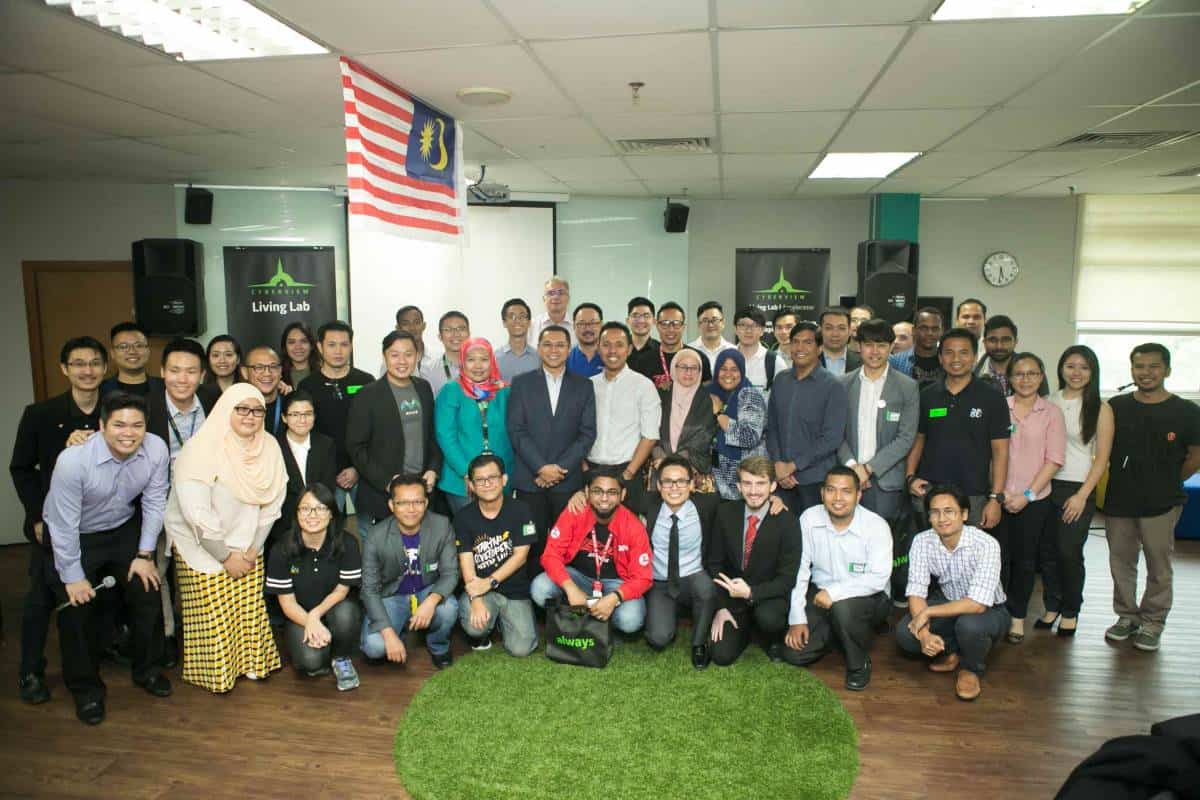
Group photo during Cyberview Living Lab Accelerator (CLLA) Demo Day

The selected startups were provided with resources and facilities valued at RM50,000 for each startup to be pilot and investment ready. These resources and facilities included mentorship in areas such as marketing, legal, and IT as well as leveraging a network of investors, entrepreneurs, and industry leaders. Cyberview is collaborating with Finnext Capital to ensure that participants are equipped with sufficient guidance and resources throughout the duration of the accelerator programme.

“The unique proposition of the CLLA is that it supports startups with solutions that feed into a smart city’s needs. There is always that question of how we can improve Cyberjaya and meet the community’s demands, and it is clear from the incredible progress that we are seeing from the participants this time around that the CLLA is an ideal platform for them to grow their ideas into game-changing enterprises while having the objective of making a positive impact on society,” said Mahadhir Aziz, Head of Technology Hub Development Division, Cyberview Sdn Bhd.

A few of the startups from the previous cohort of CLLA Programme have made progress in receiving funding and piloting their ideas. Alumni of the programme, PrimeKeeper and TrackerHero have successfully raised a substantial amount of funds for their respective businesses. The current cohort consists of fintech players LuxTag and MHub; and IoT solutions providers Campfyre, TechCare Innovation, and AppCable.

LuxTag has recently raised substantial funding from both the NEM community fund and PlaTCOM Ventures, the national technology commercialisation platform. LuxTag has also started exploring business opportunities with a company in India. IoT solutions provider TechCare Innovation has increased their revenue significantly and has officially expanded its offerings in China; Appcable is preparing to raise funds for its parking mobile application via an equity crowdfunding (ECF) platform; Campfyre has formed a partnership with the co-working space alliance; and MHub has successfully expanded their user base –  connecting with corporations like MRCB and Setia Haruman for potential collaboration through the accelerator programme.


An Elephant Never Forgets

0

MyElephant

When it comes to Thai cuisine in Malaysia, it’s safe to say we’re spoiled for choice. From being able to pick between affordable to extremely high-end restaurants, Thai cuisine plays an integral part in the Malaysian palette. One such restaurant that needs no introduction when it comes to Thai food is none other than MyElephant.

Getting its start in August 2007, MyElephant has steadily built a reputation among the locals for the past decade through its dishes and its pricing. Although some would claim MyElephant prices its dishes higher than the average Thai restaurant, it still boasts a healthy stream of customers day in and day out, with a loyal following from long-term customers who swear by MyElephant’s food.

MyElephant’s first-ever outlet is still standing to this day with very minimal changes to its décor and menu. Located in the old school flats of Happy Mansion, MyElephant blends itself into its surroundings with ease as it was initially targeted as your regular friendly neighbourhood restaurant.

Four years later, Taman Sri Hartamas was home to the second outlet with a contrastingly different vibe as compared to the first outlet. While both outlets may cater to two very different markets, MyElephant still manages to maintain the essence of its values through its food.

Going up North

With the focus of the menu centred around Northern Thai cuisine, MyElephant occasionally branches out, much like its current menu. In celebration of its 10-year anniversary, MyElephant is offering a special lobster-centric dish that features an entire lobster served with MyElephant’s very own signature Thai sauce. However, this special meal must be pre-ordered beforehand as it is freshly flown in all the way from the United States.

We started off the review with one of MyElephant’s signature dishes – Green Curry Chicken. While most places serve green curry as either too spicy or too bland, MyElephant manages to strike the right balance between both. This gives you a sweet and spicy taste, mixed with the creaminess and richness of the curry.

While some might argue that there are some places that does it better, MyElephant’s core strength is being consistent. While some may quote Bradley Cooper’s character in Burnt who says, “consistency is death.”, MyElephant isn’t striving for a Michelin star and it probably doesn’t intend on doing so (unless the occasion ever arises.)

Another signature dish of MyElephant is its Pineapple Fried Rice, which features fragrant, golden yellow rice with chunky pieces of pineapple hidden within. Not only does it have a nice synergy of sweet and spicy with a nice tangy flavour, MyElepant doesn’t overdo it with the presentation. Leaving the actual pineapple in the kitchen and not using it as a plate means a lot, especially to diners who couldn’t be bothered with all the bells and whistles.

Straying away from the usual tom yam soup, which is a crowd favourite, we were served Tom Som, a dish that holds many of the same qualities as tom yam. Littered with plenty of seafood choices like prawns, fish and squid, the flavours of this dish were distinctive and wholesome, making it the perfect dish to have on a cold, rainy day. An added bonus was the spice level, which was slightly higher than your usual tom yam soup (or perhaps the chef heard us complaining about the food not being that spicy and wanted to put us in our place.)

All of this was washed down with cold and refreshing Pandan Cooler, which although great, can be a little too sweet for some. In the end, it’s all down to personal preference. We know for a fact in some places that serve pandan water, it doesn’t give off any distinct flavour or aroma of the pandan leaves.

While this review serves no real actual purpose as MyElephant has already made its name long ago, it still serves as a reminder that MyElephant has remained consistent throughout its tenure. It also gives Malaysians a taste of what Northern Thai cuisine is all about.

Even with the ever-growing market for Thai food sprouting up around Malaysia, we can see MyElephant still maintaining its place as a favourite amongst many, purely because of its consistency. This what a decade’s worth of serving almost the same dishes will get you.

ABSS Joins with Microsoft to Bring Digital Transformation for Malaysian SMEs

0

Financio partners with Microsoft to give SMEs the tools to enable digital transformation. Designed for start-ups, small business owners and non-accountants, this platform will be the first freemium accounting application in Malaysia to adopt Microsoft cloud services to provide end-to-end, scalable solutions for micro SMEs in the digital economy.

Financio, owned by  Asian Business Software Solutions Sdn Bhd (ABSS), gives companies access to a secure solution that tracks business finances by leveraging Microsoft’s cloud solutions. Microenterprises will be able to migrate their accounting portfolio to Azure, a secure, stable and agile cloud platform with an uptime of 99.5%. As part of this partnership, Microsoft will offer Office 365 as a complimentary service for Financio’s current customers.

Celebrating the association, Paul Conway, CEO, ABSS said, “Through Financio, businesses are able to leverage accounting technology to boost productivity, drive collaboration and stay on top of their finances. This partnership comes from a shared interest to empower micro SMEs to operate business critical actions anytime, anywhere through a device and realising the benefits of accessing data on the go. Companies that are processing information offline should now be looking to do this online.

“Today, Financio is helping small businesses save over 384,000-man hours a year and powering more than 4500 small businesses across Malaysia. We are aiming to increase this number to 125,000 by March 2018, and our partnership with Microsoft will play a crucial role in achieving this target. We are delighted that our customers will now experience Microsoft’s cloud solutions to accelerate their business growth,” added Conway.

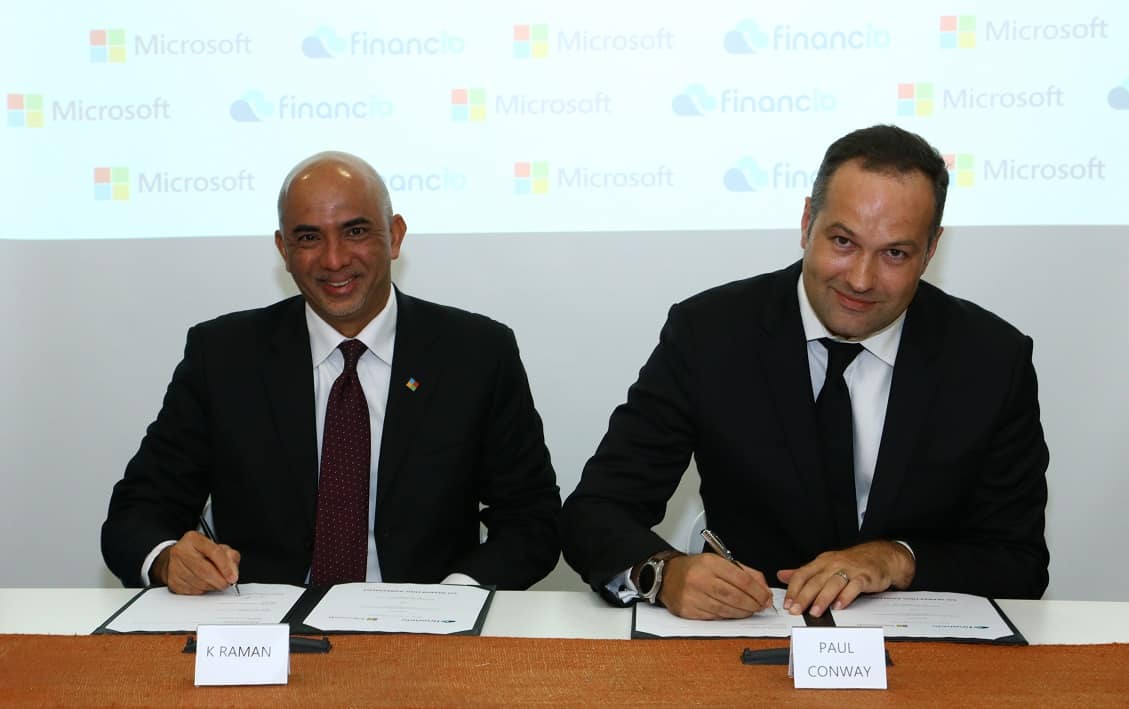
(Left) – K Raman, Managing Director, Microsoft Malaysia signing the strategic partnership with (right) Paul Conway, CEO, Asian Business Software Solutions Sdn Bhd (ABSS), for Financio to leverage Microsoft Cloud solutions in Kuala Lumpur on 17th Oct, 2017.

With Financio, users can track sales, purchases and miscellaneous transactions through a simplified dashboard, and automatically generate financial reports and tax records or forward transactions to recipients via email and inventory tracking. Using‘Financio Connect’, businesses can collaborate and share documents on the platform.

Start-ups and micro SMEs can expect to save at least 100-man hours and RM2,000 a year by moving from spreadsheets to accounting automation. Accounting automation takes away most of the bookkeeping process from the business such as double entries, generating reports and GST tax records, allowing business owners and accounting teams to focus on accelerating their business growth.

Financio is free for micro businesses, offering up to 10 invoices monthly, and business owners can upgrade to Financio’s premium features at RM32.95 a month. With Azure, micro SMEs will be able to gain access to trusted Microsoft products that deliver a seamless cloud experience while enjoying the robustness and stability that comes with Financio.

Header pic: (Left) – K Raman, Managing Director, Microsoft Malaysia signing the strategic partnership with (right) Paul Conway, CEO, Asian Business Software Solutions Sdn Bhd (ABSS) witnessed by (centre) Farid Awang, Head of Division, Finance & Account Division, SME Corporation Malaysia in Kuala Lumpur on 17 th Oct, 2017.

AI Fuelling Customer Experience Strategies of World’s Top Brands

0

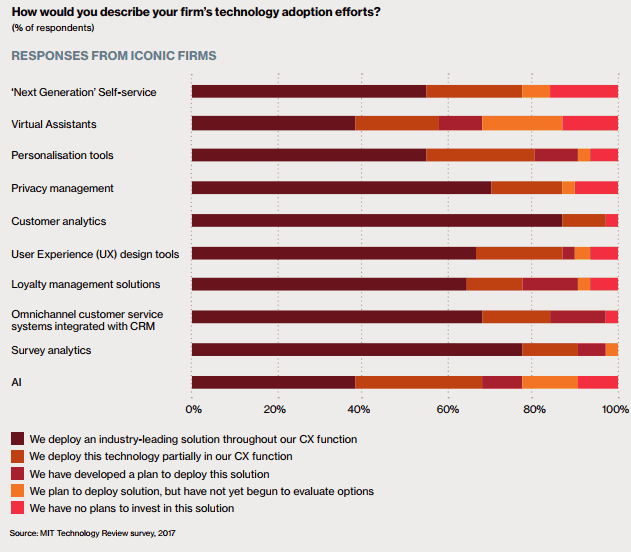
A global survey of more than 550 senior executives across 30 countries and territories reports that 91% of ‘iconic’ companies will deploy artificial intelligence (AI) solutions to increase customer satisfaction, compared to 42% of companies in their fields overall.

The new report from MIT Technology Review is sponsored by Genesys, known as Getting to Iconic, reveals that firms are more likely to recognise automated AI tools are most effective when they supplement and extend the capabilities of their customer support team, rather than replace human investment.

As such, 60% of survey respondents felt they had the right mix of automated customer communication channels, compared to only 26% of the poor performers and 40% overall.

The report also noted that optimising tools, applications and operational processes to engage with customers across every stage of their shared journey has always been a core growth strategy for successful global firms. This has only accelerated with the advance of technologies such as big data analytics, which turns customer information into predictive assets, and virtual assistants, which help firms more efficiently manage customer inquiries.

Iconic companies are also nearly three times as likely to consider leadership in technology adoption as a crucial component of maintaining customer experience excellence. In contrast, only half of firms with low levels of customer experience satisfaction and low brand recognition currently employ enabling technologies, and 10% have no intention of doing so.

Merijn te Booij, Chief Marketing Officer at Genesys says: “We’re excited that Kate, our new customer experience AI, will enable a smooth and contextual handoff between bots and humans. The combined power of automation with the finesse of the human touch across the enterprise delivers the kind of blended AI solution every customer experience leader needs today.”

Overall, Getting to Iconic determines iconic companies are much more advanced in their deployment of leading customer experience technologies, including the use of emerging AI applications. They are also much more able to follow customers across all channels, and manage customer experience levels across their extended ecosystem.

Budget 2018 Wishlist: All Eyes on the ICT Sector

0

In view of the upcoming Budget 2018, the National ICT Association of Malaysia (PIKOM) proposes several recommendations to the Malaysian government for inclusion in the budgetary plans for the coming year. These recommendations are focused on providing a needed boost for the digital economy, which comprise of a wide range of sub-sectors including ICT hardware, software, services, commucations and eCommerce.

  1. Propagating a digital ready workforce

In developing the next generation of talent to support Malaysia’s digital economy, a greater number of Science, Technology, Engineering and Mathematics (“STEM”) oriented students are needed. Government should explicitly promote secondary school and tertiary students to embark on STEM stream or courses that are relevant to Industry 4.0.

PIKOM recommends:

  • STEM students to be provided with a stipend or monetary incentives to pursue additional online courses, purchase technology and procure additional resources.
  • Enhanced corporate tax incentives for companies providing scholarships for Computer Science, Software Engineering and STEM related courses, as well as companies training employees to obtain professional certification in critical core areas such as data science, artificial intelligence, cyber-security and others.
  1. Withholding tax on software

The Finance Act 2017 has had a detrimental impact on the local software industry. Compounding the issue is uncertainly on the application of withholding tax on software prior to 2017.

PIKOM recommends:

  • Software should not be subjected to royalty for mere use or right to use
  • Tax should not be imposed retrospectively.
  1. Greater utilisation of ICT in government

The government needs to be at the forefront of technology adoption, which will position Malaysia as a leader in the digital age.

PIKOM recommends:

  • The government should accelerate the use of disruptive ICT technologies such as hyperscale public cloud, advanced analytics, mobile, social, artificial intelligence, IoT, Blockchain and others. This will not only improve public service delivery and reduce operational cost, but also serve as a catalyst and confidence booster for the private sector to adopt these technologies.
  1. Making ICT more affordable for every Malaysian

Affordable, accessible ICT hardware and software is vital towards creating an educated, informed nation, whose population is not left behind in the new digital era.

PIKOM recommends:

  • GST zero-rated for ICT products and services, especially for bigger ticket items like laptops, smartphones and so on.
  • Tax relief of RM3,000 to be exercisable annually and to cover PCs, tablets and smartphones.
  • Reintroduce the EPF PC Scheme
  • Reduce broadband prices to be on par with other countries without the speeds intact

Hong Leong Assurance Honours Top Performers at Annual Awards

0

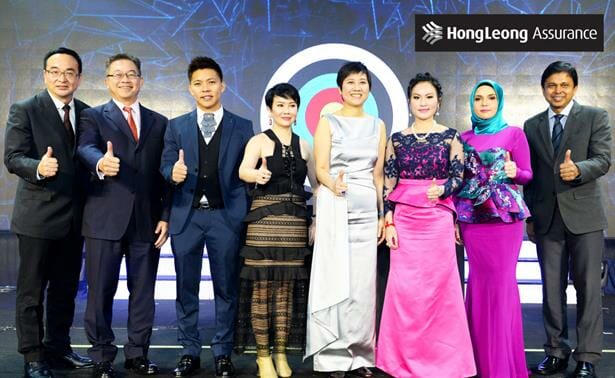
Hong Leong Assurance (HLA) recognises its high achieving agents at the Annual Awards Presentation 2017 convention recently held at the Genting International Convention Centre.

HLA broke company records this year with a total gross premium of RM 3 billion during the previous Financial Year of 2016/2017. In the same period, it won the Most Valuable Brand Award of the Year during the BrandLaureate BestBrand Awards 2016-2017, and the Malaysia’s Domestic Life Insurer of the Year award by Asian Banking and Finance for 2 years in a row during the Insurance Asia Awards 2016 and 2017 respectively.

On the international Million Dollar Round Table (MDRT) platform, HLA had achieved the highest number of MDRT achievers in the history of the company, with 235 MDRTs with 7 TOTs and 6 COTs in 2017.

Loh Guat Lan, Group Managing Director and Chief Executive Officer, said “My heartfelt congratulations to all top achievers! It has been a long journey leading up to this milestone, but I believe this is just the beginning. There is much more to be done, such as continuous development and expansion of our agency force, as well as providing enhanced product offerings which add value and promote the best practices of the company within the industry.”

She added “In the previous years, we have seen large numbers in terms of MDRTs achievers, and this year the number of qualifiers has grown substantially. The fact that our agents continue to receive this international recognition of excellence every year is testament to the underlying strength of the company. We see an encouraging number of fresh faces in this year’s awards and we hope this uptrend can be emulated and continued in years to come.”

L-R: Tan Kheng Seng (General Manager, Agency Distribution); Loke Kah Meng, (Chief Operating Officer); Jacky Chin Chun Seong (Champion MBA); May Lee (Champion Agency Manager); Loh Guat Lan (Group Managing Director and Chief Executive Officer); Jessie Wong (Champion Agent); Marissa Zarina Binti Dzulkipli (Champion Bumiputera Agent); Pusparajah A/L Muthu Krishnansamy (General Manager, Agency Recruitment & Development)

Over 1,000 awardees received awards in various award categories during the event. One notable award winner is HLA’s luminary, May Lee Sue Wee, who emerged as the Record Holder for 10 consecutive years as the Champion Agency Manager.

The highest honours went to the following Champion awardees at the top of their respective categories:

  • Champion Agency Manager – May Lee Sue Wee
  • Champion Unit Manager – Jack Leong Yien Hung
  • Champion Master Builder Award – Jacky Chin Chun Seong
  • Champion Agent – Jessie Wong Siaw Puie

The Annual Awards Presentation was held in conjunction with HLA’s two days sales convention. The convention saw renowned industry speakers from abroad to share their experience and insights. This is part of HLA’s agency force professional development programme to upgrade professional competencies and refining potential.