National utility giant, Tenaga Nasional Berhad in its commitment to driving the sustainable agenda has announced initiatives to fast-track the group’s pursuit of its aspiration of net zero emissions by 2050.
These initiatives cut across the electricity value chain, from transitioning power generation to cleaner sources; enhancing the Grid of the Future (GoTF) to enable more green solutions; and facilitating consumer participation in the energy transition, including through electric vehicle (EV) adoption.
President and Chief Executive Officer, Dato’ Indera Ir. Baharin Din said that the increasing urgency to address the devastating impact of climate change has spurred the company to accelerate its decarbonisation plans, towards its targets of a 35% reduction in carbon emissions intensity and a 50% reduction of its coal generation capacity by 2035.
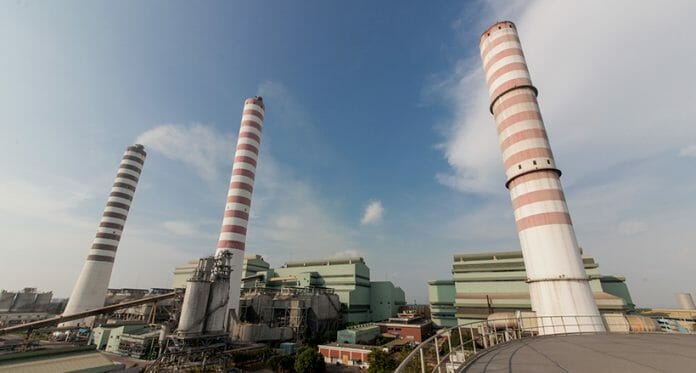
In transitioning power generation to cleaner sources, several deliberate measures will be undertaken to transition the generation portfolio of TNB Power Generation Sdn Bhd or GenCo, through the retirement of selected coal plants earlier than planned, repowering of power plants with new green technology as well as building partnerships with reputable technology companies.
These measures focus on both reducing emissions and charting business growth for TNB from clean energy technologies such as carbon capture, utilisation, and storage (CCUS), hydrogen as a clean fuel, and early assessment of Small Modular Reactors if proven commercially viable. The venture into new green technology is also expected to augment the growth of new economic sectors.
Under a redefined plan to increase the enterprise value of GenCo, Baharin said that the company will be looking to retire selected coal plants earlier than the expiration of their Power Purchase Agreements (PPA).
“We hope to start with Kapar Energy Ventures (KEV), and are exploring the viability of retiring the 1400 MW plant up to a year ahead of its PPA expiration subject to shareholders’ agreement and approvals from the relevant authorities and regulators. As for repowering plants with new technology, we have recently received a Letter of Intent to allow the repowering of our 1400 MW gas-powered plant in Paka, which we intend to make hydrogen-ready by 2029,” he said.
The group is also actively seeking to build strategic alliances with technology partners who are able to provide technology, capability, and capital synergy to position GenCo as a greener and more sustainable player in the power generation sector. This includes seeking potential collaborators to further the development of hydrogen as a viable clean source of energy.
“TNB is committed to turning GenCo around in terms of its ESG performance to become a greener power generator. As demand for clean energy increases with the Energy Transition, we project the value of the clean energy market to be an estimated RM65 billion to RM80 billion, and we intend to capture a significant share of the market, about RM40 billion by 2050. Through these deliberate steps to increase its enterprise value and sustainability position, we are also staying open to the possibility of an Initial Public Offering (IPO) of GenCo, should the opportunity come up,” said Baharin.
Under its New Energy Division, TNB is committed in supporting the Malaysia Renewable Energy Roadmap (MyRER) which aspires to achieve 31% Renewable Energy (RE) capacity by 2025 and 40% by 2035. Internationally, it plans to grow its RE portfolio in existing as well as adjacent markets across Asia Pacific and Europe.
TNB aims to potentially capture over 14 GW of RE capacity by 2050 which will translate into a CO2 avoidance of an estimated 6.9 million Tco2/MWh.
On the Grid of the Future, Investments to develop the Grid of the Future will continue as a critical enabler of the country’s Energy Transition. In Regulatory Period 3 (RP3), RM2.6 billion is allocated for the energy transition to balance grid security, sustainability and affordability.
Beyond the national grid, TNB also advocates for regional collaboration to strengthen inter-regional grid connections, in particular for the ASEAN region towards greater energy security.
As for Electric Vehicle Ecosystem, TNB will invest RM90 million to support the EV ecosystem over the span of three years, focusing on five areas including reskilling for the EV industry; electrification of TNB’s own fleet; building charging infrastructure; sponsoring EV-related studies and fostering coalitions among EV sector players.
“These efforts are aimed at uplifting the demand-side of the power sector by promoting the adoption of EVs, with a target to reach 500,000 EVs on Malaysian roads by 2030. Half a million EVs translates to approximately 2.318 TWh of electricity charging requirements, valued at almost RM1.26 billion. Not to mention the added benefit of 4.4 million tonnes of CO2 emission reduction by taking internal combustion engine vehicles off the road.