


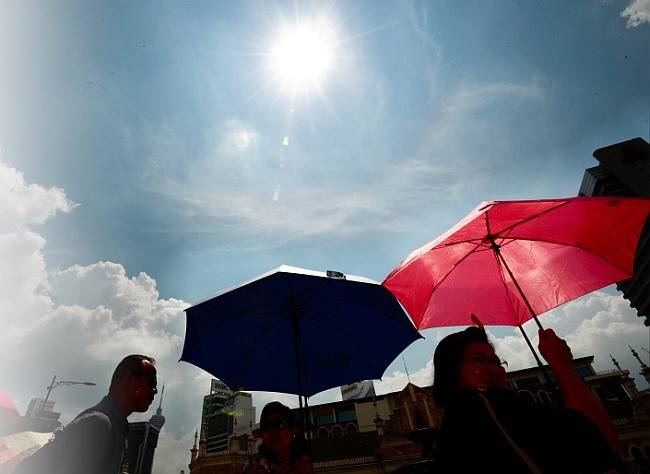
Malaysia’s ongoing hot weather is expected to persist until the early phase of the Southwest Monsoon in June, driven by drier atmospheric conditions and below-normal rainfall, according to the Malaysian Meteorological Department.
Its Deputy Director-General (Operations) Ambun Dindang said the country is currently in the final phase of the Northeast Monsoon, typically marked by reduced rainfall and hotter, drier conditions — particularly in the northern and inland areas of Peninsular Malaysia.
Based on local and international weather models, Malaysia is expected to see continued dry weather patterns with lower-than-usual rainfall over the coming months.
“Rainfall is expected during the inter-monsoon phase from end-March to May, mainly in the afternoon and early evening across the west coast and inland areas of Peninsular Malaysia, as well as western Sabah and Sarawak. This may help ease temperatures slightly,” he said.
Rainfall is forecast to pick up from the end of this week, covering much of the west and inland peninsula, along with parts of Sabah and Sarawak. However, most monitoring stations are still recording below-normal rainfall.
Several areas in Kedah — including Alor Setar, Kubang Pasu and Langkawi — along with Papar in Sabah, have recorded up to 17 consecutive days without rain, while Perlis logged 15 dry days as of March 23.
Ambun said northern Peninsular areas such as Kedah, particularly Pendang, Baling and Padang Terap, are more exposed to prolonged heat due to geographical factors and prevailing wind patterns during the Northeast Monsoon.
Hot conditions in Malaysia typically peak between February and April, with the northern peninsula more prone to higher temperatures, although this is also influenced by climate variability such as the El Niño.
He warned that the frequency of extreme hot days could rise if El Niño strengthens, noting that Malaysia’s highest recorded temperature was 40.1°C in Chuping, Perlis during the 1998 event.
MetMalaysia defines a heatwave as temperatures exceeding 37°C for three consecutive days, with Level 3 triggered when temperatures surpass 40°C.
The public is advised to stay hydrated, limit outdoor exposure, avoid open burning and use water prudently, as prolonged dry conditions could lower dam levels, heighten drought risks and disrupt water supply.


