



Malaysia’s electric vehicle (EV) transition is entering a critical new phase and the numbers are beginning to tell a more nuanced story. As EV adoption accelerates nationwide, the country currently has an estimated ratio of one public charger for every 16 EVs on the road.
The ratio, revealed as part of Malaysia Automotive, Robotics and IoT Institute’s (MARii) latest assessment of the national EV landscape, offers one of the clearest indicators yet of how infrastructure growth is tracking against rising consumer demand.
Yet the figure alone only tells part of the story. Behind the public charging network lies another rapidly growing layer of infrastructure that has so far received less attention — home charging.
According to exclusive insights shared by MARii Chief Executive Officer Azrul Reza Aziz, there are approximately 38,000 home charging units installed nationwide, significantly easing pressure on public infrastructure while reshaping how Malaysians interact with EV ownership.
For policymakers and industry stakeholders, this dual-layer charging model could become one of Malaysia’s defining advantages in the regional EV race.
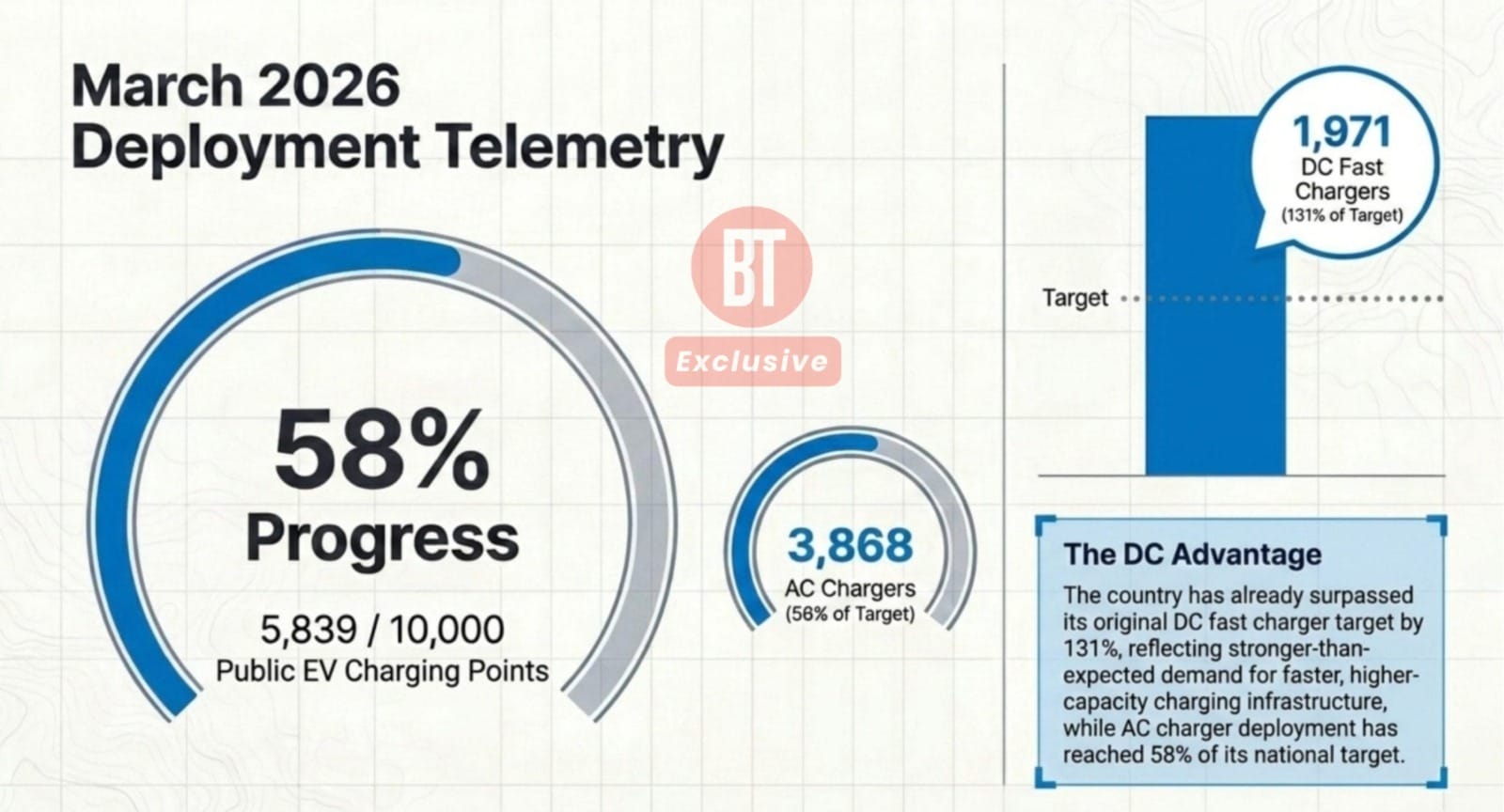
As of March 2026, Malaysia has deployed 5,839 public EV charging points nationwide, comprising 1,971 DC fast chargers and 3,868 AC chargers. The country has already surpassed its original DC fast charger target by 131%, reflecting stronger-than-expected demand for faster, higher-capacity charging infrastructure, while AC charger deployment has reached 58% of its national target.
But according to Azrul Reza, the national conversation must now evolve beyond installation figures.
“A charger that is installed but unavailable, underpowered or difficult to access does not contribute meaningfully to consumer confidence.
“The next stage should measure uptime, utilisation, charging speed, interoperability, convenience and geographic coverage. This will be more important than the headline number alone,” Azrul Reza told BusinessToday.
In other words, infrastructure quality is becoming just as important as infrastructure quantity.
The Hidden Strength of Home Charging
The estimated 38,000 home charging units currently operating across Malaysia suggest that public chargers represent only one component of the country’s wider EV ecosystem.
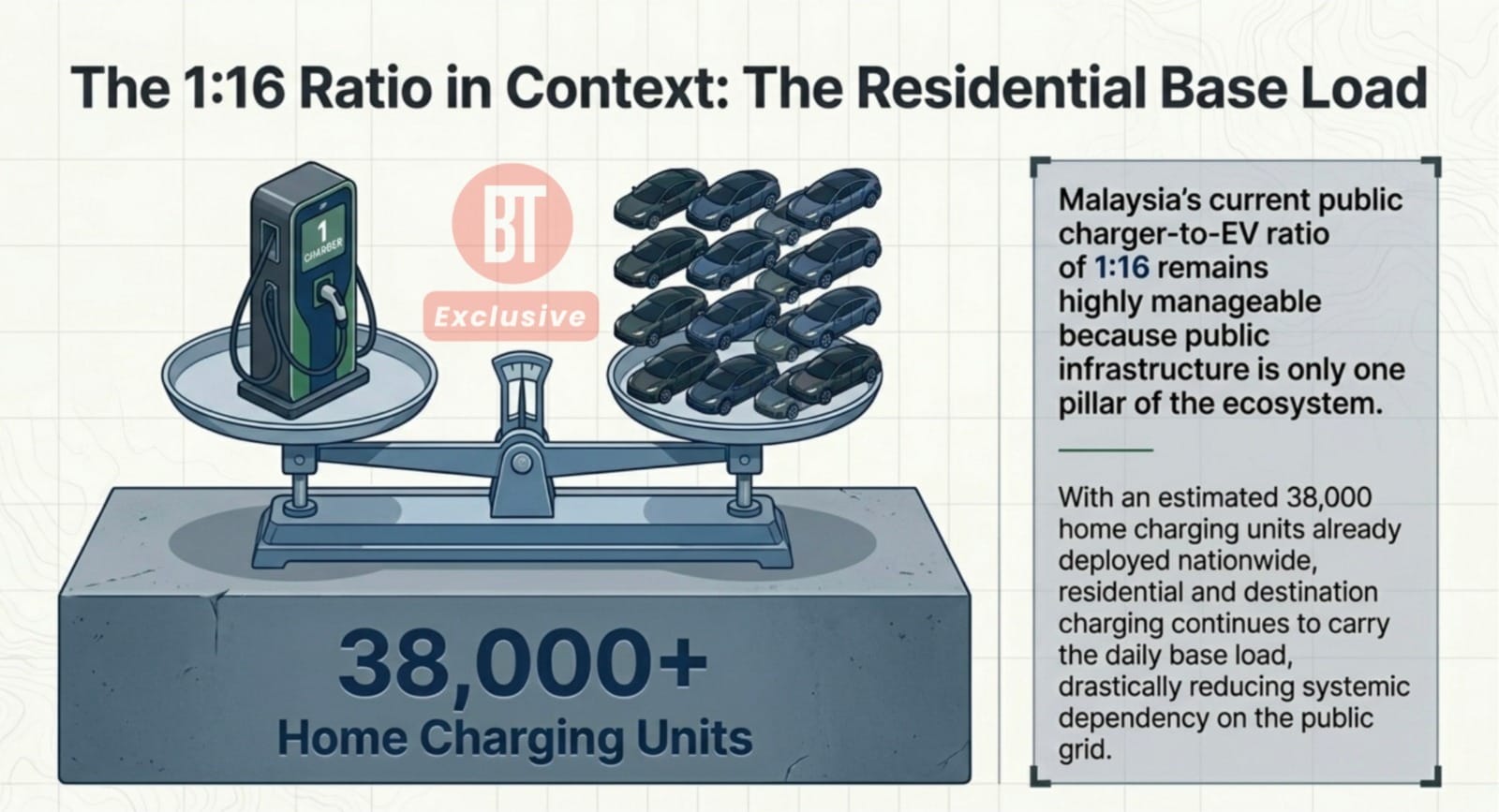
For many EV owners, residential charging remains the preferred option due to convenience and lower charging costs. This has allowed Malaysia’s public charging ratio to remain relatively stable even as EV registrations continue climbing.
However, home charging itself presents structural challenges unique to Malaysia’s urban landscape.
With a large percentage of Malaysians living in high-rise and stratified residential developments, installing private chargers often requires approvals from building management, parking allocation coordination and upgrades to electrical load capacity.
These issues have emerged as one of the more complex bottlenecks in scaling nationwide EV adoption.
Still, MARii believes home charging will remain an essential pillar supporting the broader ecosystem, particularly as public infrastructure deployment alone may not be sufficient to meet long-term demand growth.
A Shift Towards Smarter Infrastructure
Malaysia’s next infrastructure challenge may not necessarily be building more chargers — but building them more strategically.
Currently, EV charging infrastructure remains heavily concentrated in major urban corridors such as Klang Valley, Penang and Johor. As EV adoption spreads beyond major cities, semi-urban and non-urban regions will increasingly require stronger charging coverage to avoid widening accessibility gaps.
To address fragmentation across charging networks, MARii is also progressing the implementation of the National e-Mobility Service Platform (eMSP), designed to serve as a national digital backbone for EV charging coordination.
The platform is expected to enable real-time charger visibility, network integration and smoother user accessibility across multiple charge point operators.
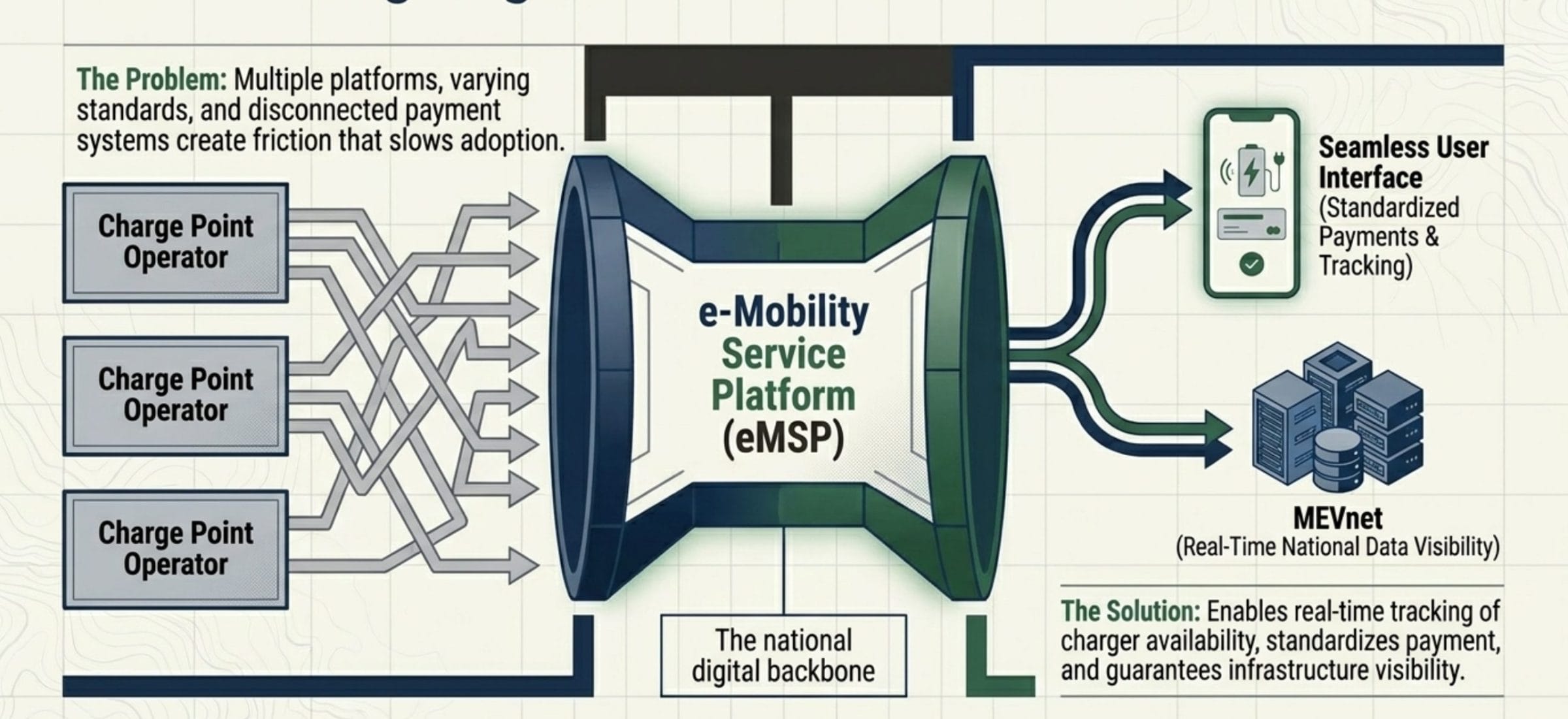
The National eMSP will be integrated via an application programming interface with the existing Malaysia Electric Vehicle Charging Network (MEVnet) dashboard, enabling synchronised and up-to-date public data.
The focus will be placed on backend integration among OEMs, CPOs, and power distributors to create a more seamless and interoperable ecosystem. Minimal emphasis will be given to building proprietary consumer-facing applications, ensuring that there is no direct disruption or competition with existing applications already available in the market.
This integration-driven approach is intended to strengthen collaboration across stakeholders while enhancing overall service delivery, operational efficiency, and ecosystem connectivity.
The Real Race Ahead
The country’s EV infrastructure story is no longer simply about reaching the national target of 10,000 public chargers.
Malaysia’s EV infrastructure ambitions are now evolving beyond domestic deployment targets and entering a broader regional competition centred on ecosystem quality, connectivity and user experience.
With EV adoption accelerating across Southeast Asia, the focus is increasingly shifting from how many chargers a country installs to how effectively its charging network supports seamless mobility, long-distance travel and consumer confidence across borders.
“In ASEAN, the next stage of competition will not be about which country installs the most chargers, but which country builds the most reliable, connected and user-friendly EV ecosystem.
“Malaysia is well positioned to play that role because of its policy foundation, industrial base, central location in ASEAN and growing digital infrastructure for EV charging coordination,” Azrul added.
And with one public charger currently serving every 16 EVs, Malaysia’s infrastructure race is only just beginning.


