Malaysia’s logistics and transportation sector is expected to remain resilient despite mounting geopolitical risks, rising energy prices and ongoing disruptions to global shipping routes, according to Kenanga Investment Bank Research.
The research house maintained its “Neutral” call on the sector, citing steady domestic demand, booming e-commerce activity and Malaysia’s growing role as a regional trade intermediary amid evolving global supply chains.
Port Operators Deliver Strong Earnings
Among the sector’s key players, port operators continued to report solid earnings growth in the latest quarter.
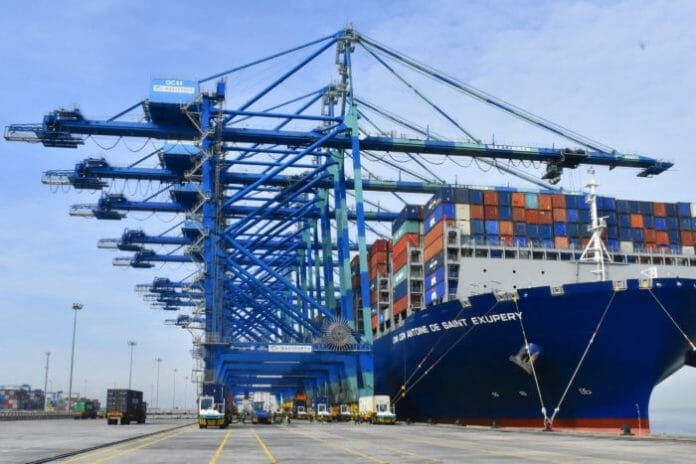
Westports Holdings posted a 45% year-on-year jump in core net profit for the first quarter of FY2026, benefiting from the full impact of tariff adjustments implemented in July 2025 and January 2026, as well as higher value-added services linked to yard congestion earlier this year.
While congestion levels have since eased, management expects value-added service contributions to normalise in the coming quarters.
Fuel costs, however, remain a concern. Westports recorded a 17% year-on-year increase in fuel expenses during the quarter due to the use of unsubsidised diesel. The company estimates that sustained elevated fuel prices arising from the Middle East conflict could result in an annual impact of approximately RM50 million.
To mitigate rising costs, Westports is accelerating its green initiatives, including fleet electrification and solar energy adoption. The company aims to replace 10% of its vehicle fleet with electric trucks by the fourth quarter of 2026 while continuing to pass some cost increases to customers.
Meanwhile, Bintulu Port Holdings delivered a 7% increase in core net profit, supported by stronger contribution from the higher-margin Samalaju Industrial Port and lower effective tax expenses.
The research house noted that operations at the Petronas Malaysia LNG complex have fully normalised, providing a positive outlook for cargo throughput at Bintulu Port and helping offset rising labour costs.
Logistics Players Navigate Competitive Pressures
Third-party logistics providers continue to face a challenging operating environment despite benefiting from resilient domestic demand.
Swift Haulage’s first-quarter performance remained subdued as the group grappled with weaker operational scale in its core businesses and customer losses within its warehousing segment. New warehouse start-up costs also weighed on earnings.
Nevertheless, the company benefited from stronger freight forwarding margins and a 12% to 13% increase in container haulage rates introduced in July 2025.
Swift noted that most of its operations remain eligible for subsidised diesel under the government’s Sistem Kawalan Diesel Subsidi (SKDS) programme, helping cushion the impact of rising global fuel prices.
The company is also expanding its electric vehicle prime mover fleet and charging infrastructure as part of its long-term carbon reduction strategy.
For Pos Malaysia, losses narrowed significantly during the quarter, supported by stronger parcel volumes during the Lunar New Year and Hari Raya festive periods, as well as a one-off postal mailing project.
However, traditional mail volumes continued to decline amid structural shifts in communication patterns, while international mail volumes were affected by geopolitical tensions and changes to de minimis regulations in the United States.
Parcel delivery remained the bright spot, recording 25% growth as Pos Malaysia gained market share in both business-to-business and business-to-consumer segments.
Global Trade Outlook Improves
Kenanga noted that the World Trade Organization (WTO) recently upgraded its forecast for global merchandise trade growth in 2026 to 1.9%, up from its previous estimate of 0.5%.
The WTO cited stronger demand for artificial intelligence-related products, continued supply chain restructuring and easing tariff-related tensions as key drivers supporting global trade activity.
However, the outlook remains vulnerable to escalating tensions in the Middle East and persistently high energy prices.
Under a high-energy-price scenario, global trade growth could slow to 1.4%, highlighting the risks posed by ongoing geopolitical instability.
The continued diversion of shipping traffic away from the Red Sea and Suez Canal route also remains a challenge for global supply chains.
According to Westports, approximately 80% of shipping lines continue to arrive behind schedule as vessels reroute via the Cape of Good Hope, extending transit times between Asia and Europe.
Malaysia Emerges as a Supply Chain Beneficiary
Despite global uncertainties, Malaysia is increasingly benefiting from its role as a “connecting economy” amid ongoing trade realignments.
The WTO identified Malaysia, alongside Singapore, Vietnam and India, as countries gaining from supply chain diversification and trade shifts resulting from US-China tensions.
Malaysia’s exports to the United States surged 42.3% year-on-year in February 2026, driven primarily by strong demand for electrical and electronic products. The US has since emerged as Malaysia’s largest export destination.
Kenanga expects Malaysia’s logistics sector to continue benefiting from growing trade flows, robust AI-related investments, data centre expansion and ongoing supply chain diversification.
E-Commerce Growth Supports Domestic Logistics
While global shipping faces headwinds, domestic logistics players continue to benefit from the rapid expansion of e-commerce.
Industry projections indicate Malaysia’s e-commerce gross merchandise value could grow at a compound annual growth rate of 5% between 2024 and 2027, reaching RM1.5 trillion by 2027.
The growth is expected to drive demand for distribution hubs, warehousing facilities and cold-chain logistics infrastructure, particularly as businesses seek faster delivery capabilities and more resilient supply chains.
However, competition remains intense, particularly from Chinese logistics operators that continue to expand alongside Chinese foreign direct investments into Malaysia.
Kenanga noted that aggressive pricing strategies by foreign logistics providers have limited the ability of local players to fully capitalise on the country’s growing trade volumes.
Sustainability Regulations Pose Long-Term Challenge
The research house also highlighted emerging environmental regulations as a longer-term consideration for the sector.
The International Maritime Organization’s proposed Net-Zero Framework and the European Union’s Carbon Border Adjustment Mechanism (CBAM) could gradually influence trade patterns and shipping costs in the coming years.
Although these measures are not expected to materially affect earnings in the near term, they could reshape cargo flows and increase carbon-related costs across global supply chains over time.
“At this stage, we view IMO and CBAM regulations as medium-term structural risks rather than immediate earnings shocks,” Kenanga said.
Despite a constructive outlook for domestic logistics growth, the research house maintained a cautious stance on the sector and currently has no top stock pick within its logistics coverage universe.