


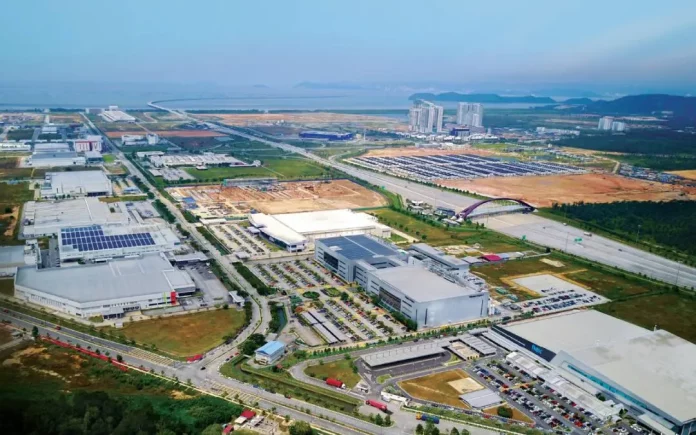
Malaysia’s first-quarter 2026 investment report contained a more instructive semiconductor project than another headline fab. Germany’s Aixtron is investing RM200 million in a Malaysian centre for manufacturing and engineering equipment used in compound-semiconductor deposition. The project shows where industrial value is often built: not only inside the chip, but in the machinery, utilities and engineering services that keep a factory operating.
Ankara should resist defining high-technology co-operation with Malaysia by whether a Turkish-backed wafer fab is announced. Malaysia already has a dense semiconductor base and is moving from assembly, testing and packaging towards design, advanced packaging and front-end activities. Türkiye’s credible contribution lies around those facilities: clean-room components, power electronics, selected test systems, factory automation, precision metalwork, industrial software, fire protection and maintenance. The strategy should begin with supplying the factory, not owning the most prestigious building in it.
Malaysia is not an empty location awaiting foreign ambition. It accounts for about 13 per cent of global semiconductor assembly, testing and packaging volume and ranks as the world’s sixth-largest semiconductor exporter. Malaysian companies such as ViTrox, Greatech, Pentamaster and UWC already provide automation, inspection and precision-engineering solutions. Turkish suppliers would therefore compete with experienced Malaysian, Japanese, German, American and Singaporean vendors. Diplomatic goodwill will not lower a fab’s tolerance for contamination, voltage instability or equipment failure.
Türkiye nevertheless has capabilities worth testing. Its machinery industry exported US$28.7 billion in 2025, while its HVAC industry exported US$7.4 billion. Turkish companies manufacture air-handling units, pumps, compressors, electrical equipment, control systems and precision components for automotive, defence, white goods and other demanding industries. These strengths provide a base for semiconductor supply, but not automatic qualification. A ventilation system suitable for a hospital is not necessarily suitable for a clean room; a component accepted by an automotive customer may still fail semiconductor requirements for particles, materials and traceability.
That gap between general industrial competence and approved-vendor status should become the centre of bilateral policy. Semiconductor plants require reliable power and water, chemicals, gases, clean-room infrastructure, engineering talent and long-term customer commitments. Their supporting systems must operate continuously and be documented to exacting standards. Turkish firms should target interfaces where existing competence can be upgraded: power conditioning, uninterruptible supply, air handling, automated material movement, fire and gas detection, precision fixtures, maintenance software and less sensitive inspection or test equipment.
The quickest route is unlikely to be the most advanced front-end fab. Malaysia’s established packaging and testing plants, power-semiconductor projects and supporting laboratories offer more accessible entry points. Compound semiconductors also create demand for thermal management, power electronics and specialised automation, areas closer to Turkish industrial strengths than leading-edge lithography. The objective should be repeatable niches, not a symbolic claim to the entire value chain.
Malaysia’s own policy increasingly follows this logic. At SEMICON Southeast Asia 2026, the Malaysian Investment Development Authority emphasised smart manufacturing, supplier integration and practical exposure to clean-room and automation environments. Its Johor–Singapore Special Economic Zone supplier programme links Micron, financiers and potential vendors through capability building and qualification. Türkiye should enter these mechanisms rather than establish a parallel bilateral showcase. Approval from a multinational plant in Penang, Kulim or Johor would provide a commercial reference that no memorandum can match.
The two governments should create a Türkiye–Malaysia Semiconductor Facilities Supplier Programme under their expanded free trade agreement and High-Level Strategic Cooperation Council. It should begin with a capability audit of a small group of Turkish firms against needs identified by Malaysian manufacturers and equipment companies. Support should finance certification, prototype adaptation, customer testing, cyber-security compliance and a permanent Malaysian service presence. Turkish and Malaysian technical institutes should train maintenance technicians on equipment actually used by participating factories.
Public finance must be conditional. Türk Eximbank support or investment incentives should follow approved-vendor status, local spare-parts capacity, measured equipment uptime and repeat orders. They should not underwrite a politically attractive fab whose process technology, customers and critical machinery remain controlled elsewhere. Joint ventures with Malaysian firms may be more valuable than wholly Turkish subsidiaries because they combine local customer knowledge with Turkish manufacturing depth. Intellectual-property boundaries and third-country export controls must be mapped before technology is transferred.
A fab can create an anchor around which suppliers develop. But that argument holds only when secure customers, suitable technology, reliable utilities and patient capital already exist. Fabs are among the world’s most capital-intensive industrial projects, and Southeast Asia’s semiconductor debate increasingly favours specialised capacity over every country replicating Taiwan or South Korea. A premature Turkish fab in Malaysia could absorb public resources while importing most of its machinery, chemicals and know-how. It would look sovereign while remaining operationally dependent.
A supplier strategy also has wider Southeast Asian value. Malaysia’s clusters connect with Singapore’s front-end and financial capabilities, Thailand’s power-electronics and back-end activities, and Viet Nam’s expanding packaging base. Qualification in Malaysia could help Turkish firms approach those networks, although each market has different customers, regulations and industrial strengths. ASEAN should be treated as linked but distinct production systems, not as one semiconductor market.
Prime Minister Anwar Ibrahim placed semiconductors, artificial intelligence and data centres at the centre of economic discussions during the first Türkiye–Malaysia High-Level Strategic Cooperation Council in January 2026. The next meeting should ask a less glamorous question: which Turkish component, software system or maintenance service has entered a Malaysian factory and earned a second order? Türkiye will not become part of the semiconductor economy by placing its flag above a clean room. It will do so when a Turkish-made system survives qualification, keeps a production line running and becomes difficult to replace. Malaysia does not need another partner promising to manufacture the chip. It may have room for one prepared to master the industry that makes chip manufacturing possible
Mehmet Enes Beşer– He’s a researcher focusing on ASEAN, and a graduate of Sociology in Boğaziçi University. His work examines Türkiye’s relations with Southeast Asian countries, particularly in the fields of economic development, industrial cooperation, and foreign policy. He’s also the ASEAN Coordinator at Vatan Party (Türkiye) and a member of the Editorial Board of Teori magazine.


