


Cartier’s animal kingdom is getting a new cast. The panther is still there, but it now shares the stage with tigers, parrots, carp, crocodiles and rhinoceroses in Into the Wild, the maison’s latest high jewellery collection.
The new pieces take a familiar Cartier idea and broaden it. Animal heads become oversized rings, crocodiles and tigers stretch into articulated necklaces and bracelets, and the panther appears on a jewellery watch. The designs are recognisable without trying to look like exact replicas of the animals they depict.
That balance has been part of Cartier’s approach to wildlife for more than a century. Birds and insects appeared in its jewellery as early as the 1900s, followed by reptiles, big cats, zebras and elephants. The panther took on a more defined role in 1948, when Cartier first presented it as a three-dimensional sculptural form.
Into the Wild picks up from there, but the emphasis is less on the panther alone and more on the variety of the animal world.
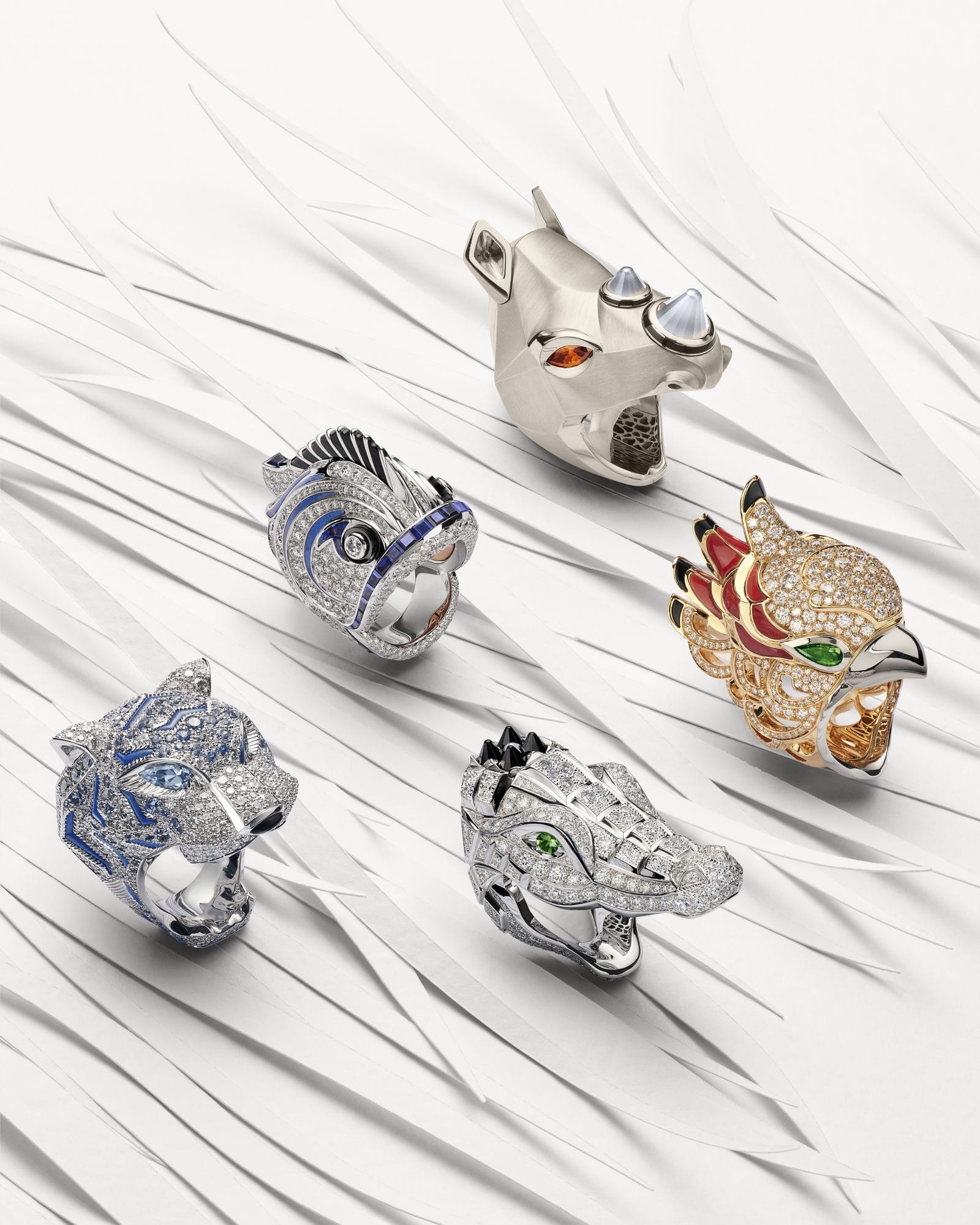
The statement rings make that clear. Each is built around an animal’s head, with the defining features pushed into bold forms. The tiger and carp use sapphires, aquamarine and dumortierite quartz in shades of blue.
The parrot combines coral and tsavorite garnets, while the rhinoceros pairs spessartite garnet with smoky quartz. Diamonds, onyx and emeralds give the crocodile its black, white and green palette.
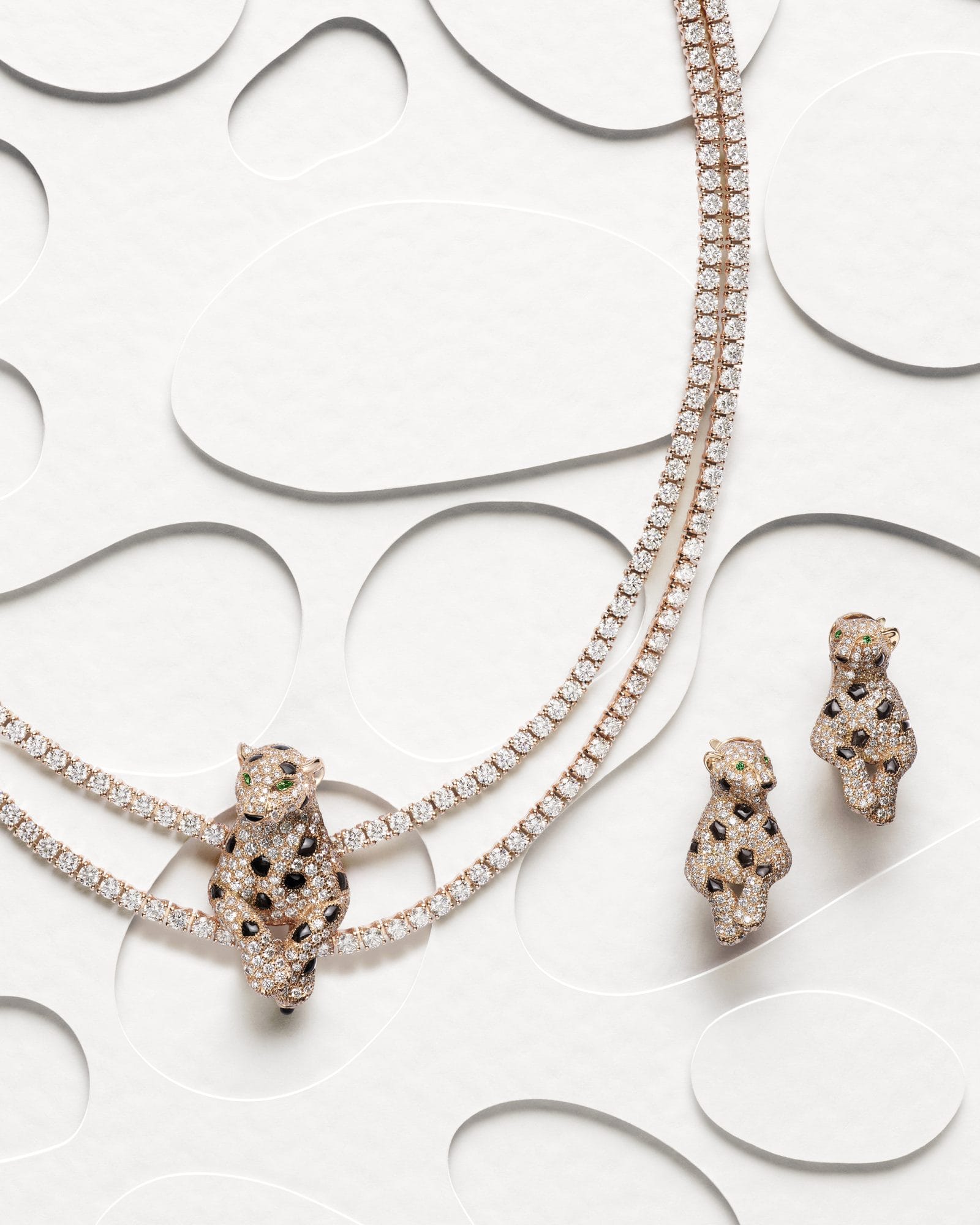
The stones also play a practical role in shaping the animals. Cartier’s lapidaries carve the rhinoceros’s horns, the carp’s gills and the parrot’s crest. Metalworkers then build around those forms, while different setting techniques create the impression of fur, scales and skin.
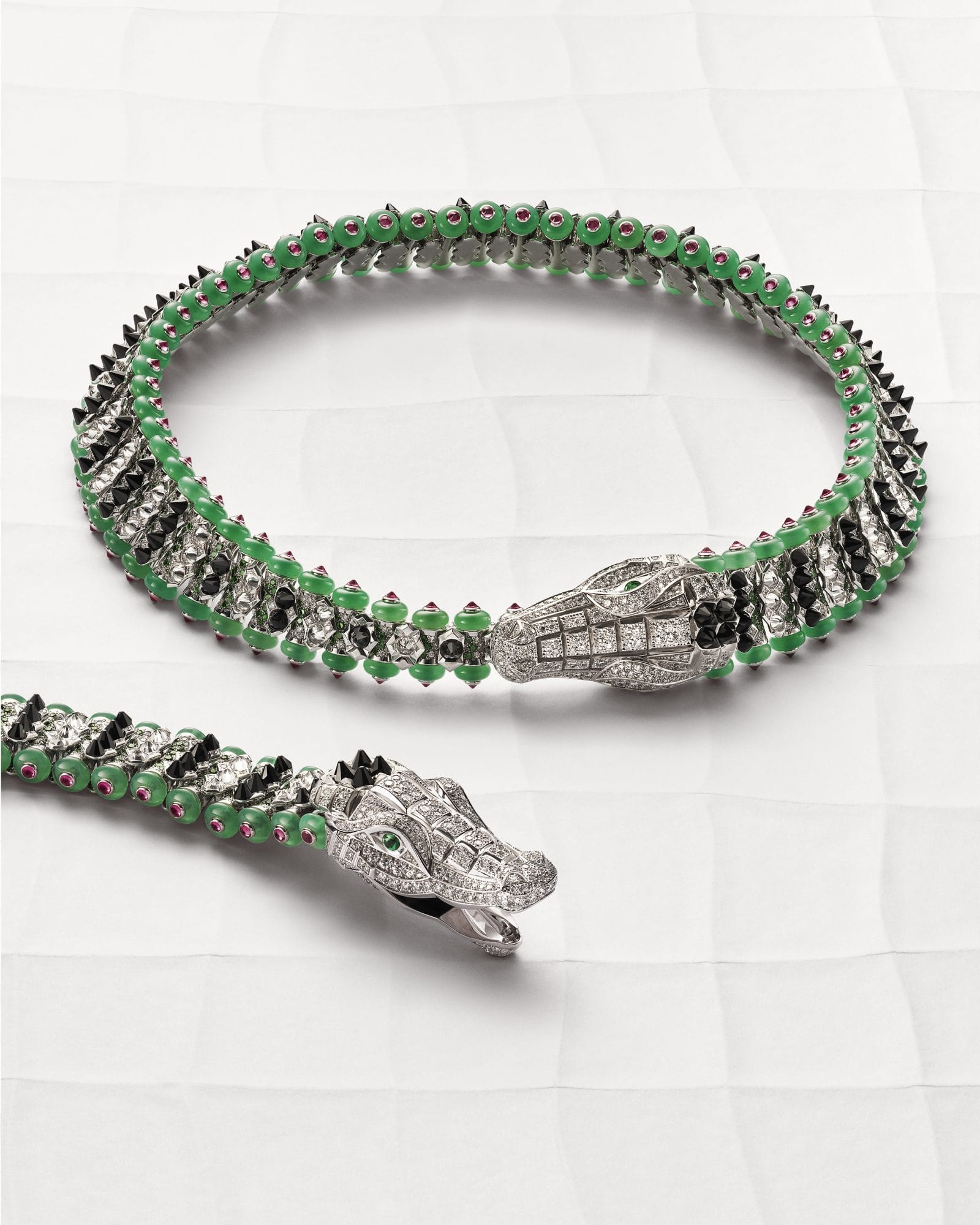
The same idea carries into the necklaces and bracelets, where the animals are designed to move. The crocodile and tiger have sculpted heads but flexible bodies made from articulated sections. Their clasps are hidden inside the animals’ mouths, so the mechanism does not break up the design.
The crocodile pieces use diamonds and onyx to trace the animal’s scales and ridged back, with chrysoprase and rubellites adding colour. The tiger takes a cooler approach, combining dumortierite quartz, sapphires and aquamarine with chalcedony beads mounted on moving gold links.
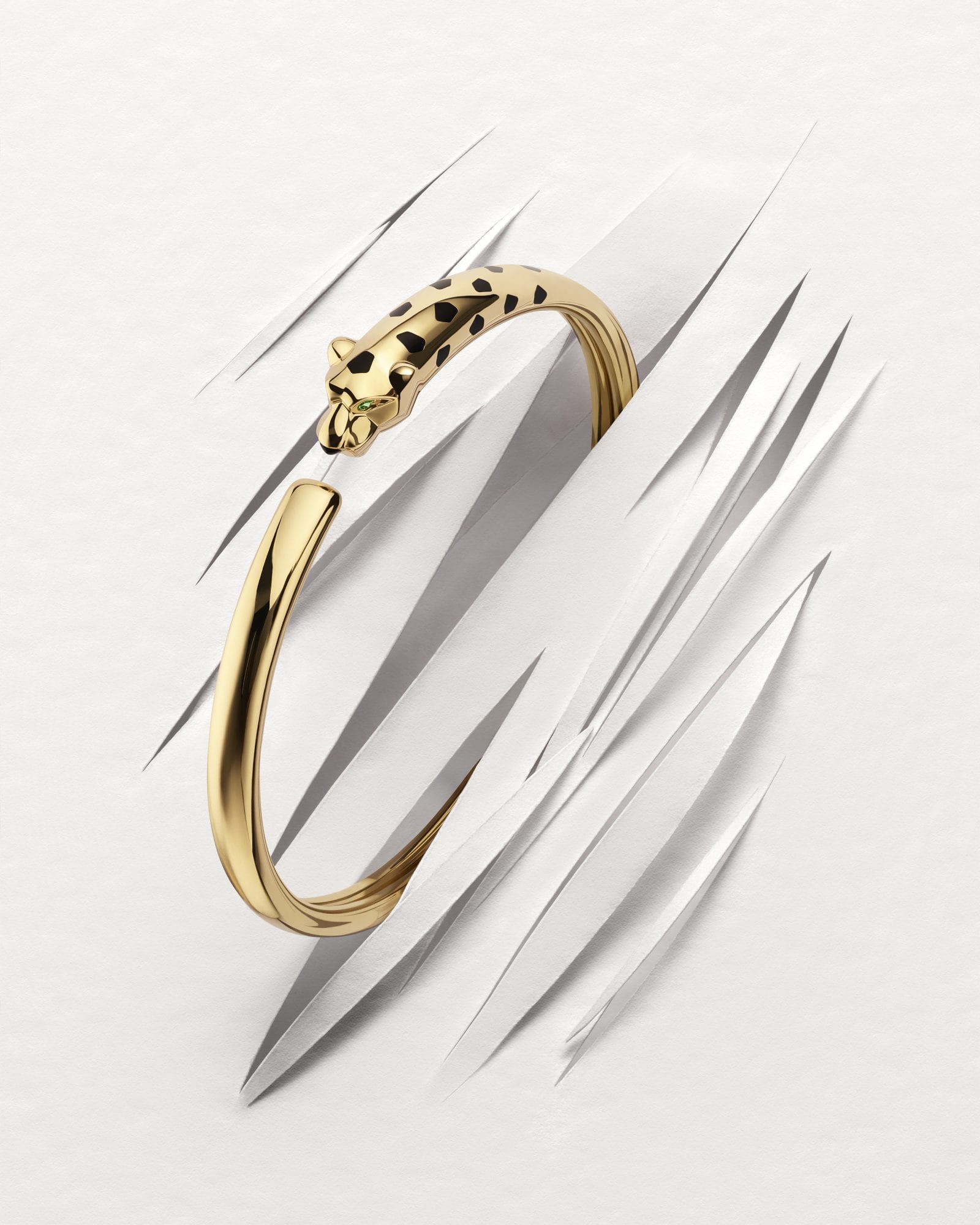
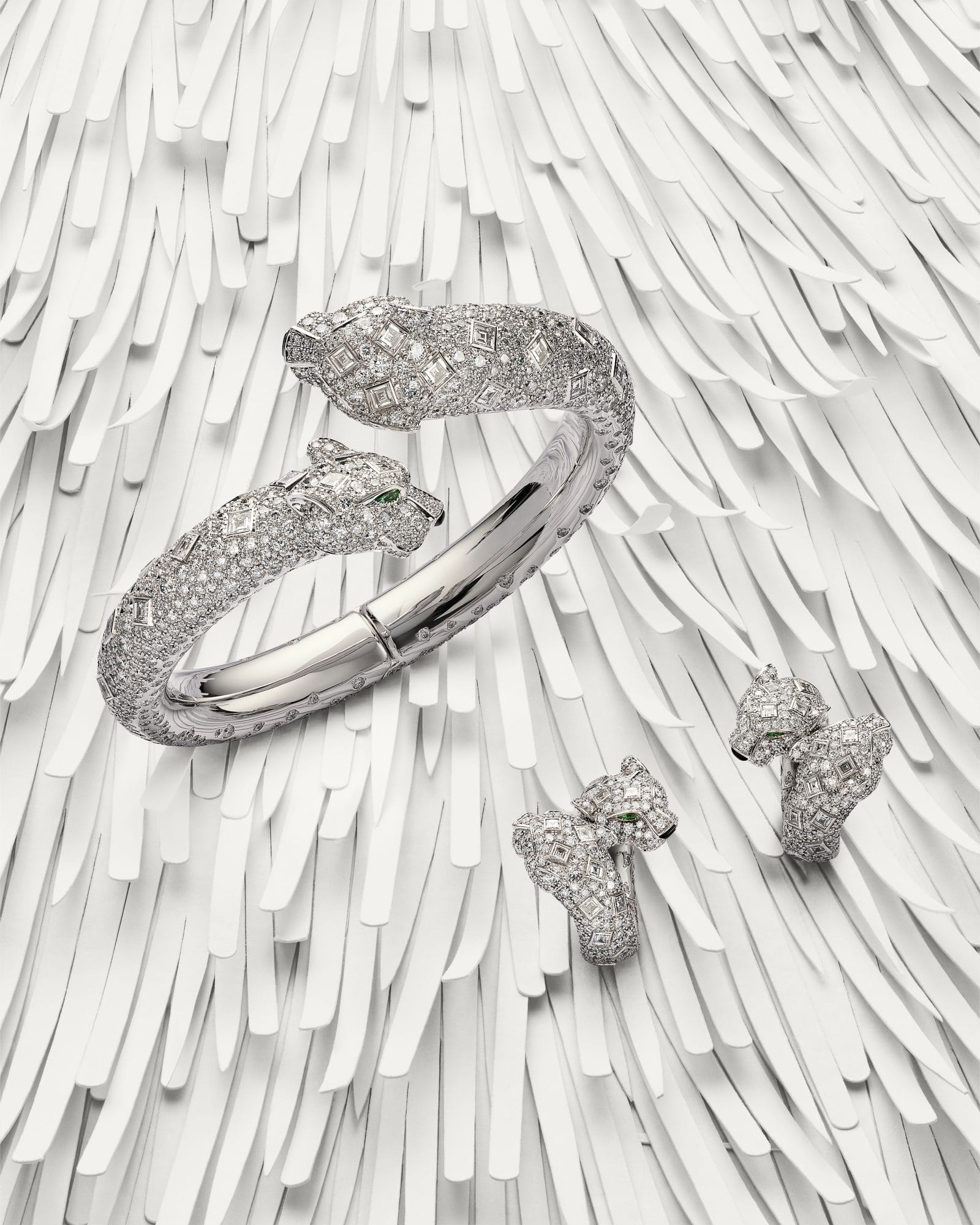
Then there is the panther. In the Panthère de Cartier tête-à-tête bracelet, two heads meet across the wrist. White gold and diamonds create the coat, while emerald eyes add the only strong hit of colour. Cartier varies the diamond sizes and setting techniques to give the surface more texture.
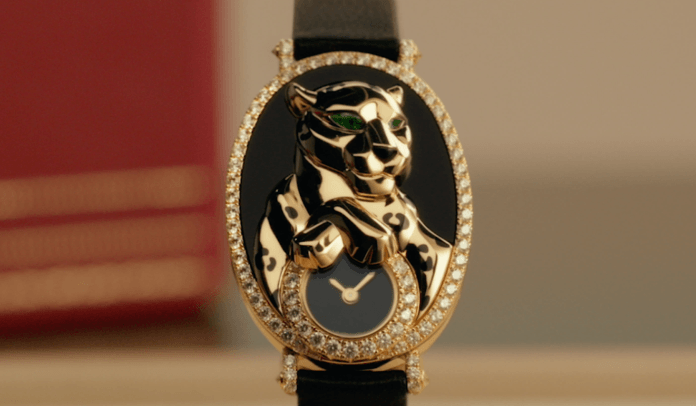
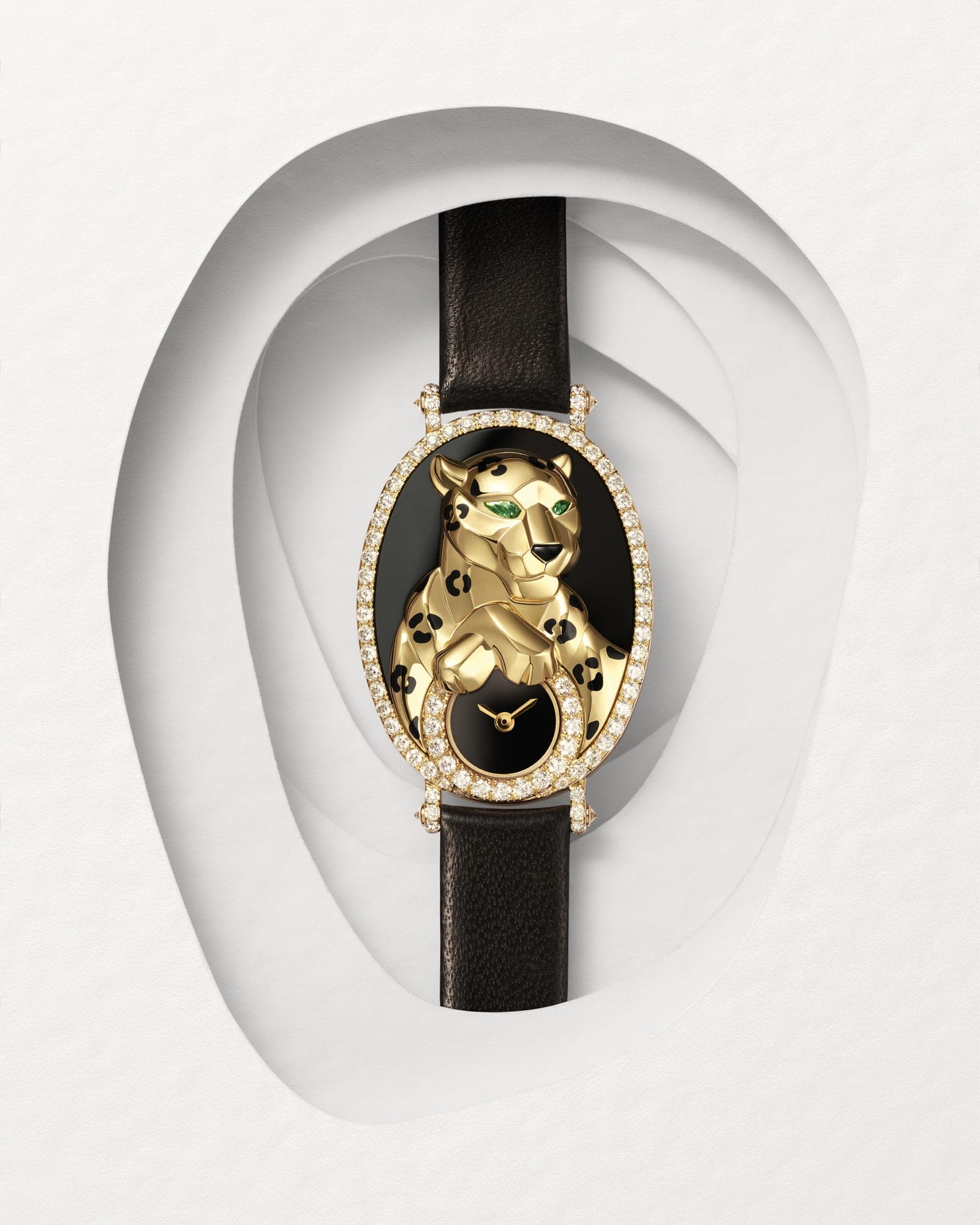
The panther also becomes part of a jewellery watch made at the maison’s Métiers d’Art workshop in La Chaux-de-Fonds. Inspired by cameo carving, the medallion-shaped piece places a sculpted panther over the dial. Onyx forms the nose and dial, tsavorite garnets create the eyes, and diamonds surround the bezel and four lugs. Black lacquer completes the markings.
The collection’s animal theme is also moving beyond jewellery. From Sept 1, Paris will see a 1,400-square-metre panther installed on the façade of the Hôtel-Dieu overlooking the Seine. Other interpretations are planned in London, Milan, Shanghai, Tokyo, Miami and New York.
The large-scale work reflects the same mix of craft used in the jewellery. Marquetry, ceramics, lacquer and mosaic are among the techniques used to recreate the panther at architectural scale. Cartier is also creating five short animal fables with sets made from materials including straw, glass marquetry, mosaic and paper sculpture.
For Cartier, wildlife has long been more than a decorative theme. It is one of the maison’s ways of experimenting with shape, materials and movement. Into the Wild continues that tradition, but its wider cast makes the point more clearly: after decades of the panther taking the lead, Cartier is making room for the rest of the animal kingdom.


