


The technology sector is poised for stronger earnings growth in 2027, supported by record global semiconductor demand, sustained artificial intelligence (AI) infrastructure spending and a multi-year expansion in wafer fabrication equipment (WFE) investments, according to Kenanga Investment Bank.
The research house maintained its positive outlook on the sector, citing improving demand across semiconductor equipment, inspection systems, storage solutions and data centre infrastructure, with capacity constraints becoming increasingly apparent among local technology companies.
Kenanga said its recent industry visits to Penang and Johor reinforced expectations that financial year 2027 (FY27) would mark a significant earnings turning point as new production capacity and customer programmes move into commercial operations.
However, it cautioned that future share price gains would depend increasingly on companies’ ability to translate AI-related investments into actual revenue and earnings rather than their exposure to the technology alone.
“We believe the next phase of re-rating will increasingly be driven by execution and earnings conversion rather than AI exposure alone,” Kenanga said in its technology sector report.
Kenanga highlighted the exceptional strength of global semiconductor demand, with sales reaching a record US$160 billion in August 2026, representing a 144.3% year-on-year increase.
For the first eight months of 2026, global semiconductor sales surged 103% to US$957 billion, already surpassing the industry’s previous full-year record.
The research house expects global semiconductor revenue to reach between US$1.5 trillion and US$1.6 trillion for the full year, driven by accelerating AI infrastructure deployment and an ongoing recovery in the memory market.
This demand is expected to sustain a prolonged investment cycle in WFE, supported by aggressive capital expenditure from hyperscale technology companies and capacity expansion in advanced semiconductor manufacturing.
Based on Kenanga’s projections, WFE capital expenditure outside China is expected to grow by 46% in 2026, followed by 41% in 2027 and 17% in 2028.
The projected expansion points to a sustained investment cycle extending beyond the current year, providing opportunities for Malaysian technology companies supplying equipment, components and related services to global semiconductor manufacturers.
Kenanga said recent meetings with technology companies in Penang and Johor indicated stronger management confidence, with customer orders increasingly exceeding the supply chain’s current delivery capacity.
Unlike previous recoveries concentrated in specific products or customers, the current upcycle appears broader, encompassing semiconductor equipment, inspection technologies, storage and data centre infrastructure.
The research house noted that companies were investing in additional machinery and expanding manufacturing facilities to meet customer requirements.
Businesses with readily available and qualified production capacity are expected to be better positioned to capture immediate orders.
Nevertheless, Kenanga said a significant portion of new capacity and customer programmes remains in the qualification process or early stages of production.
As these programmes progress towards higher production volumes, FY27 is expected to become a crucial year for earnings growth.
“The key question is increasingly shifting from whether demand is there to how quickly companies can execute and translate it into earnings,” it said.
Despite the technology sector’s strong share price rally since January, Kenanga cautioned that AI exposure alone would no longer be sufficient to justify premium valuations.
It said investors were likely to place greater emphasis on measurable operational progress, including customer qualification, equipment installation, production utilisation, revenue contribution and profitability.
While announcements involving new AI facilities, manufacturing lines and capacity expansion could continue to attract market interest, companies demonstrating tangible financial returns would offer a more sustainable investment proposition.
Kenanga believes the next phase of the technology sector’s valuation recovery will be driven primarily by earnings delivery rather than expectations surrounding AI investments.
Kenanga maintained its preference for front-end semiconductor-related companies, citing clearer earnings visibility as the global semiconductor manufacturing expansion continues.
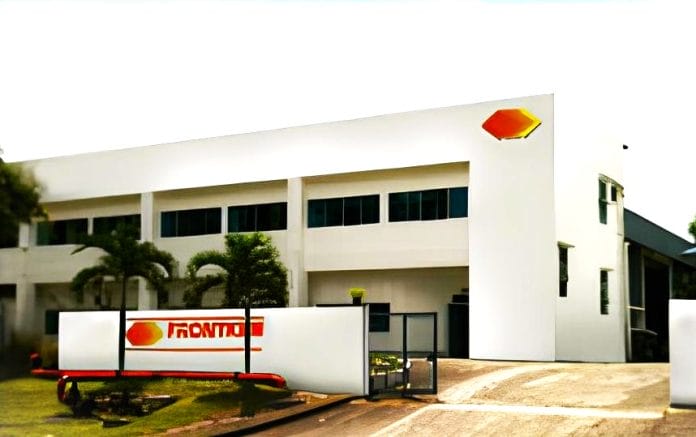
The research house favours Kelington, UWC, Frontken, NationGate and AMBEST for their exposure to semiconductor-related investment and their relatively clearer earnings outlook.
Meanwhile, Infomina remains Kenanga’s preferred AI software exposure, supported by its potential to convert early AI adoption into scalable and recurring earnings streams.
Although Kenanga remains optimistic about the technology industry’s medium- to long-term prospects, it cautioned that intermittent profit-taking and valuation pressures could persist.
The principal risks include elevated bond yields, tighter financial conditions and geopolitical uncertainties, rather than a deterioration in underlying semiconductor demand.
These external factors could trigger temporary share price corrections despite continued growth in AI infrastructure investments and semiconductor manufacturing capacity.
Kenanga said any near-term weakness would likely reflect broader financial market volatility, provided AI capital expenditure, semiconductor demand and global fabrication plant expansion remain intact.
Overall, the research house expects 2027 to be a defining year for Malaysian technology companies, with investors increasingly distinguishing between businesses benefiting from AI-related optimism and those successfully converting strong demand into sustainable earnings growth.


