



In the world of hospitality, tackling food waste isn’t just a trend—it’s a crucial step towards promoting conscious consumption and building a more sustainable future. A prominent international hotelier, Hilton is stepping up to the plate, aiming to slash its landfill waste by 50% by 2030, closely aligning with the United Nations’ Sustainable Development Goals of halving global food waste per capita by 2030. This ambitious goal is part of Hilton’s Travel with Purpose 2030 Goals, which also include emissions-reduction targets validated by the Science Based Targets initiative (SBTi) and aligned with the Paris Climate Agreement.
Through partnerships and innovative technology, the hotel chain is working to reduce food waste across its properties, reinforcing its commitment to build a more sustainable future for the hospitality industry. Supported by team members worldwide, including 62,000 in Asia Pacific, Hilton’s strategy promotes responsible travel and operations, tackling food waste while fostering positive social impact in the communities it serves.
Tackling Food Waste with AI-Powered Kitchens
In thsi aspect, Hilton is working with Winnow, an AI-enabled food waste solution, to bring AI technology into its properties within the Asia Pacific region. Winnow’s system measures daily food waste, helping the kitchen team better understand and manage the amount of excess food prepared. The system also reveals savings opportunities within food trimmings, and inspires the team to repurpose ingredients creatively, such as making bread pudding from leftover croissants. This helps chefs see exactly where food waste is coming from, how they can cut costs and therefore improve their practices and purchasing decisions.
Hilton Tokyo Bay was the first hotel in Japan to implement Winnow Vision, leveraging data analytics to reduce food waste since January 2020. Within the first four weeks of usage, the team cut food waste by 30%, saving over 17,016 meals and ¥3.3 million (approximately US$31,000) annually. As a result of Hilton Tokyo Bay’s success with Winnow, the technology has been installed across 15 more hotels in Japan.
Globally, 170 Hilton hotels across 29 countries have implemented the Winnow food waste measurement system, including Conrad Bali, Hilton Clark Sun Valley, Millennium Hilton Bangkok, DoubleTree by Hilton Shah Alam i-City, and Hilton Kuala Lumpur – with plans to expand this to 20 more Hilton properties in Southeast Asia this year. Winnow has been working with Hilton hotels since 2017 (Hilton Dubai Jumeirah). The combination of advanced AI technology and Hilton’s engaged culinary teams has already saved over 1 million meals from landfill, and has helped Hilton hotels save over US$2 million annually and reduce their carbon footprint by 2,050 tons of CO2e as of the end of 2023.
Transforming Blemishes into Benefits
While technology can often be a game-changer in creating new ways to address existing problems, seemingly simple actions can also make a difference. Take Conrad Centennial Singapore and Hilton Singapore Orchard, for example.
Conrad Centennial Singapore is addressing food waste by using “ugly vegetables” that might otherwise be thrown away, and tackling broader sustainability issues by incorporating plant-based eggs and meats on their menu.
From ‘ugly vegetables’ to gourmet meals – how Conrad Centennial Singapore and Hilton Singapore Orchard are leading the way in sustainable dining.
And the best part? Diners can also enjoy fresh veggies from local suppliers and urban farms, supporting local businesses and reducing carbon emissions while at it. Conrad Centennial Singapore sources produce from a local vertical farm in a bid to reduce the hotel’s carbon footprint by procuring a significant portion of the hotel’s vegetables locally, while Hilton Singapore Orchard maintains an herb garden on property at Osteria Mozza. The Californian-Italian restaurant adopts a garden-to-table concept to grow herbs such as rosemary, basil and mint leaves which are used in dishes and cocktails as garnishes. Hilton Singapore Orchard also has an Eco-Wiz ecoDigester on premises, allowing the decomposition process of food waste to be sped up and eventually responsibly disposed into the sewage system.
Commitment to A Circular Economy
Conrad Singapore Orchard’s commitment to a circular economy shines through in their waste management practices. By harnessing the power of food digesters, the hotel has successfully diverted food waste from landfills and incinerators. This innovative solution transforms organic waste into valuable resources, effectively minimizing the hotel’s environmental footprint.
In addition, the hotel actively combats food waste by donating surplus pastries to Food from the Heart daily. These initiatives underscore Conrad Singapore Orchard’s dedication to nourishing both our community and the planet.
Giving Food Surplus a Second Life
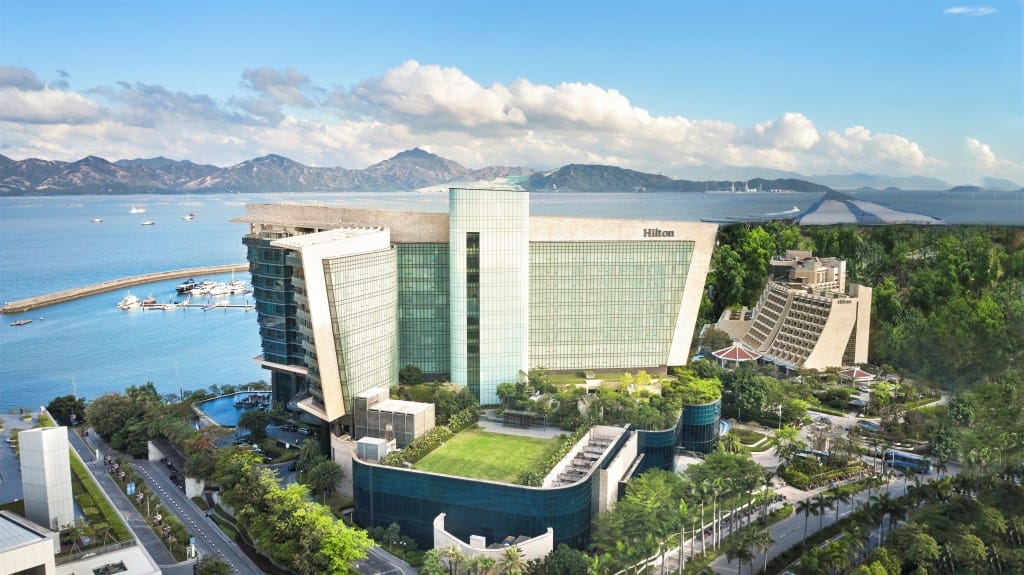
Hilton Shenzhen Shekou Nanhai is taking a big step forward in sustainable practices by scaling up circular food production and keeping food waste in check, by using smart kitchen waste treatment equipment to turn kitchen waste into carbon dioxide, water and organic fertilizers.
Turning kitchen waste into green gold – Hilton Shenzhen Shekou Nanhai’s innovative approach to food waste.
What’s even smarter is how the property is using these byproducts — the organic fertilizers are not only put to good use in the hotel’s organic ecological garden, but also within neighboring communities. Since the installation of this smart equipment in 2021, the hotel has recycled 290 tons of kitchen waste and produced approximately 25 tons of organic fertilizer.
Rescuing Meals, Restoring Hope with Scholars of Sustenance
Teamwork is crucial when it comes to reducing food waste. In Asia, Hilton partners with food banks, charities, and waste management companies to ensure surplus food goes to people who need it. An example is Scholars of Sustenance (SOS), one of the recent grantees of the Hilton Global Foundation (HGF) who work with Hilton properties in the Philippines, Thailand, and Indonesia to donate cooked food to food banks and soup kitchens.
In Thailand, Hilton’s partnership with SOS Thailand has been going strong since April 2020. Using surplus ingredients, chefs from DoubleTree by Hilton Sukhumvit Bangkok made 210 meals, which were then delivered to the Baan Mankong Kalayanamit community in Bang Sue, a low-income neighborhood where many residents are struggling due to job losses and food shortages.
Hilton hotels in the Philippines and Indonesia donate surplus food to local food banks and soup kitchens that go to underprivileged members of local communities. In 2023, over 31,000kg of food was donated, resulting in more than 131,000 meals and almost 60,000kg of CO2 being diverted. To date, Hilton has also reduced its global contribution to landfill waste by diverting more than 308,000 pounds of waste.
Leveraging Technology, Fostering Partnerships, and Adopting a Circular Approach for a Better Future
Hilton’s LightStay management platform is another perfect example. It’s used across all its properties to gather precise data on food waste, spot inefficiencies, and take targeted actions to cut down waste.
As awareness grows and regulations tighten, Asia’s hospitality industry is poised to lead in sustainable practices, particularly in reducing food waste. By embracing technology, fostering partnerships, and transparently reporting our sustainability efforts, hotels can minimize their environmental impact while enhancing their operations.


