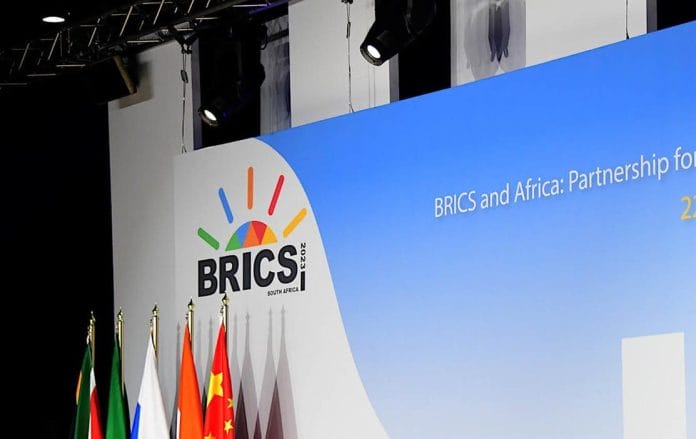
BRICS continues to gain prominence as a stabilising force in an increasingly fractured world, amplifying the voices of countries long marginalised in global decision-making processes.
According to a recent report by the Xinhua Institute titled “BRICS Cooperation: Advancing the Collective Progress of the Global South”, the bloc presents a meaningful path for the Global South to pursue shared prosperity amid a complex international environment.
The think tank, affiliated with China’s Xinhua News Agency, provides a thorough overview of BRICS’s evolution, major accomplishments and current relevance. It argues that BRICS, with its inclusive and cooperative framework tailored to emerging economies, adds collective momentum to the Global South’s development.
With enhanced appeal, growing diversity and stronger geographical representation, the expansion of BRICS is reshaping the global political and economic landscape. In January, Indonesia, ASEAN’s largest economy, officially joined the bloc.
BRICS nations now represent more than half of the world’s population, nearly 30% of global GDP, and over 50% of global economic growth, signifying a historic shift of Global South power from the periphery to the centre of the global stage.
The report underscores the leadership and responsibility BRICS nations have taken on as frontrunners of the Global South, especially in development issues and global governance reform.
Greater BRICS cooperation has not only highlighted development priorities of emerging economies but also fostered dialogue on equal footing. It reflects a growing consensus that multilateral solutions must include a broader range of voices, especially those historically excluded.
The bloc offers a hopeful and practical development model via infrastructure investments, technology transfers, and financial integration. For members of the Global South struggling with infrastructure gaps, food insecurity and climate challenges, BRICS provides support that has otherwise been limited.
More importantly, BRICS advocates fairness and justice in global governance. It speaks with one voice for shared progress, mutual respect and sovereign equality, while firmly opposing the formation of exclusive “small blocs.”
The countries are committed to practising true multilateralism, upholding the international system with the United Nations at its core, and strengthening the multilateral trading system centred on the World Trade Organisation.
Within international platforms such as the United Nations and G20, BRICS nations have advanced reform efforts by coordinating positions and strengthening policy dialogue, enhancing the voice, agenda-setting power and influence of developing nations in shaping international rules.
At its core, BRICS champions a more equitable world, where inclusive development replaces exclusion, and collective voices outweigh singular dominance in determining humanity’s future.