


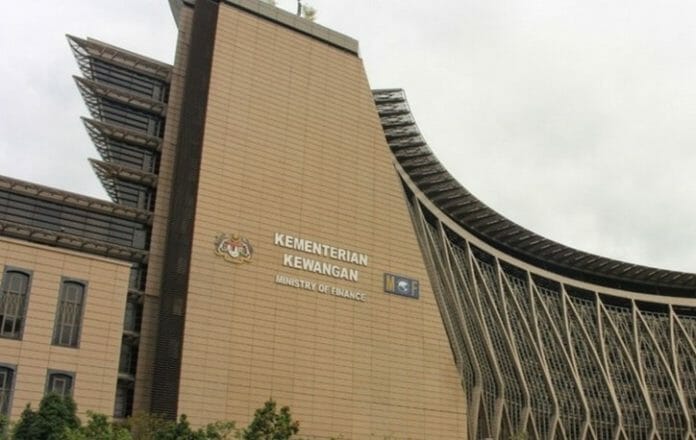
Malaysia’s fiscal deficit is projected to see only a marginal narrowing from 4.1% of its Gross Domestic Product (GDP) in 2024 to 4.0% in 2025, according to a recent report by BMI, a Fitch Solutions company. This forecast is wider than the government’s own projection of 3.8% for 2025 and is expected to delay policymakers’ ambition to reduce the deficit to 3.0% by 2028.
BMI’s assessment suggests that total government debt, while increasing in recent years, remains just below the revised statutory ceiling of 65% of GDP, standing at 64.0% in 2024. For now, this poses limited fiscal risks, although the report anticipates public debt to continue rising in the coming years. A key mitigating factor highlighted by BMI is that over 97% of Malaysia’s total debt is denominated in Ringgit, significantly minimizing currency-mismatch risks.
Revenue Under Pressure from Subdued Growth and Oil Prices
BMI forecasts Malaysia’s revenue to amount to 16.4% of GDP in 2025, a slight decrease from 16.8% in 2024. This anticipated dip is largely attributed to subdued economic activity, which is expected to constrain tax collection. BMI’s own 2025 real GDP growth forecast stands at 4.2%, falling below the government’s more optimistic target of 4.5%-5.5%.
Furthermore, petroleum-related revenue is expected to ease. While policymakers had projected it to decrease from 3.2% of GDP in 2024 to 3.0% in 2025 based on an assumption of oil prices trading between USD75/bbl and USD80/bbl in 2025, BMI deems this outlook “too optimistic.” With Brent Crude averaging USD69.9/bbl in the first half of 2025 and BMI’s Oil & Gas team forecasting a full-year average of USD68/bbl, it is likely that petroleum income tax (PITA) will undershoot budget expectations.
Expenditure Likely to Exceed Projections
BMI suspects that Malaysian policymakers will once again overshoot planned expenditure in 2025, a trend consistent with recent years. Several factors could contribute to this:
- RON95 Subsidy Rationalisation: As of July 11, details surrounding the RON95 subsidy rationalisation plan remain scant, introducing uncertainty into the expenditure outlook.
- Electricity Tariff Hike: A 14% increase in electricity tariffs, effective July 1, could add pressure on public coffers. Despite the adjustment likely not affecting most households directly, Malaysia’s imbalance cost pass-through system often compels the government to intervene and further subsidize utility costs beyond the MYR6.0 billion (USD1.84 billion) allocated for the first half of 2025.
These factors combined suggest a challenging path for Malaysia to achieve its ambitious fiscal consolidation targets in the near term.

