



Malaysia has transformed into one of Southeast Asia’s most cashless-savvy nations. From busy malls in Kuala Lumpur to fish markets in Kelantan, QR codes are a familiar sight. Quietly driving this cashless shift is Payments Network Malaysia Sdn Bhd (PayNet), the country’s national payments network.
August marks a milestone for PayNet — eight years since it was established to unify and strengthen Malaysia’s payment systems. Majority-owned by Bank Negara Malaysia (BNM), together with 11 local banks, PayNet serves as the country’s trusted payments backbone.
As an entity focused on serving the public good, PayNet is the invisible engine of Malaysia’s digital economy. In 2024, PayNet processed transactions worth 3.8 times the country’s gross domestic product (GDP), through reliable services such as DuitNow, MyDebit, and FPX.
“The best payment systems are the ones you don’t notice. They just work. Our job at PayNet is to make sure every transaction, whether it’s at a kampung stall or with a global merchant, is instant, secure, and accessible to all Malaysians. That reliability is what keeps Malaysia’s economy moving,” said Teh Lip Guan, PayNet’s Chief Technology Officer.
Every day, more than 13 million transactions are processed through PayNet’s rails, enabling Malaysians to pay, get paid, and do business seamlessly, anywhere in the country and beyond.
Where It All Began: The 2017 Merger
PayNet was formed in 2017 from the merger of BNM subsidiary MyClear and the Malaysian Electronic Payment System (MEPS), owned by a consortium of domestic banks. The goal was to build an efficient, innovative, and competitive national payment infrastructure to accelerate Malaysia’s shift to e-payments while future-proofing the system.
Today, PayNet powers some of Malaysia’s most-used financial tools, such as the national real-time payments platform, DuitNow, which enables instant payments and transfers for bank accounts and e-wallets via QR code, mobile number, or identity card (IC) number.
PayNet also operates Interbank GIRO for account-to-account transfers, JomPAY for bill payment, MyDebit for cashless payments via debit card, and FPX for online bank payment. Together, PayNet’s platforms processed 6.1 billion transactions in 2024 and are on track to break the eight billion mark in 2025.
Cashless Convenience for the Rakyat
A core principle of PayNet’s mission is financial inclusion. PayNet works to ensure the rakyat, from underserved communities to micro, small and medium enterprises (MSMEs), have access to digital financial services.
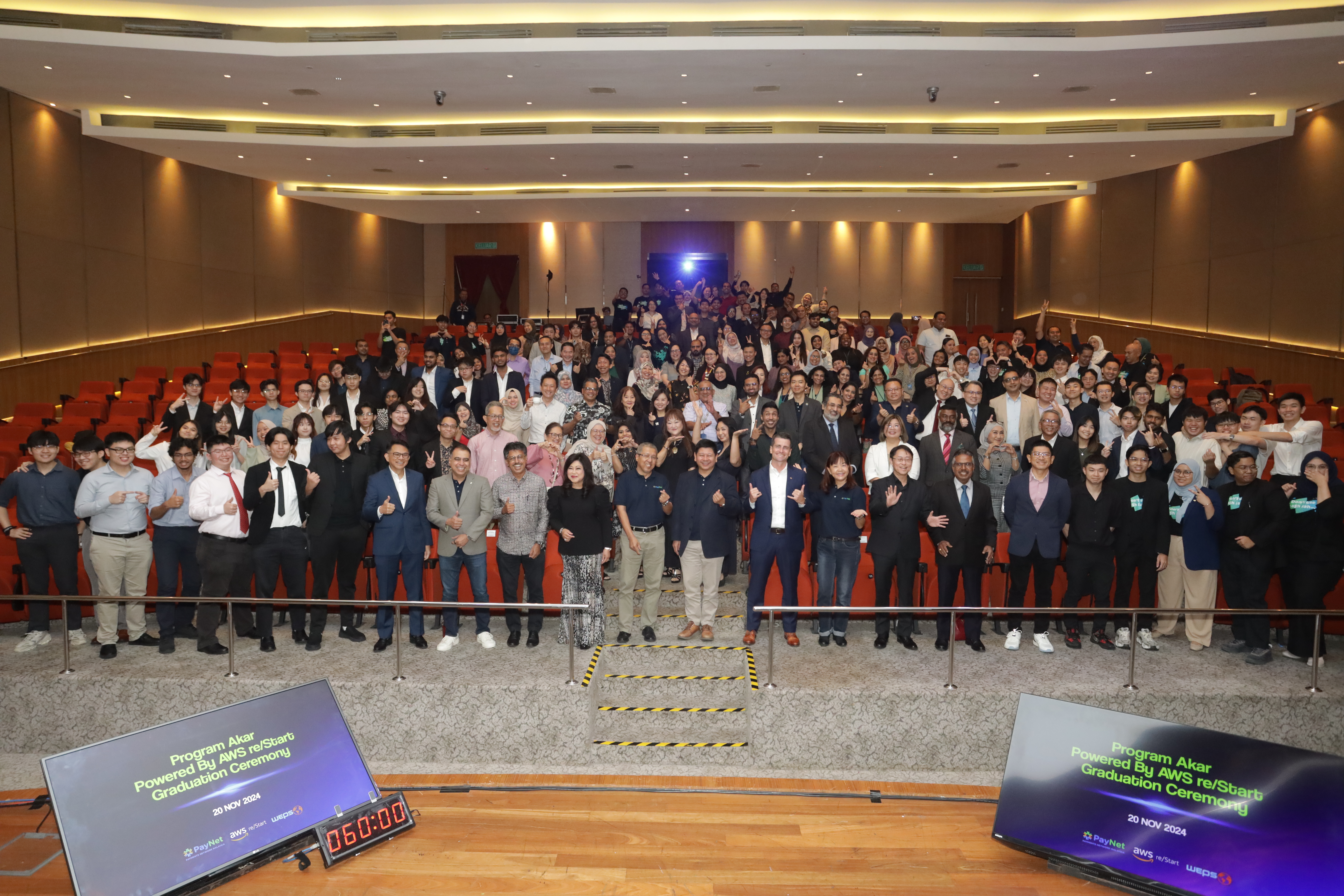
Environmental, social, and governance (ESG) initiatives include PayNet Akar, which upskills talent to funnel into Malaysia’s financial services industry through practical training, leadership development, and industry exposure. PayNet Akar first kicked off in 2024, partnering with Amazon Web Services to equip students with cloud skills. This year, PayNet partnered with Microsoft to train students in AI and data science.
Complementing these ESG efforts is PayNet Cambah, which has grown beyond Langkawi to support micro-entrepreneurs and social enterprises across Malaysia, including Johor, Pahang, and Sabah. By working with local collaborators, Cambah helps businesses upskill, digitalise, adopt digital payments, and enter new markets.
In Langkawi, at least 134 B40 households, mainly single mothers, have been supported through zero-waste fashion training and cashless solutions. Similar pilot initiatives are now underway in Batu Pahat, Gambang, and Kota Marudu, reflecting PayNet’s commitment to nurturing grassroot communities in a sustainable and scalable way.
Building on these ESG initiatives, PayNet’s drive for digitalisation spans across the country, with more than 2.6 million DuitNow QR touchpoints, while empowering more than 450,000 MSMEs with digital payments. From roadside vendors to markets, these efforts are helping businesses go cashless, widen their consumer reach, and strengthen their place in the digital economy.
Seamless Payments Without Borders
As cashless adoption deepens at home, PayNet’s reach now extends across the region. It has integrated Malaysian merchants into the regional digital economy through QR code interoperability with systems in Singapore, Thailand, Indonesia, China, and Cambodia. This interoperability enabled 4.1 million cross-border QR payments in 2024.
PayNet also supports Project Nexus, a Bank for International Settlements (BIS) Innovation Hub initiative in collaboration with BNM. Nexus aims to streamline cross-border payments by linking real-time payment systems globally, positioning Malaysia as a key player in the future of instant cross-border commerce. This will further enhance the country’s seamless cross-border capabilities, supporting Malaysia’s goal to become a digital payment hub in Southeast Asia, while providing frictionless spending for tourists.
In parallel, PayNet works to protect Malaysians from scams and fraud across all payment channels. In 2024, BNM, PayNet, and financial institutions launched the National Fraud Portal (NFP). The platform, developed by PayNet with the National Scam Response Centre (NSRC), has slashed the time to trace stolen funds by 75% and increased mule account detection by 45%.
Powering Public Services and Fintech Innovation
PayNet also supports the digital transformation of Malaysia’s public and private sectors. Its annual Cashless Boleh campaign, in collaboration with the Ministry of Finance, has driven widespread e-payment adoption. The most recent iteration, Cashless Boleh 4.0, achieved 139 million digital transactions across 20 federal bodies (86% penetration) and 46 million digital transactions across eight state governments (92% penetration) over a one-year period. By enabling cashless payment options for government services, PayNet has helped to streamline processes for the ease of the rakyat.
Building on this momentum, PayNet is also driving innovation through its Fintech Hub, an ecosystem which connects startups with banks, tech partners, and investors. Designed to accelerate local fintech development and collaboration, the Hub is a supportive platform linking startups with financial institutions, tech players, and investors.
The Hub fuels Malaysia’s ambition to become a regional fintech powerhouse through its COMMUNITY and CATALYST programmes. This fintech-focused initiative not only connects members to key industry players but also gives startups exposure to funding opportunities, financial incentives, and chances to learn from and collaborate with global ecosystem players.
Shaping Malaysia’s Digital-First Future
Beyond being the backbone for financial transactions, PayNet is steadily shaping Malaysia’s digital future. From kampung hawkers to global commerce, PayNet has laid the rails for progress that is inclusive, secure, and scalable.
As it marks its eighth year, PayNet continues to lead with purpose to make every payment count towards the nation’s shared prosperity. The goal is to ensure everyone in Malaysia — locals and tourists alike — can transact with ease. But PayNet’s impact extends further. It empowers people and merchants across the region, supports the digitalisation of micro and small businesses, safeguards Malaysians against scams, and creates education opportunities for youth.
In doing so, PayNet goes far beyond enabling payments. It uplifts the rakyat and strengthens the very foundations of Malaysia’s economy, while shaping a payment ecosystem that will anchor the country’s position as a regional leader in the digital economy for years to come.


