


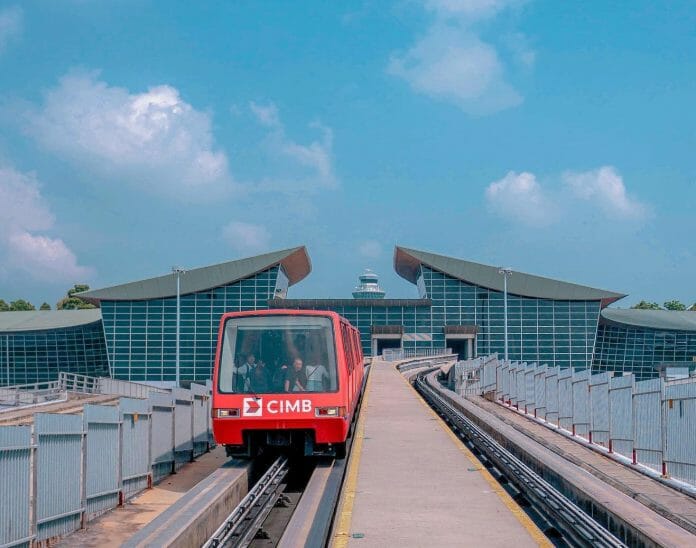
Malaysia Airports Holdings Berhad (MAHB) has confirmed that the aerotrain service disruption at Kuala Lumpur International Airport (KLIA) Terminal 1 this morning was caused by a failure in the system’s power storage unit.
This is not the first time, but it is becoming quite embarrassing at this point, after MAHB spent hundreds of millions and shut down the service for more than 2 years.
The KLIA aerotrain, which connects the main terminal to the satellite terminal, has been plagued by persistent breakdowns despite major upgrades costing RM456 million. The project — which includes new trains and extensive overhaul work — faced cost adjustments due to interest rates, foreign exchange movements, and re-mobilisation expenses.
The system was offline for about 28 months before its relaunch in July this year. On October 22, MAHB stated that it would take serious action against the contractor responsible for ongoing repair issues, following repeated disruptions.
MAHB noted that since its return to service, there have been three incidents requiring temporary service suspension — on 12 July, 3 September, and 15 October — with passengers safely escorted to the terminal in accordance with airport safety protocols. However, it did note in the statement that the disruptions did not affect flight operations, as passenger movement between terminals continued via shuttle bus services.
“All incidents, including minor ones, are logged and reported to the authorities under the Ministry of Transport. Only these three events required a temporary pause in service,” MAHB said.
According to MAHB, the July and September disruptions were traced to a dislodged Current Collector Device (CCD), which disrupted the power feed along the guideway and caused train stoppages. These incidents fall under the responsibility of Alstom, the aerotrain’s main contractor, which oversees the train and traction systems.
Meanwhile, the 15 October incident — now under preliminary investigation — was linked to a power trip affecting both guideways, an issue within the scope of the IJM-Pestech Joint Venture (IPJV), responsible for the power distribution and installation works.
All three incidents occurred during the Defect Liability Period (DLP), meaning the contractors remain fully accountable for system reliability, rectification, and performance.
MAHB said it has held multiple joint technical meetings with Alstom and IPJV’s senior management to identify root causes and expedite permanent solutions. The company also announced plans to appoint an independent assessor to conduct a comprehensive review of the power supply design, installation integrity, and overall system reliability.


