


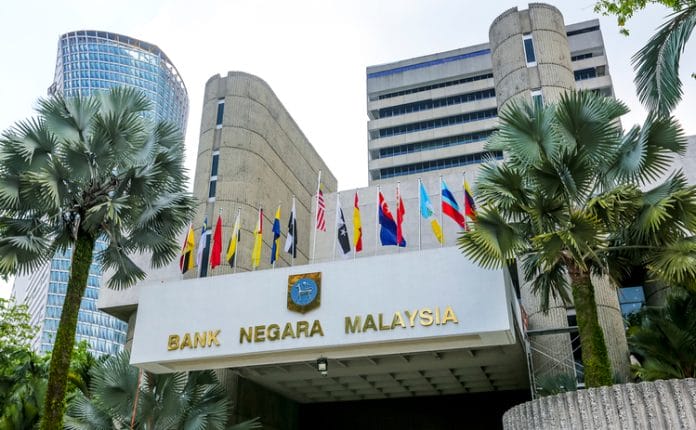
Bank Negara Malaysia (BNM) has reiterated that its close consultations and data-sharing agreement with the US Treasury do not compromise its ability to independently set monetary policy or manage the stability of the ringgit.
The central bank said the arrangement merely reflects long-standing practices also observed by other major US trading partners, including Thailand, Japan, South Korea and Switzerland.
In response to Bernama’s query, BNM explained that it has routinely shared foreign exchange (FX) intervention data with the US Treasury on a semi-annual basis, allowing the US to cite the figures in its FX Reports published every June and November.
“Bilateral cooperation has been instrumental in ensuring Malaysia is not grouped with countries perceived as having non-transparent FX policies,” the central bank said.
BNM stressed that the disclosures do not contain sensitive information and do not impede its ability to conduct FX interventions when necessary to manage excessive volatility and preserve the stability of the ringgit.
“The ability to conduct FX intervention as a policy tool to stem excessive exchange rate volatility remains intact and is expressly acknowledged in the agreement with the US Treasury,” BNM said.
It emphasised that monetary policy remains independently formulated and implemented under the Central Bank of Malaysia Act 2009, with the overnight policy rate (OPR) as the main tool for maintaining price stability conducive to economic growth.
BNM reiterated that the ringgit exchange rate is not a monetary policy target, adding that it maintains a long-standing stance against using the ringgit to gain trade competitiveness. The Monetary Policy Committee (MPC) only considers exchange rate movements insofar as they affect the outlook for inflation and domestic growth.
The clarification follows the announcement yesterday that BNM and the US Treasury agreed to continue close consultations on macroeconomic and FX matters. Both parties also reaffirmed their commitment under the International Monetary Fund (IMF) Articles of Agreement to avoid manipulating exchange rates or the global monetary system for unfair competitive advantage or to prevent balance of payments adjustments.


