When people talk about Federal Territory Day, the focus is almost always on Kuala Lumpur or Putrajaya. Labuan rarely comes up in the conversation. That has always felt strange to me because Labuan is probably the most interesting of the three Federal Territories.
Labuan is a duty-free island with a strong industrial role, a history shaped by colonial rule and World War II and a way of life that still feels personal and close-knit. Federal Territory Day here is not just about status. It is about why this island was chosen, what that decision changed and how Labuan continues to balance development with identity.
Why Labuan Became a Federal Territory
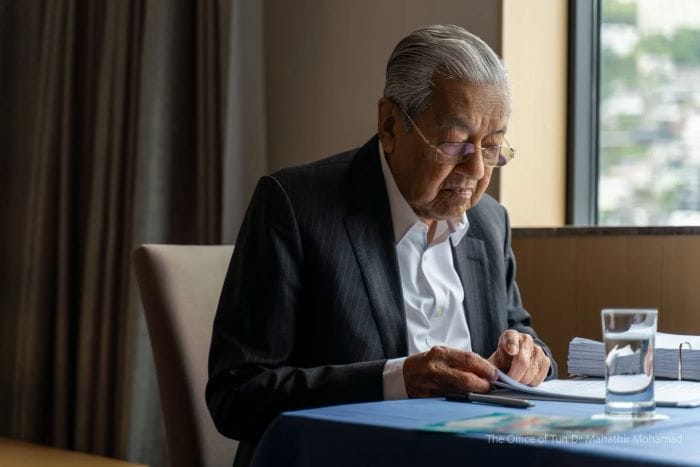
Labuan became a Federal Territory in 1984 after Sabah ceded the island to the federal government through an agreement signed by Sabah’s Chief Minister and then Prime Minister Dr Mahathir Mohamad. From that point on, Labuan was placed under direct federal administration.
At the time, Sabah had limited capacity to develop Labuan’s infrastructure and compete with established regional ports and financial centres. Making Labuan a Federal Territory allowed faster development, clearer planning and stronger investor confidence. By 1990, Labuan was designated an International Offshore Financial Centre and a free trade zone.
Whenever Federal Territory Day comes around, I am reminded that Labuan’s status was never just symbolic. It was a strategic move meant to give the island a clear economic role at the national level.
The History
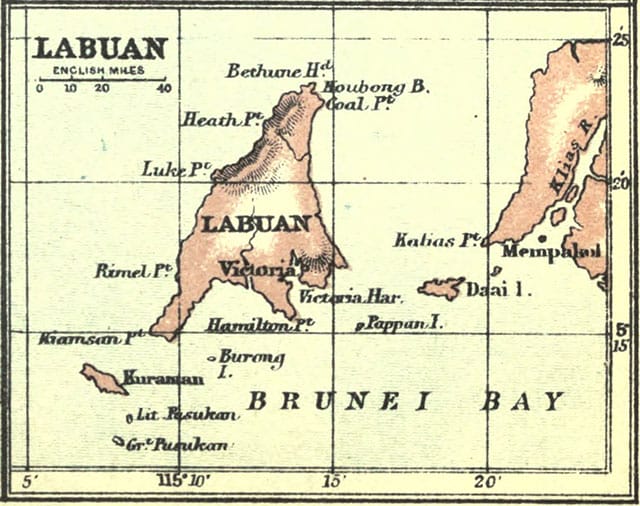
Long before Labuan became a Federal Territory, it was already shaped by centuries of outside influence. After the fall of the Majapahit Empire in the early 16th century, Labuan came under the rule of the Brunei Sultanate.
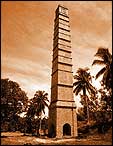
By the early 1840s, the island had caught British attention, largely because of its strategic location and potential as a naval base to protect regional trade routes and curb piracy.
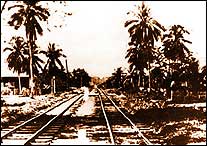
Labuan was formally ceded to the British in 1846 and soon became a crown colony and free port. Coal mining followed, along with early infrastructure like one of the region’s first railway lines built to move coal from Tanjung Kubong to Victoria Harbour.
Labuan’s administration changed hands several times after that, moving between crown colony status and control by the British North Borneo Chartered Company. During World War II, the island was occupied by Japanese forces and renamed Pulau Maida.
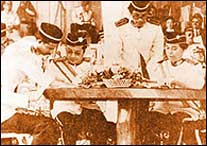
In 1945, Allied forces landed in Labuan, leading to Japan’s surrender at what is now known as Surrender Point.
After the war, Labuan was returned to North Borneo, its duty-free status was reinstated in 1956, and in 1963 it became part of Malaysia alongside Sabah and Sarawak. All of this came before the island was finally transferred to the federal government in 1984, setting the stage for the role it plays today.
What Federal Territory Status Actually Brought
Being a Federal Territory changed Labuan in very real ways. The island offers a 3 percent corporate tax rate for trading companies, tax exemptions for non-trading offshore income, full foreign ownership and duty-free status with no import or export tariffs.
These incentives helped shape Labuan into a hub for offshore finance, insurance, oil and gas services and maritime logistics. With a population of only about 40,000, Labuan contributes far more economically than people expect, with GDP figures around RM3.63 billion in recent data. It also plays a role in supporting economic activity in Sabah and Sarawak.
To me, Federal Territory Day is a reminder that Labuan exists the way it does today because of a long-term federal decision that still affects jobs, investment and daily life.
A Federal Territory with a Past People Forget
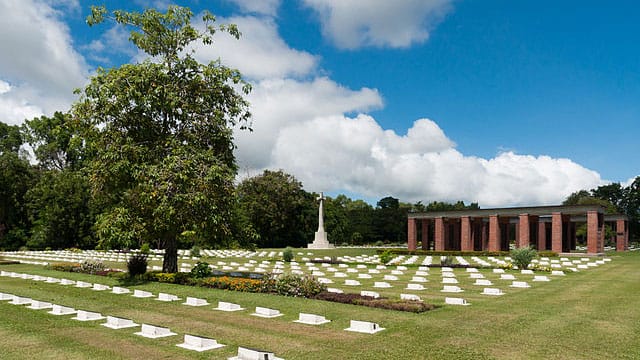
What many people do not realise is that Labuan’s story did not begin in 1984. The island was once part of the Straits Settlements under British rule before becoming part of North Borneo in 1946.
Labuan is also home to Malaysia’s largest World War II war cemetery, where more than 3,900 Allied soldiers are buried. It is a quiet place, but it says a lot about how strategically important this island once was.
Then there is the Chimney. Standing at 32 metres tall and built with over 23,000 bricks brought in from England, it is one of Labuan’s biggest mysteries. It is not really a chimney and not a lighthouse either. Its true purpose is still unclear, though it is often linked to the island’s coal mining past. For me, it symbolises how much of Labuan’s history is still not widely known.
Tradition Still Has a Place Here
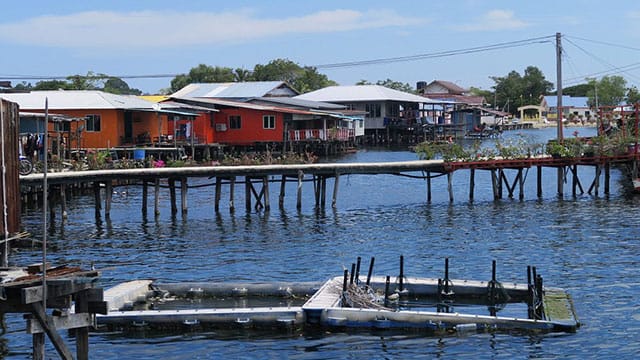
Despite being an offshore financial centre, Labuan has not lost all of its traditional communities. Kampung Patau-Patau 2 remains the last floating village in Malaysia, home mainly to Brunei Malays who still live in stilt houses over the water and travel by boat every day.
I find this contrast fascinating. In the same Federal Territory, you can see international business offices, shipyards and a village where life still depends on the sea and the tide.
Federal Territory Day Beyond Politics
Federal Territory Day in Labuan does not feel loud or grand. It feels reflective. The island moves at a slower pace, and the day often becomes about community rather than ceremony.
Places like the Chimney Museum, the Labuan War Cemetery, Kampung Patau-Patau 2 and the Labuan Botanical Garden remind me that Labuan is shaped by more than economics. Nature, history and culture are just as much a part of its identity.
Food plays a role too. Labuan is known for its seafood, especially salted egg or butter crabs at Anjung Ketam. Mawilla Yacht Club is popular for oysters, prawns and even lamb curry, while Nagalang Seafood is a go-to for tom yum and steamed barramundi. Local favourites like kuih sapit, kuih jala, satay, Mortar Laksa and durian cheesecake are just as much a part of island life.
What Federal Territory Day Means to Me
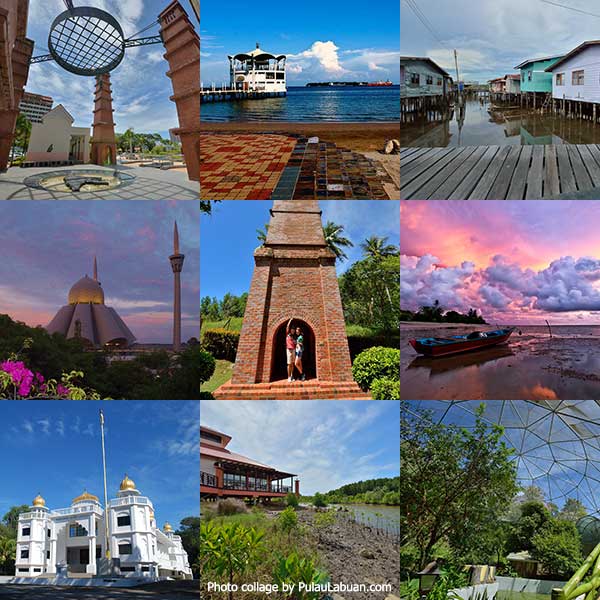
For me, Federal Territory Day in Labuan is about accountability. It is about asking whether the reasons Labuan was made a Federal Territory are still being honoured and how federal support can continue without losing what makes the island special.
Labuan proves that a Federal Territory does not have to look like a capital city. It can be a small island that carries national economic ambitions while still holding on to its history, environment and community.
When Federal Territory Day comes around, I think Labuan deserves more attention. Not because it wants the spotlight, but because its story shows that federal identity in Malaysia can take many different forms.