


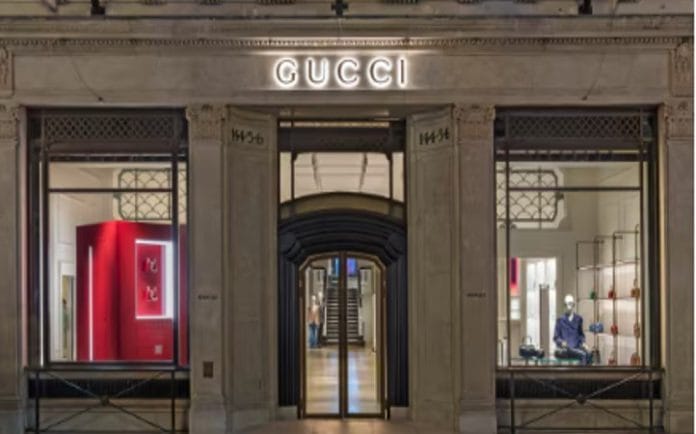
Gucci’s slowdown is adding fresh pressure on its parent company Kering, as the luxury group looks to reverse years of underperformance. According to Bloomberg, comparable sales at Gucci fell 10% in the final quarter of 2025, broadly in line with analyst expectations and underscoring the continued cooling of luxury demand, particularly in China.
The weak finish capped a difficult year for Kering’s largest brand, which still accounts for around 60% of the group’s profit. Once the main driver of growth, Gucci has struggled to keep pace as consumers become more cautious and fashion cycles accelerate. The wider luxury market offers little relief, with hopes of a sector-wide rebound continuing to fade.
That mood shift was reinforced last month when rival LVMH reported disappointing fourth-quarter results. Its chief executive, Bernard Arnault, struck a restrained tone on the outlook for the year ahead, signalling that the post-pandemic boom is firmly in the rear-view mirror.
Kering is now betting on new leadership to change the narrative. Luca de Meo took over as chief executive in September, inheriting a group that has lagged competitors despite its stable of high-profile brands, including Yves Saint Laurent and Balenciaga.
Investors initially backed the appointment — shares rose sharply last year — but the stock is down 14% so far this year as patience wears thin.
De Meo has wasted little time making changes. He reshaped Gucci’s leadership early on, appointing long-serving executive Francesca Bellettini as chief executive, and later agreed to sell Kering’s beauty business to L’Oréal for €4 billion to cut debt and refocus on fashion. His full strategy is due in April.
For now, attention is on Gucci’s next move. Later this month, the brand will unveil designer Demna’s debut collection at Milan Fashion Week, a moment closely watched by both the industry and investors.
The stakes are high: Gucci’s recurring operating income fell 40% last year to €966 million, slightly ahead of forecasts but still a sharp drop. Whether creative change and tighter management can restore momentum is the question hanging over Kering’s year ahead.


