


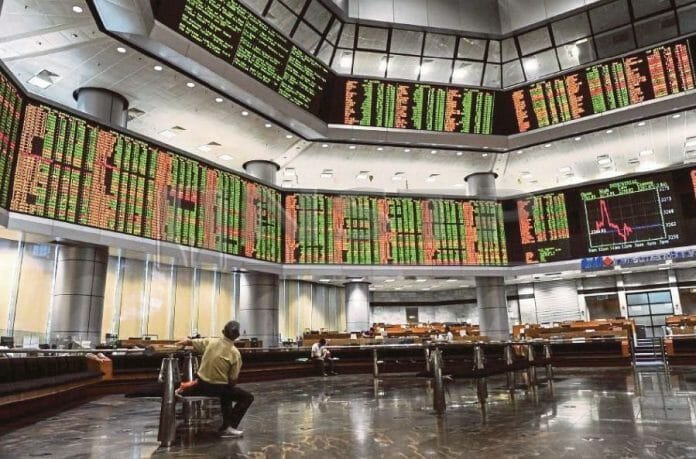
As global investors grapple with a volatile rotation out of high-priced U.S. software stocks, Southeast Asian (SEA) equity markets are emerging as a resilient haven. A new report from BMI reveals that the region’s unique sector diversification and focus on physical AI infrastructure are shielding it from the “AI commoditisation” fears currently rattling Wall Street.
The Valuation Gap: A Safety Buffer
The divide between the U.S. and Southeast Asia is most visible in the numbers. While U.S. software and SaaS (Software-as-a-Service) firms continue to trade at a demanding price-to-earnings (P/E) ratio of 28, major Southeast Asian indices are trading at a more conservative average P/E of 14.
This “valuation cushion” means that while U.S. indices—heavily concentrated in large-cap software—remain vulnerable to shifting sentiment, SEA markets are anchored by traditional sectors like banking, industrials, and hardware.
Volatility Comparison: APAC vs. U.S.
The report highlights a significant difference in market sensitivity (Beta) over the last two years:
Region/Sector Raw Beta (Relative to Benchmark) Risk Profile APAC IT Sector 0.83 (vs. Emerging Asia) Muted / Less Volatile iShares Software ETF 1.324 (vs. S&P 500) High / 30% more volatile than market
Unlike the U.S. market, which is currently bifurcated between software winners and losers, Southeast Asia is capturing “upstream” value. The region is positioning itself as the engine room for the global AI buildout through massive investment in data centers.
- Singapore: Remains the regional leader but faces land and power constraints.
- Malaysia & Indonesia: Emerging as the primary beneficiaries of Singapore’s “supply crunch,” with significant activity flowing into Johor (Malaysia) and Batam (Indonesia).
This focus on hardware and physical infrastructure makes the region less susceptible to the “Citrini-style” bear case, which suggests that Large Language Models (LLMs) may lack user loyalty and erode the pricing power of existing software platforms.
Identifying the Risks
While the outlook is generally stable, the report warns that the region is not entirely immune. The Philippines, a global hub for call centers, faces a significant risk. As “Agentic AI” (AI that can perform complex tasks autonomously) matures, routine workflow automation could lead to job losses in the IT outsourcing segment.
Companies within Telecoms and Banking that rely heavily on legacy software for customer service remain exposed to sentiment shocks, even if they lack “pure” software exposure.
“SEA’s IT outsourcing industry could face significant job losses as agentic AIs automate less complex tasks within a major employment segment for the region,” the report notes.
The Bottom Line
While the Malaysian KLCI Index has retreated 6% from its January highs—partly due to geopolitical tensions like the U.S.-Iran conflict—it remains up 20% since the “Liberation Day” lows.
By prioritising deep AI-driven business transformation over simple incremental digitization, and by dominating the hardware supply chain, Southeast Asia is proving that a “traditional” sector weighting might be the best defense against a high-tech selloff.

