


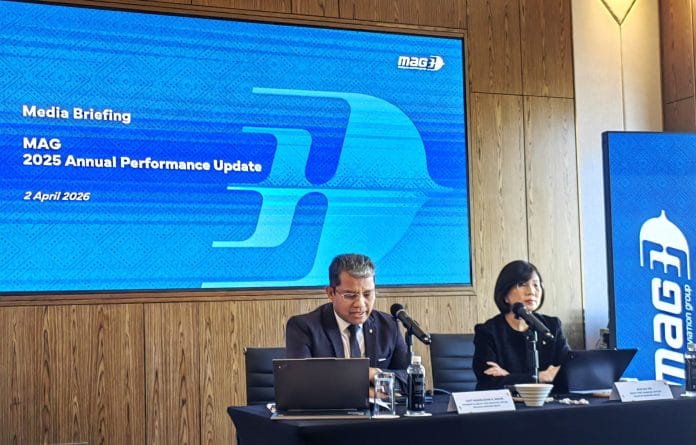
Airfares are set to remain elevated across key routes as geopolitical conflicts continue to disrupt global aviation flows, with Malaysia Aviation Group Bhd (MAG) signalling that ticket prices will stay closely tied to supply-demand imbalances rather than short-term cost shocks.
President and Group Chief Executive Officer Captain Nasaruddin A Bakar said the group is not rushing into blanket capacity cuts despite rising fuel costs, opting instead for a more agile, demand-driven approach to pricing and network planning.
“We are seeing very strong demand today, with load factors reaching up to 90% on certain sectors,” he told BusinessToday during the group’s 2025 financial performance update on April 2.
Rather than committing to fixed fare hikes, Captain Nasaruddin emphasised that MAG is leaning on dynamic pricing, a model widely used across the airline industry, where ticket prices fluctuate based on real-time demand and available capacity.
“With that, there are certain changes in fares, and we will continue to review and adjust accordingly. It is purely based on supply and demand,” Captain Nasaruddin said, while highlighting that while fares may not uniformly spike, they are unlikely to ease significantly in the near term, particularly on high-demand international routes facing capacity constraints.
“A key driver behind the sustained pricing strength is an unusual surge in transit passengers, as ongoing conflicts, particularly in West Asia, force airlines to reroute or ground aircraft, pushing displaced travellers onto alternative carriers like Malaysia Airlines,” Captain Nasaruddin said.
He shared that MAG is seeing particularly strong demand on long-haul routes such as Auckland and London, as well as within Asia-Pacific corridors, with load factors approaching 90%.
“These demands are coming from stranded passengers, especially those travelling from east to west, due to disruptions in West Asia and rerouting through alternative airlines,” Captain Nasaruddin said, adding that domestic and regional travel remains resilient, indicating that leisure and essential travel demand has yet to be meaningfully dampened by higher ticket prices.
Meanwhile, while some regional carriers have trimmed capacity to cope with rising fuel costs, Captain Nasaruddin said MAG is taking a more calibrated approach, fine-tuning frequencies rather than implementing sweeping cuts.
“At the same time, we are constantly adjusting our network monthly, increasing flights on stronger-performing routes while maintaining flexibility to respond to shifts in demand,” he added.
However, Nasaruddin cautioned that the current demand surge may not be permanent.
“If the wars are prolonged, it could soften demand,” he said, highlighting the delicate balance between near-term demand spikes and longer-term uncertainty.
Separately,
Beyond immediate operational challenges, MAG is also accelerating its sustainability agenda, with sustainable aviation fuel (SAF) emerging as a strategic priority amid volatile oil markets.
“The group has already established a dedicated sustainability division and, in 2025, we partnered with FatHopes Energy to develop SAF from waste-based feedstocks.
“Yes, it is an opportunity for the industry…to mitigate the issues with regards to the biofuel that we have today,” Captain Nasaruddin noted.

