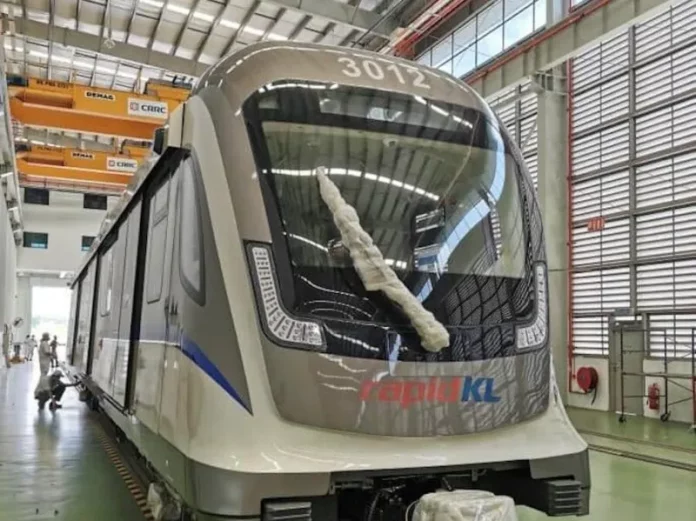
When I wrote about LRT3 in April, the discussion surrounding the project was largely centred on delays and shifting timelines. At the time, many commuters were understandably frustrated. After all, the line had already seen its expected launch pushed from September 2025 into 2026, with technical issues and certification work cited as the main reasons.
Now, with June already more than halfway through and no official operation date announced by Rapid KL or the Ministry of Transport (UPDATE: Date announced at the end of this article), the conversation online appears to have evolved.
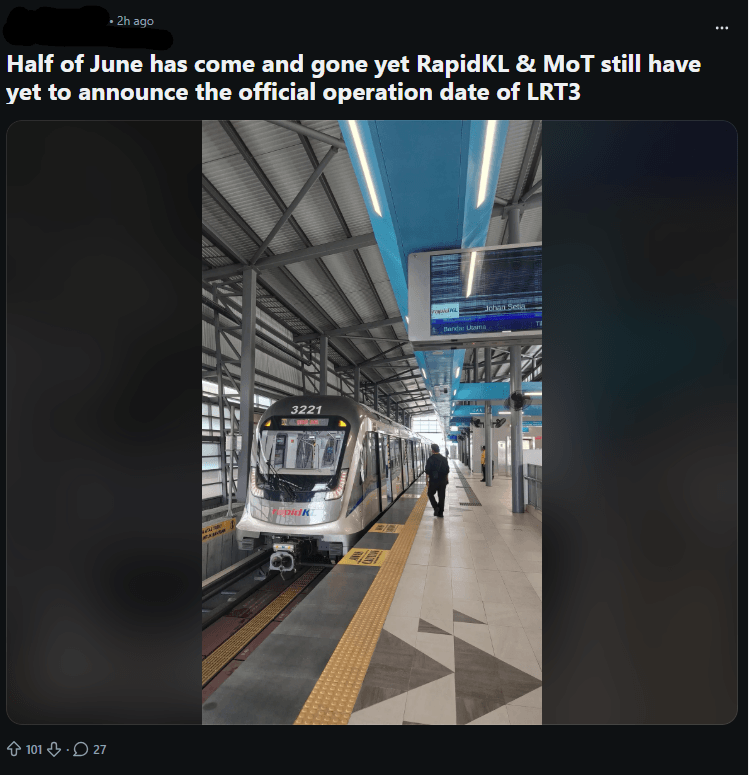
Recently, a discussion on Reddit questioned why there was still no confirmed launch date despite daily train movements being observed and the line itself appearing largely complete. Interestingly, while there were jokes and light-hearted remarks about the prolonged wait, much of the discussion was not focused on demanding an immediate opening.
Instead, many commenters highlighted the importance of safety and reliability.
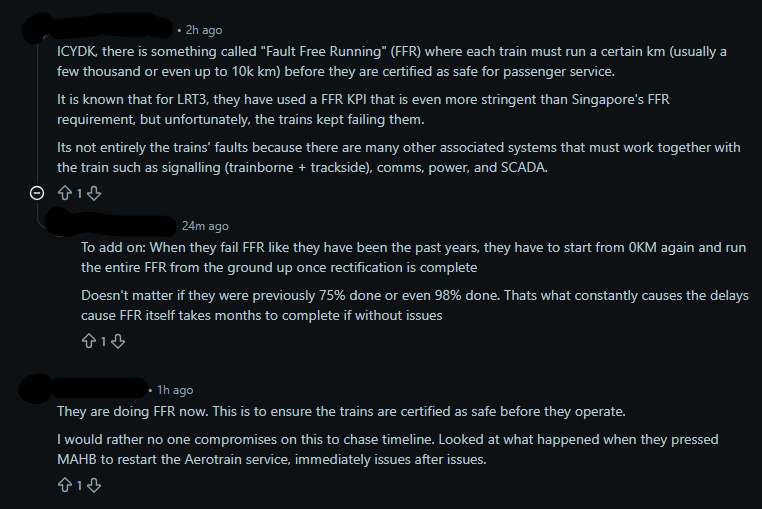
Several users pointed to the Fault Free Running process, where trains and supporting systems are required to undergo extensive testing before passenger operations can begin. Others noted that modern rail systems involve more than just trains, with signalling, communications, power systems and software integration all needing to function together consistently.
Some users even argued that after years of delays, taking additional time to ensure the system performs as intended would be preferable to dealing with frequent breakdowns after launch.
That shift in sentiment is perhaps one of the more interesting developments surrounding LRT3.
Earlier reactions tended to revolve around why the line was not opening. More recent discussions seem to focus on how it should open. In other words, reliability has become just as important as timing.


As someone who relies on public transport regularly, I can understand that perspective. Like many commuters, I would certainly welcome the convenience that LRT3 promises, especially with the Damansara Idaman station located close to the office area.
But public transport systems are judged over years, not by a single launch date.
The expectation among commuters has also become clearer. People naturally want the project completed, but they also want confidence that the system will operate smoothly from day one.
Interestingly, even when a photograph purportedly showing LRT3 fare prices went viral in May, Prasarana Malaysia Bhd declined to verify the image when contacted by BusinessToday, saying only that the official fare structure would be announced closer to the completion and launch of the line.
That response reflected the broader situation surrounding LRT3 itself. Much of the infrastructure appears ready, train testing continues and signs point to the project entering its final stages.
UPDATE: LRT3 launch date has been announced, late this June. Thankful for everyone involved.