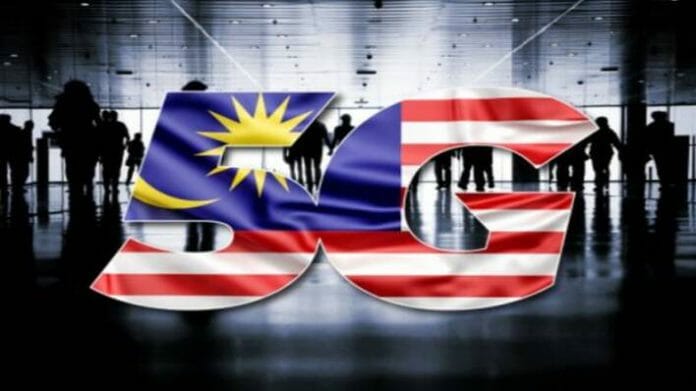
Malaysia’s telecommunications sector is awaiting greater clarity on the financial and cash flow implications of the planned takeover of Digital Nasional Berhad (DNB), as the country progresses toward its dual 5G network model, according to Kenanga Investment Bank.
The research house noted that three major mobile network operators (MNOs)—YTL Power International Berhad, CelcomDigi Berhad and Maxis Berhad—have each paid RM327.9 million to Ministry of Finance Malaysia after the government exercised its put option on DNB.
Upon completion of the transaction, expected in the first half of 2026 subject to conditions precedent, each operator will hold a 33% stake in DNB. They will also assume portions of shareholder loans and advances estimated at around RM161.2 million each.
Kenanga said the timing of the transaction’s completion will be critical, as it determines when the operators begin recognising DNB’s financial contribution—or losses—under equity accounting. The takeover could also affect dividend payouts, given the potential need for further capital commitments to support DNB’s operations and capital expenditure.
DNB outlook seen improving despite past losses
DNB reported a net loss of RM1.2 billion in FY2024, but Kenanga expects its financial performance to improve gradually following a restructuring exercise in early 2025.
The restructuring involved changes to its business model, funding structure and operations, with cost savings anticipated from manpower rationalisation and operational efficiencies. Additional improvements could come from network optimisation and renegotiation of supplier contracts.
DNB is also exploring cost-saving measures such as leasing existing infrastructure from its MNO shareholders to reduce capital and operational expenditure.
U Mobile ownership shift and 5G ambitions
Separately, developments around U Mobile Sdn Bhd are shaping the second 5G network (NW2). Control of the company has transitioned to Mawar Setia Sdn Bhd, a vehicle linked to Tunku Tun Aminah Sultan Ibrahim and Vincent Tan Chee Yioun, following the acquisition of a majority stake from ST Telemedia Pte Ltd.
The deal was partially financed via a RM3.8 billion syndicated facility arranged by Affin Group and MBSB Bank Berhad. Kenanga views the shift to local ownership as part of broader efforts to prepare U Mobile for a potential initial public offering.
U Mobile has also secured a three-year 5G wholesale contract with Telekom Malaysia Berhad to provide multi-operator core network services, covering system integration, activation and optimisation. This follows a similar agreement with Eastel, its first wholesale customer.
However, uncertainties remain, as DNB has rejected Telekom Malaysia’s attempt to terminate its existing 10-year access agreement, potentially complicating the new arrangement.
Subscriber growth supported by convergence strategies
Looking ahead, Kenanga expects continued growth in postpaid subscribers among major MNOs, supported by bundled offerings that combine mobile, broadband and digital services.
These convergence strategies are seen as key to improving customer retention and attracting new users, helping operators compete against smaller players.
Postpaid average revenue per user (ARPU) is expected to stabilise for CelcomDigi after bottoming out in late 2024, while Maxis may face renewed pressure due to ongoing migration from prepaid to postpaid plans.
In the prepaid segment, subscriber numbers are likely to remain volatile amid intense competition. However, ARPU is expected to trend higher for both CelcomDigi and Maxis, supported by improved subscriber mix and upselling initiatives.
Overall, Kenanga said the sector’s near-term outlook will hinge on the successful execution of the DNB restructuring and the rollout of Malaysia’s dual 5G network framework, alongside operators’ ability to manage capital commitments and sustain earnings growth.