



Johor has become Malaysia’s economic success story. Record investments, rapid industrial expansion, the Johor-Singapore Special Economic Zone (JS-SEZ) and an influx of global technology companies have transformed the state into one of Southeast Asia’s most dynamic investment destinations. Yet behind these impressive figures lies a more fundamental question: can Johor’s long-term prosperity be sustained if economic growth remains concentrated in its southern corridor?
The debate surrounding Johor’s future is no longer about whether the state can attract investment. The numbers speak for themselves. Instead, the more important question is whether investment is reaching enough people, businesses and districts to create broad-based prosperity across the state.
This distinction is increasingly relevant as Johor heads into a new political cycle. While election campaigns often revolve around promises of investment and development, voters are increasingly asking a more substantive question: what kind of development model best serves Johor over the next decade?
Two distinct policy frameworks offer contrasting answers.
At the state level, the Barisan Nasional-led administration has championed Maju Johor 2030, a blueprint centred on governance, economic growth, social wellbeing, youth development, environmental sustainability and public service delivery. At the federal level, Prime Minister Datuk Seri Anwar Ibrahim’s Ekonomi MADANI provides a broader economic philosophy that emphasises not only investment, but also income growth, industrial upgrading, stronger local enterprises and equitable wealth distribution.
Although both frameworks share common aspirations, they differ in one important respect. Maju Johor primarily focuses on facilitating development and attracting investment, while Ekonomi MADANI asks whether that investment ultimately translates into better wages, stronger local businesses and more balanced regional development.
Johor’s Investment Success Is Undeniable
Few states have matched Johor’s recent investment performance.
Over the past several years, Johor has consistently ranked among Malaysia’s leading destinations for approved manufacturing investments. The emergence of the JS-SEZ, together with growing cross-border integration with Singapore, has further strengthened the state’s position as a regional manufacturing, logistics and technology hub.
Data centres have become one of Johor’s defining growth industries, attracting billions of ringgit in foreign direct investment from global technology firms. Industrial parks continue to expand, while sectors ranging from advanced manufacturing to digital services are establishing deeper roots within the state.
These achievements deserve recognition.
However, investment statistics tell only part of the story.
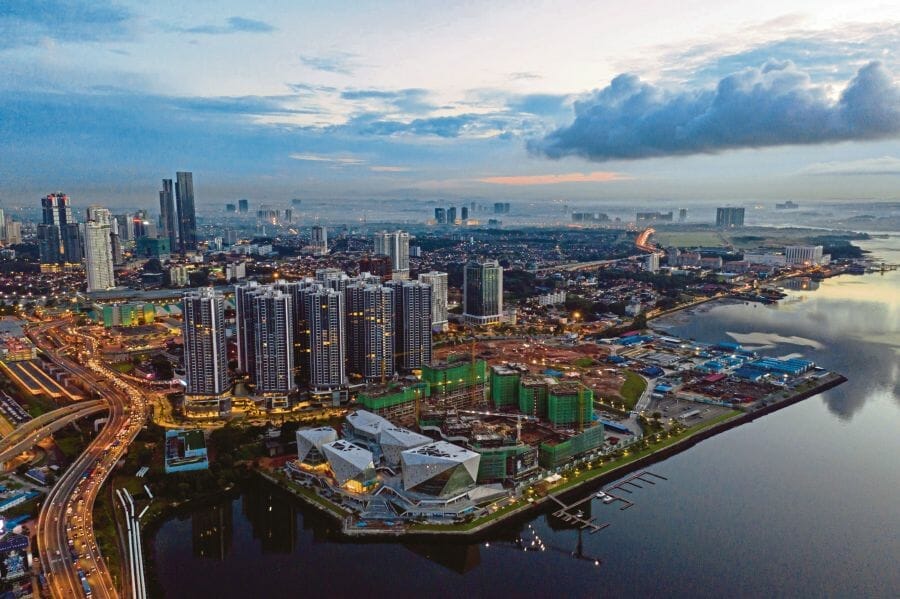
While southern Johor continues to flourish, much of the state’s economic activity remains concentrated around Johor Bahru, Iskandar Puteri, Kulai, Senai, Pengerang and Pasir Gudang. The very success of these growth corridors raises concerns that districts further north may struggle to capture similar opportunities unless deliberate efforts are made to integrate them into Johor’s broader economic transformation.
Southern Johor: The Engine of Growth
There are clear reasons why investors naturally gravitate towards southern Johor.
Its proximity to Singapore provides immediate access to one of Asia’s leading financial and commercial centres. World-class ports, established industrial infrastructure, international connectivity and a mature ecosystem of suppliers make the region highly attractive for multinational corporations.
The JS-SEZ has reinforced these structural advantages.
Its focus on advanced manufacturing, logistics, financial services, artificial intelligence, aerospace, specialty chemicals and digital industries positions southern Johor as one of Southeast Asia’s most competitive investment destinations.
According to investment data, nearly 90 per cent of Johor’s approved investments during the first quarter of 2025 were located within the JS-SEZ footprint.
This demonstrates strong investor confidence.
However, it also illustrates the extent to which growth remains geographically concentrated.
Economic spillovers cannot simply be assumed. Without deliberate policy interventions, northern and central Johor risk becoming suppliers of labour and raw materials rather than participants in higher-value economic activities.
A Different Standard for Measuring Development
Maju Johor 2030 recognises the importance of holistic development.
Its six pillars cover governance, economic development, social protection, public facilities, environmental sustainability and youth development. Collectively, they provide a comprehensive framework for state administration.
Yet many of these aspirations were already embedded within the earlier Pelan Pembangunan Mampan Johor (PPMJ) 2030, which outlined district-based development strategies, regional economic specialisation and balanced growth across Johor.
Rather than representing a completely new direction, Maju Johor largely consolidates existing development priorities under a new administrative framework.
Ekonomi MADANI introduces a different lens through which development is assessed.
Instead of measuring success primarily through investment approvals and project announcements, it evaluates whether investment raises productivity, creates high-income employment, strengthens domestic supply chains, encourages local procurement and expands opportunities for small and medium enterprises.
In other words, the emphasis shifts from the quantity of investment to the quality of its economic impact.
Beyond the Southern Corridor
The challenge for Johor is not to reduce investment in the south.
Rather, it is to ensure that southern Johor becomes the engine that drives development across the entire state.
Northern and central districts already possess significant economic strengths.
Muar remains Malaysia’s furniture manufacturing capital, accounting for more than half of the country’s furniture exports. Batu Pahat continues to maintain a strong manufacturing base, while Kluang possesses considerable potential in logistics and agro-processing due to its strategic position along the Gemas–Johor Bahru Electrified Double Tracking railway.
Segamat and Tangkak continue to build on their agricultural strengths, supported by investments in high-value crops, biomass processing and food production.
These districts are not economically stagnant.
The issue is that they remain under-integrated into Johor’s highest-value investment ecosystem.
Muar: From Manufacturing Hub to Innovation Centre
Muar offers perhaps the clearest example of untapped potential.
The district is home to hundreds of furniture manufacturers that collectively contribute a substantial share of Malaysia’s furniture exports.
However, the industry faces increasing competition from regional manufacturers while contending with rising labour costs, dependence on foreign workers and narrowing profit margins.
Rather than relying solely on traditional manufacturing, Muar has an opportunity to reposition itself through industrial upgrading.
Greater emphasis on design, branding, automation, sustainable timber certification, digital marketing and higher-value furniture production would enable local manufacturers to capture more value while improving wages and productivity.
The proposed Maharani Freeport further strengthens this opportunity by creating a potential maritime and industrial hub capable of attracting new investment beyond Johor’s southern corridor.
Infrastructure as Economic Policy
Transport infrastructure will also play an increasingly important role in balancing Johor’s development.
Projects such as the Gemas–Johor Bahru Electrified Double Tracking railway and the planned expansion of Shuttle Selatan have the potential to integrate inland districts more closely with Johor’s industrial centres.
Improved connectivity should not simply facilitate movement between cities.
It should encourage investment around railway stations, stimulate logistics activities, improve access to employment and strengthen regional supply chains.
Similarly, flood mitigation projects across Segamat, Batu Pahat and Tangkak should be viewed as investments in economic resilience rather than merely disaster management initiatives.
Reliable infrastructure remains fundamental to attracting long-term investment.
Measuring Success Differently
Perhaps the most significant lesson from Ekonomi MADANI lies in how success is measured.
Investment figures alone cannot fully capture development outcomes.
More meaningful indicators include median household income, wage growth, skilled employment, SME participation, local procurement, affordable housing, transport accessibility and improvements in public services.
These measures determine whether economic growth genuinely improves people’s lives.
Johor’s next stage of development should therefore focus not only on attracting larger investments, but also on ensuring that those investments generate broader economic benefits across every district.
Building a More Inclusive Johor
The state does not require an entirely new development blueprint.
Rather, it needs stronger integration between existing regional plans and a clearer emphasis on inclusive growth.
Southern Johor will undoubtedly remain the state’s primary economic engine.
However, its success should increasingly support industrial upgrading in Muar, logistics expansion in Kluang, agricultural modernisation in Segamat, manufacturing innovation in Batu Pahat and tourism development in Tangkak.
Development succeeds not when people are forced to leave their hometowns in search of opportunity, but when every district offers meaningful employment, quality public services and the foundations for a high standard of living.
Johor has already demonstrated that it can attract investment.
Its next challenge is ensuring that prosperity extends well beyond the Causeway.
If the state succeeds in connecting its northern and central districts to the momentum generated in the south, Johor’s next chapter may prove even more significant than its current investment boom—not simply because it grows faster, but because it grows together.
REFSA, Thenesh Anbalagan Executive Director Ng Sze Fung Research Analyst


