The political standoff in Negeri Sembilan is shaping up as more than a local leadership dispute as it is emerging as the clearest test yet of how durable Prime Minister Datuk Seri Anwar Ibrahim’s unity government really is under pressure.
The withdrawal of support by 14 Barisan Nasional-UMNO assemblymen for Menteri Besar Datuk Seri Aminuddin Harun, while maintaining backing for the state government itself, has exposed a political contradiction at the heart of coalition rule: Support for the structure, but not necessarily the leader.
That distinction is critical.
Rather than triggering an immediate collapse, the move has become a high-stakes bargaining tactic — one that allows coalition partners to apply pressure without bringing down the administration. In effect, it signals that within today’s coalition politics, power can be contested from within, not only from across the aisle.
Pressure Without Collapse
Universiti Malaya political scientist Mohammad Tawfik Yaakub told BusinessToday that UMNO’s stance reflects both responsibility and leverage.
He argues that by keeping support for the unity government in Negeri Sembilan intact, UMNO is avoiding the risks of a snap state election and shielding voters from political instability.
“At the same time, the withdrawal of confidence in Aminuddin serves as a calculated pressure move to ensure their role in state administration, particularly in matters involving the governance of Negeri Sembilan’s Adat Perpatih, or customary laws, institution, is not sidelined.
“In other words, this is not about tearing down the government. It is about renegotiating influence within it,” he said.
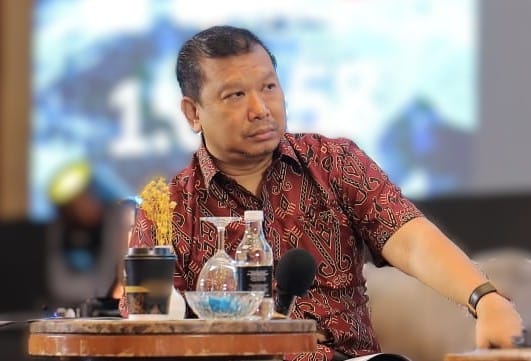
That interpretation is echoed more bluntly by political analyst Dr Ahmad Zaharuddin Sani, who describes UMNO’s manoeuvre as “political theatre”, a reminder to Pakatan Harapan (PH) that it remains a kingmaker, not a junior partner.
More Than Governance
While the immediate flashpoint stems from disputes tied to the Adat Perpatih institution in Sungai Ujong, both analysts say the deeper struggle is over political relevance, leadership and control ahead of the next general election.
They explained that Negeri Sembilan’s politics are uniquely shaped by its adat traditions, which are recognised under the state constitution, making the issue more complex than a standard coalition disagreement.
Yet beneath the constitutional and cultural sensitivities lies a broader contest: Who gets to steer the coalition’s future.
“UMNO, weakened nationally after years of electoral decline, is seeking greater visibility and influence. PH, meanwhile, is focused on maintaining stability and resisting concessions that could dilute its leadership.
“The result is a coalition tug-of-war — not over policy, but over positioning,” Dr Ahmad said.
A Prototype for Future Coalition Politics
However, what makes Negeri Sembilan significant is that it may be setting a precedent for how disputes within coalition governments are managed in Malaysia.
Instead of collapsing alliances, partners may increasingly use selective withdrawals of confidence as bargaining tools while keeping governments intact.

That creates a new political formula: Pressure without withdrawal, instability without regime change.
Dr Tawfik suggests the path forward may lie in restructuring power-sharing arrangements, such as creating a stronger Deputy Menteri Besar role with broader executive authority.
“If adopted, such a move would not merely resolve the immediate dispute; it could redefine how coalition governance is structured in Malaysia,” he said.
The National Stakes
Meanwhile, Dr Ahmad said the implications extend beyond Negeri Sembilan.
“If UMNO succeeds in extracting concessions, similar tactics could emerge in other states where PH-BN cooperation remains uneasy. If PH resists and weathers the challenge, it strengthens the case for centralised coalition discipline.
“Either way, the episode reveals the fragile foundations of Malaysia’s unity government, a coalition built on necessity, not deep trust,” he added.
At the same time, Dr Ahmad also highlighted that the crisis presents both risk and opportunity for Anwar.
“By positioning himself as the guardian of stability, he can reinforce PH’s image as the responsible partner while allowing UMNO to absorb public criticism for destabilising moves.
“Simultaneously, the weakening of Aminuddin, viewed as aligned with former Economy Minister Datuk Seri Rafizi Ramli, could indirectly reshape internal dynamics within PKR itself,” he said.
A Test, Not a Collapse
For now, both analysts agree the immediate priority is de-escalation.
They said negotiations, political ceasefire and respect for traditional institutions remain key to preventing the dispute from spiralling into a larger crisis.
But regardless of how it ends, Negeri Sembilan has already become more than a state-level drama.
It is now a test case for the resilience of Malaysia’s coalition era and a preview of how power struggles inside the unity government may unfold in the years ahead.