



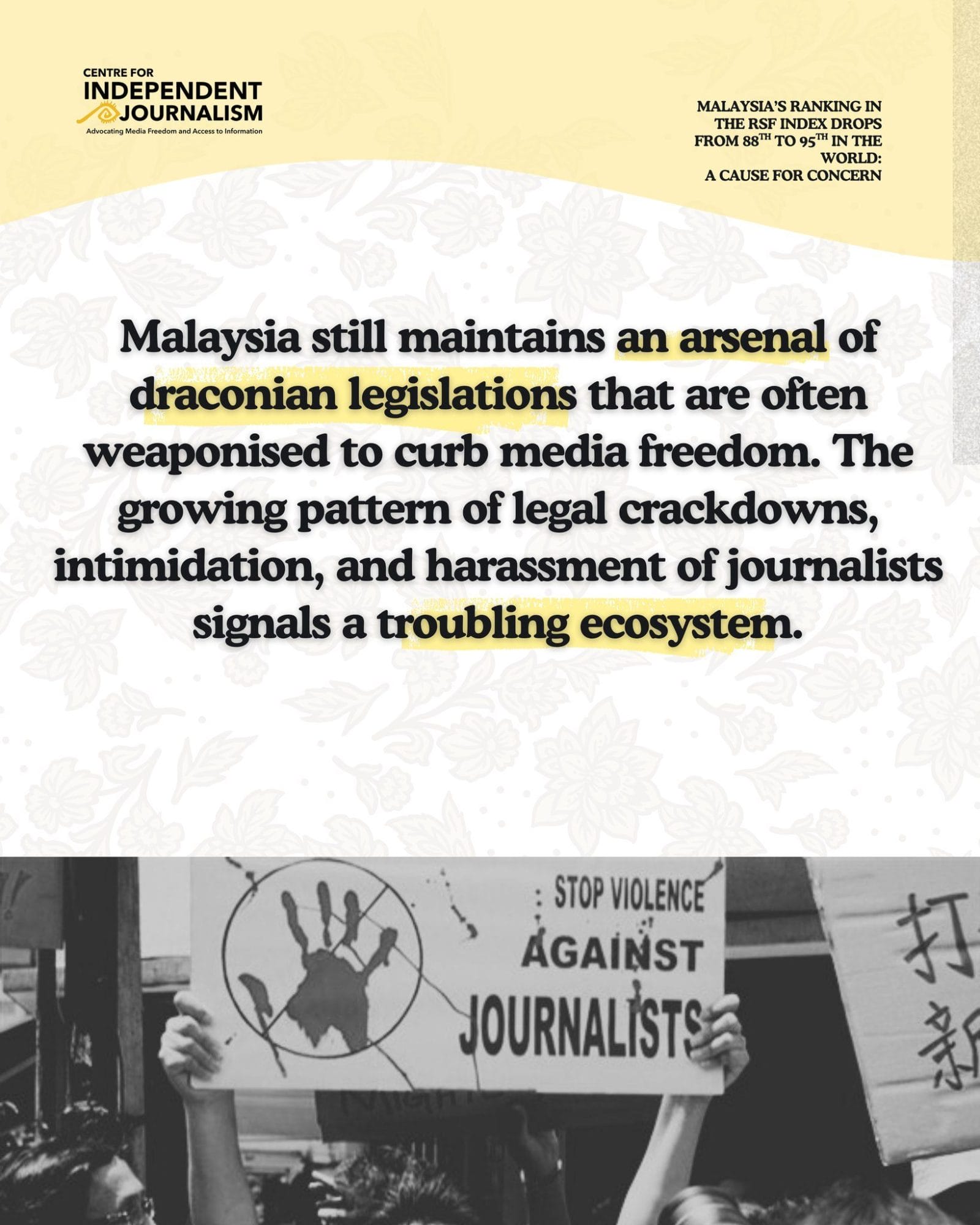
Malaysia has slipped seven places to 95th out of 180 countries in the 2026 Reporters Without Borders (RSF) World Press Freedom Index, with its overall score declining to 52.73 from 56.09 the previous year, effectively erasing the gains made in 2025 when the country climbed 19 places to 88th after a disastrous 2024 showing of 107th.
The latest decline arrives against a backdrop of mounting legal actions and intimidation against journalists, drawing warnings from media watchdogs that Malaysia risks further deterioration in future rankings if urgent reforms are not implemented.
The Centre for Independent Journalism Malaysia (CIJ) said in a statement, the country continues to operate under what it described as an “arsenal of draconian legislations” that are often weaponised to curb media freedom, contributing to a troubling ecosystem for journalism.
Recent incidents have sharpened those concerns. Malaysiakini journalist B Nantha Kumar was investigated under Section 203A of the Penal Code and Section 233 of the Communications and Multimedia Act, followed by a police raid on his home carried out just three days before the 2026 RSF index was released, after reporting on the government’s controversial migrant worker recruitment system.
CIJ said such cases reflect a growing pattern of intimidation and legal pressure that deters journalists from reporting on matters of public interest, including governance and corruption.
“These incidents reflect how excessive legal measures, intimidation, and threats beyond formal proceedings can deter journalists from carrying out their work, undermining press freedom and the public’s right to information,” said Wathshlah G. Naidu, Executive Director of the Centre for Independent Journalism.
The group warned that the environment risks fostering a culture of fear within the media, ultimately undermining the public’s right to information.
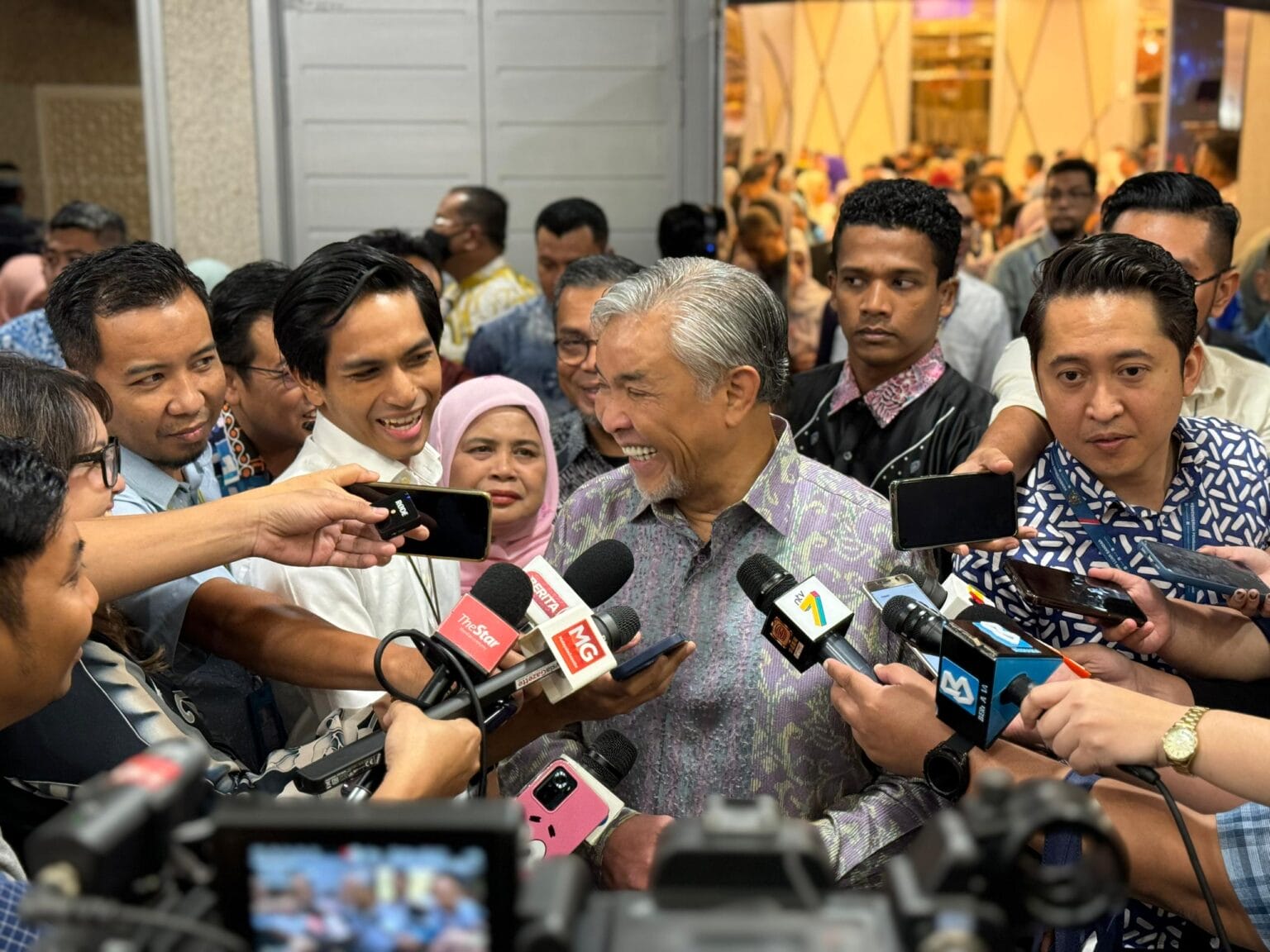
Alyaa Alhadjri, Coordinator of Gerakan Media Merdeka Malaysia (GERAMM), cautioned that the trend could push Malaysia’s standing lower still if structural changes are not made.
“Malaysia risks a further decline in global press freedom rankings, particularly in the area of journalists’ safety and protection against criminalisation of journalistic work,” Alyaa told BusinessToday.
RSF’s 2026 assessment noted that while Malaysia is classified as being in a “problematic situation” — the same tier as last year — continued suppression of online dissent, police investigations into financial news outlets and concentrated media ownership remain persistent concerns. The index also highlighted that the authorities continue to pursue investigative reporters, while the monarchy, race and religion remain extremely sensitive subjects that routinely result in self-censorship.
Secretary of Media Council Malaysia Radzi Razak said press freedom must be framed as a broader democratic reform agenda rather than an annual ranking exercise.
“Malaysia’s next move must be to treat press freedom not as an annual ranking exercise, but as a democratic reform agenda. This means ending the reflex to use criminal laws against journalists, strengthening newsroom independence, protecting reporters from harassment, and allowing the Malaysian Media Council to function as the first avenue for accountability, mediation and ethical standards,” he said.
“The Press Freedom Index will improve only when journalists can do their work without fear, and when public institutions accept scrutiny as part of democracy rather than a threat to authority,” Radzi added.
Malaysia’s 2026 score of 52.73 is nearly identical to its 2024 score of 52.07 — the year it fell 34 places — suggesting that last year’s recovery was fragile and that the structural conditions enabling legal harassment of journalists have not meaningfully changed.


