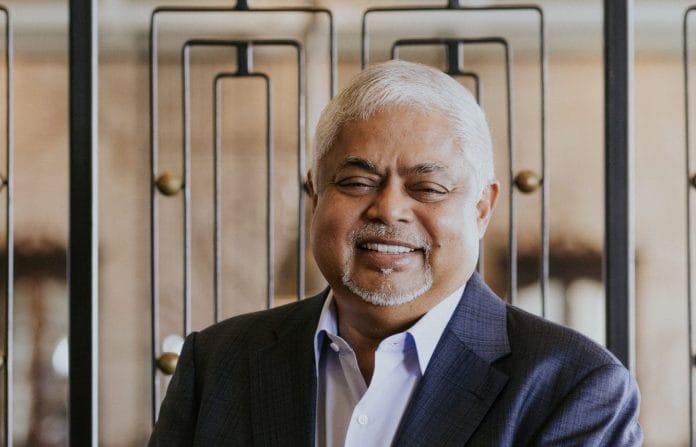
By Dato’ Sri Vijay Eswaran
Across Southeast Asia, a quiet anxiety is taking root beneath the surface of global optimism about artificial intelligence (AI).
By 2030, an estimated 164 million workers in ASEAN could see their roles come under risks of disruption by generative AI, through automation of routine tasks and the augmentation of complex roles. Many workers fear job losses driven by AI will outpace the creation of new opportunities, deepening a sense of uncertainty about their place in the future economy.
Left unaddressed, that anxiety hardens into fatalism; the belief that the future of work will be decided not by people, but by algorithms, and by those who control them.
The future of work is not something that happens to us. It is something we create. Technology may change the tools in our hands, but it does not remove the responsibility from our shoulders.
If Malaysia, and ASEAN, is to navigate this moment with confidence, it must look beyond remaining a passive player in this AI race, and ask a more fundamental question: how do we ensure that our people are not merely adopters of technology, but creators of opportunity?
Entrepreneurs Are the Heart of Job Creation
Work is more than survival. It is dignity, identity, and contribution.
Across Southeast Asia, entrepreneurship has long been a lifeline for families and communities, from informal microenterprises and family-run shops to fast-growing digital startups.
Employment is closely tied to well-being, social stability, and personal agency. When people are able to work, build and contribute, they do not merely earn an income; they regain a sense of control over their own destiny.
Reskilling programs, especially in digital and AI-related skills, are critical, but they only prepare workers for jobs that may or may not exist. Entrepreneurship creates the possibility of new work altogether.
Job growth depends on entrepreneurs who create businesses and expand industries. Small and medium enterprises already dominate the regional economy, with between 97.2% and 99.9% of all enterprises in ASEAN classified as MSMEs.
The real challenge isn’t whether jobs will vanish—history shows they will. The deeper question is whether we can equip people to become creators of opportunity. Entrepreneurship ensures that work stays rooted in human agency, not merely in technological progress.
The Next Billion Jobs Will Come from Distributed Opportunity
Broad-based SME growth is one of the strongest drivers of employment in developing economies. However, across ASEAN, access to finance, networks, and markets remains uneven.
Startup ecosystems are often concentrated in major urban centres such as Kuala Lumpur, Jakarta, Singapore, and Bangkok, even as the region continues to attract significant capital, with foreign direct investment reaching US$226 billion in 2024 despite global uncertainty.
This concentration limits inclusion and scale. When opportunity is confined to a few urban hubs, the potential of millions across the region remains untapped. Only when access to education, mentorship, and capital is more evenly distributed can entrepreneurship generate jobs at the scale the region requires.
The next billion jobs will not come from a handful of tech hubs alone. They will come from distributed opportunity, from villages, small towns, second-tier cities and overlooked communities where ambition already exists, but access does not.
Talent is universal. Opportunity is not. That is the gap ASEAN must close.
Leveraging Technology for Inclusive Growth
Artificial intelligence is a powerful tool, but its benefits risk amplifying inequality if access remains concentrated.
Technology should not be framed as a competitor to human creativity. It is a collaborator. AI will only create real prosperity when its power is placed in the hands of many, not guarded by the few.
When entrepreneurs across Southeast Asia harness AI to scale their businesses, they not only create jobs but also democratize access to innovation. The future of work is not a contest between humans and machines, but a collaboration where technology accelerates what human creativity initiates.
Critically, ASEAN’s diversity, spanning different levels of digital infrastructure, language ecosystems, and economic development across eleven nations, means that AI adoption cannot follow a single template.
Localised solutions, built by entrepreneurs who understand their own communities, will be far more effective than imported models designed elsewhere. The answers to ASEAN’s challenges will not always come from Silicon Valley, Shenzhen or Kuala Lumpur. Many will come from the people closest to the problems themselves.
A Future Shaped by Human Resolve
The conversation on the future of work must evolve from one centred on adaptation to one that embraces creation. Preparing workers to navigate change is necessary but enabling them to drive that change is essential.
Jobs at scale will not be generated by algorithms alone. They will come from people who choose to build businesses, solve problems, and create value in ways that technology alone cannot dictate.
Malaysia, and this region, also possesses a structural advantage that is too often overlooked: a young, growing population with rising digital fluency. Harnessing this demographic dividend is one of the most consequential economic choices ASEAN can make in this decade.
The role of policy and institutions is clear: to widen the doorway so that more people can enter the economy not as spectators, but as creators.
In the end, tomorrow’s work will not be shaped by lines of code alone, but by the courage, imagination and resolve of people who choose to build.