


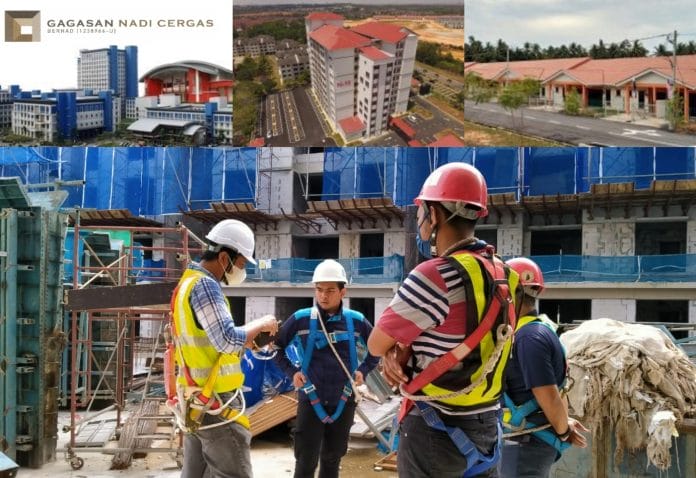
The Malaysian construction industry is facing renewed cost pressures as the Department of Statistics Malaysia (DOSM) reported a widespread increase in the price of essential building materials for April 2026.
The latest “Special Release for Building and Structural Works” highlights significant month-on-month surges, particularly in raw materials like sand and aggregates, alongside steady climbs in steel and cement prices across Peninsular Malaysia, Sabah, and Sarawak.
Sand prices saw some of the most dramatic increases this month, with the unit price index rising by as much as 14.5%. The East Coast was hardest hit, with the Terengganu & Kelantan region recording the maximum 14.5% jump, followed closely by Pahang (14.4%) and Miri (14.1%).
Aggregates followed a similar trajectory, with price index changes ranging from 0.5% to 16.4% across various regions. These sharp increases in bulk raw materials are often attributed to localized supply constraints and rising haulage costs following recent diesel price adjustments.
Industrial materials also trended higher in April, adding to the overall burden on contractors:
The steel unit price index rose between 0.1% and 6.1%. Perak recorded the highest increase at 6.1%, followed by Johor at 2.7%.
Cement prices edged up by 0.1% to 6.0%. The highest monthly hike was observed in Sibu (6.0%), followed by Johor (3.9%).
Average Market Prices (April 2026):
- Steel: Increased to RM3,504.20 per metric tonne (up 2.3% from March’s RM3,426.80).
- Cement: Rose to RM25.90 per 50kg bag (up 1.3% from March’s RM25.55).
Comparing April 2026 to the same month last year reveals a persistent inflationary trend in the construction sector. The annual unit price index for sand has jumped by as much as 18.6% in Miri and 16.0% in the Northern Region (Pulau Pinang, Kedah & Perlis).
Cement also showed a notable year-on-year increase of up to 7.5%, with Kuching and Perak leading the annual price hikes.
The continued rise in material costs presents a significant challenge for developers and contractors, many of whom are already navigating a high-interest-rate environment. Industry experts suggest that the “double-digit” spikes in sand and aggregates may force a recalculation of project margins, particularly for infrastructure and residential developments in high-growth areas like Johor and the Klang Valley.
“With steel now averaging above the RM3,500 mark again, we may see an increased push for price escalation clauses in new private-sector contracts,” noted one industry analyst.
The report underscores a broader trend where domestic supply chain dynamics—including logistics costs and regional demand—are increasingly dictating the pace of construction inflation in Malaysia.


