
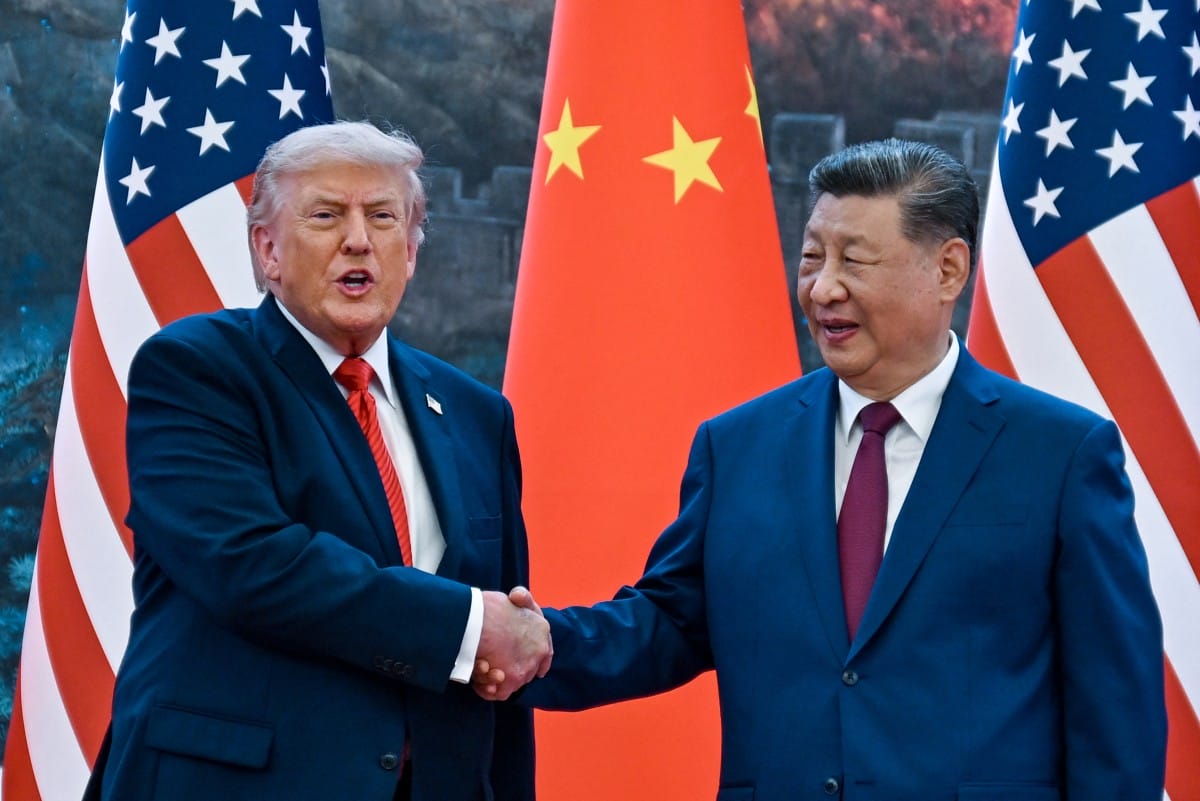
As US President Donald Trump holds high-level talks in Beijing with Chinese President Xi Jinping, the first visit by a US leader to China in nearly a decade, renowned economist Geoffrey Williams said the renewed dialogue between the world’s two largest economies indirectly improve the outlook for Malaysia while easing the global trade tensions.
The visit, staged with a formal reception but set against a backdrop of unresolved trade disputes and geopolitical friction, comes at a time of heightened global uncertainty, including spillover risks from ongoing conflicts in the Middle East.
However, Williams told BusinessToday that the prevailing narrative of US-China confrontation is increasingly overstated, arguing instead that both sides remain engaged in sustained, pragmatic cooperation.
He described the Beijing meeting as evidence of a “high-level entente”, where Washington and Beijing continue to negotiate and work through differences rather than drift into outright economic decoupling.
“Beyond the ceremony, there will be very serious talks on trade and investment to the benefit of both countries,” Williams said, adding that improved relations would help reduce global risk sentiment and support broader trade, investment and growth.
For Malaysia, the easing of US-China tensions is expected to provide indirect economic benefits by reducing geopolitical pressure on supply chains and cross-border trade flows.
Williams noted that Malaysia currently runs a substantial trade deficit with China, importing significantly more than it exports, while maintaining a strong trade surplus with the US driven by exports.
He said a shift away from a “trade war” narrative towards structured negotiation would help stabilise expectations in global markets, ultimately supporting a more predictable environment for Malaysian trade and investment.
While Malaysia remains closely tied to both economic giants, Williams said the evolving US-China dialogue is less about choosing sides and more about reducing volatility, a development he described as broadly “positive” for regional trade stability.