


Asian markets closed mostly higher, led by Japan (+2.5%) and Taiwan (+2.05%), as tech strength and sustained AI optimism underpinned sentiment. Japan’s ¥3.11tn fiscal support to ease Iran war-driven cost pressures further lifted confidence, offsetting concerns over stalled US–Iran talks and sporadic Middle East strikes. Overnight, Wall Street pulled back from record highs (S&P 500 -0.73%, Nasdaq -0.89%, Dow -1.21%), while Brent oil rose to ~USD98/bbl (from 1M low USD89) amid escalating US–Iran hostilities and attacks on GCC states. US 10Y yields climbed 5bps to 4.49%, supported by strong ADP jobs data and ISM Services PMI. Meanwhile, Broadcom plunged 12% in after-hours trading on earnings miss and weaker guidance.
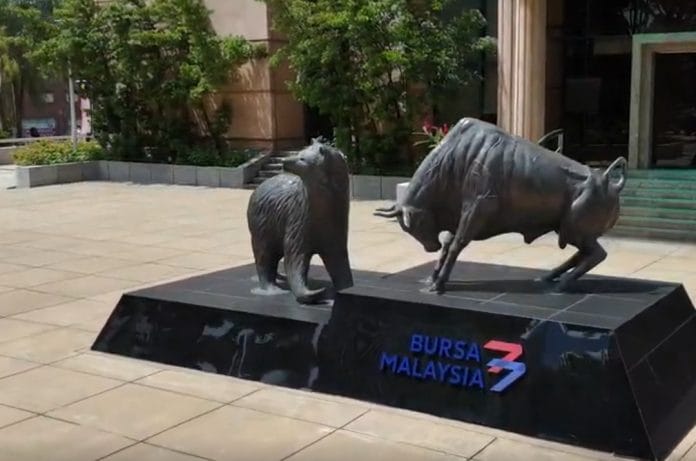
The KLCI fell 0.61% in late trade to 1,672.7 (its 12th decline in 13 sessions), as investors grappled with geopolitical, earnings and election risks, led by selldown CIMB, Maybank, IHH, Maxis, CDG and Tenaga. Sentiment was further weighed by renewed tariff concerns after the US moved to impose additional duties on 60 economies (including Malaysia) over forced labour, raising business costs and risking supply chain reconfiguration.
Foreign funds remained heavy sellers (-RM454m; 5-day: -RM2.98bn; May: -RM3.56bn), extending a 14-session outflow streak to RM4.24bn. In contrast, local institutions (+RM322m; 5-day: +RM2.44bn; May: +RM3.15bn) and retail investors (+RM132m; 5-
day: +RM541m; May: +RM408m) continued to provide support.
Following a 5.4% decline from the 7 May high of 1,768 to 1,672.7, the KLCI has turned technically bearish, forming a Double Top and breaking below key MAs (20/50/100) and its rising trendline. After 14 losses in 16 sessions, the index has entered a corrective
phase, with immediate support at the MA200 (1,666); a break could accelerate downside toward 1,650, 1,625 (38.2% FR) and 1,600.
That said, with a 5.5% (98 pts) pullback from its YTD peak of 1,771, conditions are nearing oversold levels, which may prompt a technical rebound toward 1,700–1,720 resistance.
Amid renewed Middle East escalation, fragile ceasefire talks and a prolonged Strait of Hormuz blockade, the KLCI is likely to remain in consolidation mode. Sentiment is pressured by war-related GDP risks, a soft 1Q26 earnings season with cautious guidance, and persistent foreign outflows.
Political risk premium has also ticked higher following the Johor state assembly dissolution on 1 June, raising concerns over broader instability, including potential apillover state polls or even an early GE16 (due only in Jan 2028)


