



Malaysia’s next-generation MyKad is poised to become the country’s most significant identity card upgrade in more than two decades, bringing enhanced security features and a renewed focus on identity verification. Yet one change is already prompting questions among public transport users: the removal of the embedded Touch ‘n Go (TNG) function.
While the New Structure MyKad began limited issuance through selected National Registration Department (JPN) offices on June 1, its official launch is expected to be carried out by Prime Minister Datuk Seri Anwar Ibrahim at a later date.
The new card, which will eventually replace the MyKad first introduced in 2001, features 53 security elements compared with 23 in the current version. Among the enhancements are QR codes for verification and enforcement purposes, holograms, microtext, ultraviolet security features, laser engraving and a chip with a higher level of encryption.
The move reflects the government’s aim of strengthening Malaysia’s national identity infrastructure. However, the removal of the TNG payment function has raised questions about how commuters, particularly My50 pass users, will navigate the transition.
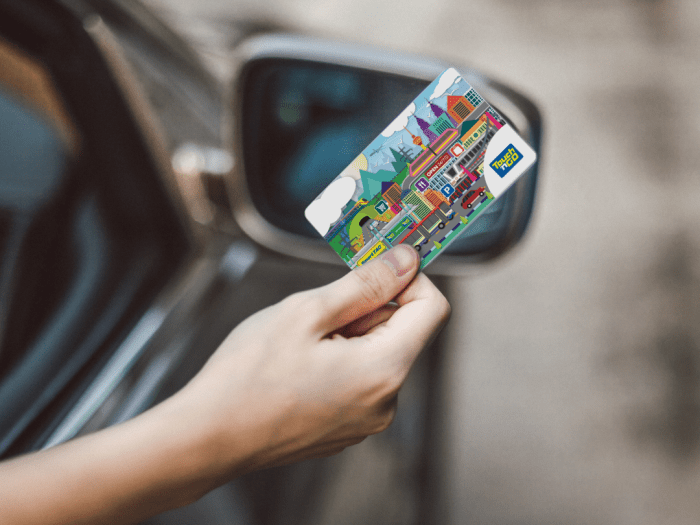
According to Touch ‘n Go Group, existing users who have linked My50 subscriptions to their current MyKad can continue using and renewing their passes through available channels, provided their cards remain valid and usable as a Touch ‘n Go transit medium.
At present, there is no confirmed sunset date for MyKad-linked My50 passes.
The situation is different for those issued with the new-generation MyKad.
As the card no longer contains Touch ‘n Go functionality, it cannot be used as a transit payment medium. Instead, commuters wishing to purchase or renew My50 digitally will need to do so through the Travel Pass feature on TNG eWallet, linked to an enhanced NFC-enabled Touch ‘n Go card.
The process requires users to have an eKYC-verified TNG eWallet account, an enhanced NFC-enabled Touch ‘n Go card and an NFC-enabled smartphone.
The arrangement effectively creates two paths for commuters during the transition period. Existing MyKad holders can continue using a familiar system, while future cardholders will need to adopt a separate card and app-based ecosystem.

For Dr Clarissa Ai Ling Lee, Lecturer at Monash University Malaysia’s School of Business, the change should not necessarily be viewed as a fraud-prevention measure.
“The change may be less about the Touch ‘n Go function alone and more about redefining the MyKad’s role as identity infrastructure rather than as a multi-purpose payment object,” she told BusinessToday.
Lee noted that identity security and payment security are related but distinct concerns.
“Security for payment systems also has to be considered separately from security for personal identification. A personal ID can enable financial transactions to be linked to a person, but securing identity and securing payments are not the same thing,” she said.
From a governance perspective, she believes separating identity and payment functions may simplify responsibilities across different systems and institutions. However, she cautioned that the success of the transition will depend largely on user experience.
“Users may now need to manage more cards, more apps, more top-up mechanisms or more account recovery processes,” she said.
According to Lee, digitalisation itself is not necessarily the source of friction.
“The important policy question is not simply whether functions should be split, but whether the government and service providers can make the transition simple, inclusive and low-friction.”
She pointed to older users, students, lower-income groups and those with limited access to smartphones as among the groups that could face greater challenges if the transition is not managed carefully.
Touch ‘n Go, meanwhile, said adoption of My50 through its Travel Pass feature has continued to grow. Based on internal data, purchases and renewals via TNG eWallet accounted for approximately 44% of total My50 transactions across physical and digital channels between January and May 2026.
The company also clarified that My50 through Travel Pass is not currently a QR-based or phone-only tap-in and tap-out solution. Users still require an enhanced NFC-enabled Touch ‘n Go card as the transit medium.
Beyond convenience, Lee believes the shift reflects a broader trend towards the increasing digitalisation of everyday services.
“Once payment, identity verification, concession access, transport use and account management are separated into app-based or platform-based systems, more aspects of everyday mobility become trackable, processable and governable through data,” she said.
While such systems may offer efficiencies, she said policymakers should continue paying attention to issues such as interoperability, user choice and accessibility.
The longer-term future of MyKad-linked My50 subscriptions remains unclear. Touch ‘n Go said any future changes, including potential phase-out timelines, would be subject to confirmation and official announcements by Prasarana and the relevant authorities.
BusinessToday also reached out to Prasarana Malaysia Bhd regarding future arrangements for commuters using the new-generation MyKad and the long-term direction of MyKad-linked My50 subscriptions. However, no response was received by the time of publication.
For now, Lee believes the discussion should not be framed as a choice between security and convenience.
“There is no single system that comes without trade-offs,” she said.
“Removing TNG from MyKad may be cleaner from a technical and governance standpoint, but that does not automatically make it better for users. Any disruptive change has to ask whether the wider ecosystem can support the transition without increasing exclusion, inconvenience or unequal access.”

