


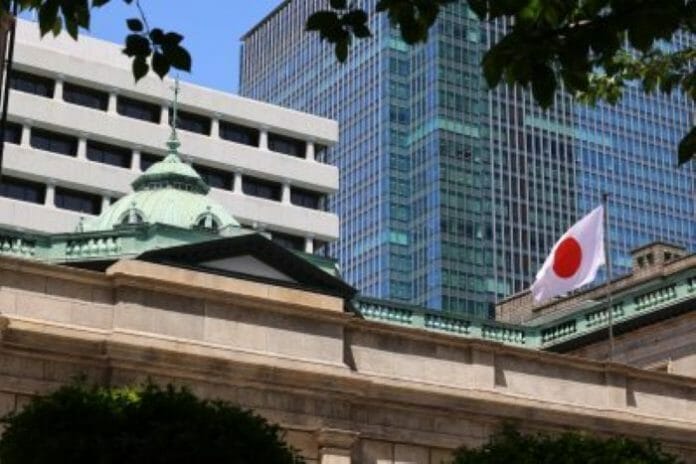
The Bank of Japan (BOJ) is widely expected to remain at the centre of global market attention next week, with investors closely watching whether policymakers proceed with another interest rate increase as part of the central bank’s ongoing monetary policy normalisation efforts.
Market participants will also be looking for fresh signals on Japan’s inflation outlook, the estimated neutral interest rate and the future pace of government bond purchases, amid a shifting domestic economic environment and evolving global market conditions.
According to Howe Chung Wan, Head of Asian Fixed Income at Principal Asset Management, the BOJ is likely to raise its policy rate by 25 basis points to 1.0% at its upcoming meeting.
“We opine that the BOJ is likely to hike interest rates to 1% next week. This has been guided by recent rhetoric hinting a hike is needed sooner rather than later,” he said.
Howe noted that support for higher interest rates within the BOJ has strengthened in recent months, with an increasing number of policymakers expressing concerns over maintaining overly accommodative monetary conditions.
While previous meetings saw growing dissent in favour of rate hikes, policy decisions were believed to have been tempered by domestic political considerations.
However, developments since then may have shifted the balance in favour of further tightening.
“The heavy cost of foreign exchange intervention following the BOJ’s decision to hold rates in April has lent further support to a hike next week,” Howe said.
He added that external factors, including discussions involving senior US officials during recent bilateral engagements, may have also increased pressure on Japanese authorities to address persistent yen weakness through monetary policy adjustments.
Beyond the expected rate increase, investors will be assessing whether the BOJ retains a tightening bias for the remainder of 2026.
Principal Asset Management expects policymakers to leave the door open for additional rate hikes later this year, although communication may become more measured.
Howe noted that BOJ Governor Kazuo Ueda is expected to be absent from the upcoming meeting, potentially resulting in less explicit forward guidance regarding the timing of future policy moves.
“Forward guidance may be tapered down to continue tightening bias without a specific timeline,” he said.
Such an approach would allow policymakers to maintain flexibility while signalling that the normalisation process remains intact.
Another key area of interest for markets will be any updated assessment of Japan’s neutral interest rate — the theoretical rate that neither stimulates nor restrains economic activity.
According to Howe, market participants believe the BOJ’s estimate of the neutral rate may have shifted higher following its previous rate increase in December.
Any revision to that assessment could influence expectations regarding how much further the central bank may need to tighten policy over the medium term.
On the balance sheet front, Principal Asset Management expects the BOJ to maintain its current pace of Japanese Government Bond (JGB) purchases.
The central bank has been gradually reducing its market intervention while seeking to avoid excessive volatility in Japan’s bond market.
“We expect the BOJ to maintain the current pace of JGB purchases to avoid putting further stress on the bond market,” Howe said.
Maintaining the existing purchase programme would provide stability to financial markets while allowing policymakers to focus on interest rate adjustments as their primary policy tool.
A rate hike by the BOJ would mark another significant step in Japan’s transition away from the ultra-loose monetary policies that characterised much of the past decade.
The move could have broader implications for global bond markets, foreign exchange trends and capital flows, particularly across Asia, as investors reassess yield differentials and the outlook for the Japanese yen.
With inflation remaining above the BOJ’s long-term target and wage growth showing signs of persistence, markets will be closely scrutinising next week’s meeting for clues on how quickly Japan intends to continue its path toward policy normalisation.

