As investors sift through a growing pipeline of technology listings on Bursa Malaysia, Pentech Holdings Bhd is preparing to enter the ACE Market with a proposition that extends beyond the current excitement surrounding artificial intelligence and data centres.
According to Managing Director and Chief Executive Officer Yeoh Chin Ming, the ICT infrastructure and integration specialist is positioning itself to capitalise on rising demand for managed services and cybersecurity solutions, particularly among medium-sized enterprises that may not have access to enterprise-grade protection.
The strategy forms a key pillar of Pentech’s post-listing growth plans and could gradually transform the company from a predominantly project-based ICT integrator into a business with a larger recurring revenue base.
One question investors may raise ahead of the IPO is how to assess revenue visibility given the absence of a conventional order book.
Yeoh told BusinessToday that Pentech’s business differs from industries such as construction, where projects often stretch over several years.
“Unlike construction companies, we do not operate with a formal order book because our business is mainly project-based with short delivery cycles, typically ranging from one to three months, and in some cases up to around six months,” he said, while revealing that the company relies on confirmed purchase orders and active projects to provide visibility into near-term earnings.
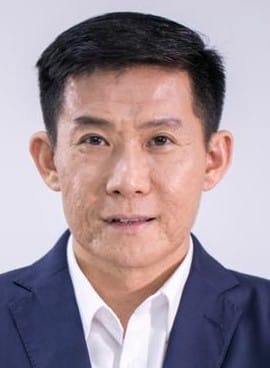
Yeoh then shared that as at April 27, 2026, the company had 622 ongoing projects with a remaining contract value of RM87.7 million that will be progressively converted into revenue as projects are delivered.
Beyond project work, Yeoh revealed that recurring service contracts provide a second layer of visibility.
“These contracts, which typically run between one and three years and in some cases up to five years, generate recurring revenue over the contract period.
“In simple terms, our visibility comes from two sources: Short-term confirmed project purchase orders and long-term recurring service contracts,” he said.
A Deliberate Shift Towards Recurring Revenue
The recurring income segment is becoming increasingly important to Pentech’s long-term strategy.
According to Yeoh, the company is targeting a long-term revenue mix in which cloud, managed services and professional services contribute approximately 40% of total revenue.
The rationale is partly financial.
“The recurring business segment typically commands a gross profit margin of around 20% to 25%,” he said.
As the contribution from recurring services grows, management expects overall profitability to improve.
“In the long run, the company’s net profit margin has the potential to gradually improve from approximately 5% to 7% or even 8% over the next three to five years,” he highlighted.
The target suggests management is focused not only on growing revenue, but also on improving earnings quality through higher recurring income and higher-margin service offerings.
The Cybersecurity Opportunity
A significant portion of the IPO proceeds will be channelled towards the establishment of a new Security Operations Centre (SOC) and upgrades to the company’s Operating Command Centre (OCC) in Kuala Lumpur.
Yeoh said the investment is aimed at expanding Pentech’s managed services capabilities while addressing what he views as a gap in the cybersecurity market.
“Advanced cybersecurity monitoring and cyber threat detection services are available in the market. However, such solutions are often designed for large enterprises and can be costly.
“As a result, many medium-sized enterprises may not have access to enterprise-grade cybersecurity protection solutions,” he said, adding that Pentech intends to offer scalable cybersecurity monitoring and response services that are more affordable and accessible to medium-sized businesses.
“Our strategy is to make SOC services more affordable and accessible to a broader segment of the market, particularly medium-sized enterprises,” he emphasised, while highlighting that if successful, the initiative could broaden the company’s addressable market while increasing recurring service revenue and customer retention.
Positioning For AI And Data Centre Growth

While artificial intelligence (AI) has emerged as one of the technology sector’s dominant themes, Yeoh said Pentech does not intend to compete as an AI application developer, instead, the company sees itself as an enabler of AI adoption.
“We see ourselves as an AI enabler rather than acting as an AI application developer like OpenAI,” he claimed.
According to Yeoh, organisations implementing AI solutions require backend ICT infrastructure, network connectivity, cybersecurity capabilities and systems integration support.
“We believe its existing expertise positions it to participate in the broader AI ecosystem by supporting enterprise adoption rather than developing AI models or applications,” he said.
Meanwhile, Yeoh expects Malaysia’s growing data centre ecosystem to drive demand for enterprise ICT infrastructure and solutions, which remain core areas of its business.
Less Than 1% Market Share
Despite generating approximately RM233 million in revenue in FY25, Yeoh believes there remains substantial room for growth.
Citing Department of Statistics Malaysia data, he said the combined gross output value of ICT-related services and ICT wholesale trade reached RM37.2 billion in 2025.
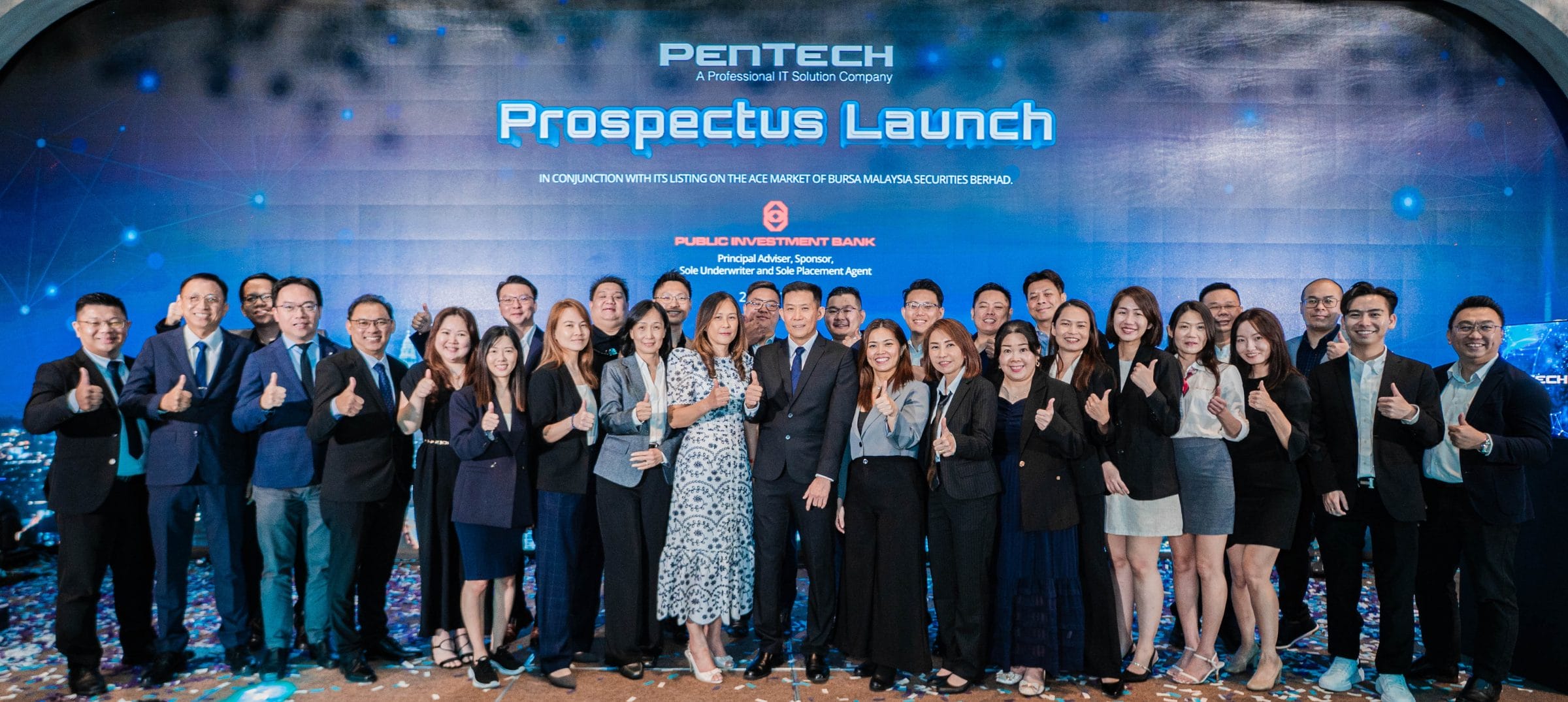
“When you compare that with revenue generated by Pentech in 2025 of approximately RM233 million, our market share is less than 1%.
“This signifies there is tremendous room for expansion for Pentech to capture in the future,” he added.
Yeoh shared that the company currently serves more than 1,000 customers across sectors including manufacturing, financial services, healthcare, education and transportation.
“This diversified customer base reduces dependence on any single industry while creating opportunities to cross-sell additional services,” he said.
The Investment Question
Separately, the central investment question may ultimately be whether Pentech can successfully execute its transition towards a larger recurring revenue base.
For this, Yeoh shared that the company already possesses a sizeable active project pipeline and a diversified customer portfolio.
“However, management’s long-term growth ambitions depend increasingly on expanding managed services, cybersecurity offerings and cloud-related solutions.
“Should those initiatives gain traction, investors may eventually assess Pentech less as a conventional systems integrator and more as a recurring-services technology provider,” Yeoh said, while emphasising that this distinction could become one of the most important factors determining how the market values the company after listing.