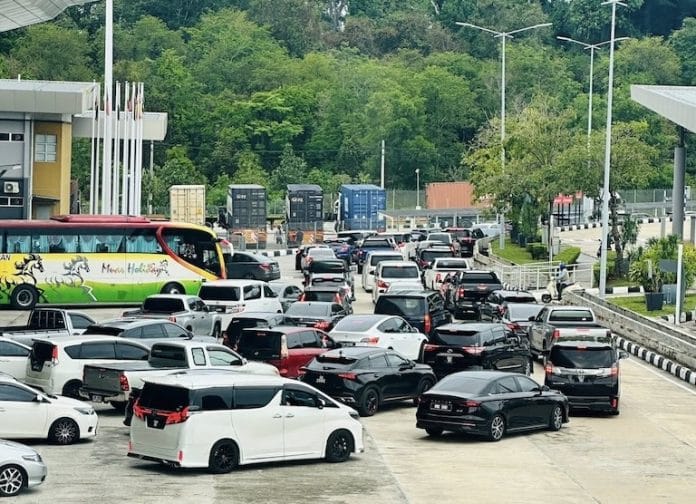
Thousands of Malaysians are still crossing into southern Thailand despite repeated safety warnings, with long queues reported at official border checkpoints in Kelantan, particularly during school holidays and festive periods.
Kelantan police chief Datuk Mohd Yusoff Mamat said the three Immigration, Customs, Quarantine and Security (ICQS) complexes — Rantau Panjang in Pasir Mas, Pengkalan Kubor in Tumpat and Bukit Bunga in Tanah Merah — are recording consistently high traffic.
He said around 3,000 people cross daily on normal days, rising to more than 4,000 during weekends. During school holidays, the figure increases to between 6,000 and 7,000 a day. At peak periods, total entries and exits can reach up to 10,000 in a single day.
Mohd Yusoff said the security situation in southern Thailand remains unpredictable, noting that the Foreign Ministry’s travel advisory issued last year is still in force. He said people continue to make the journey despite warnings, with many willing to queue for hours.
He pointed to a mix of factors behind the sustained demand, including limited local tourism options in Kelantan and the appeal of a short “overseas” trip just across the border. He also noted that the perception of foreign travel often comes simply from receiving a passport stamp.
Currency exchange rates, he added, also make spending in Thailand more attractive. Common draws include Thai food, night markets, and low-cost consumer goods, such as popular items from convenience stores.
Mohd Yusoff said border towns such as Rantau Panjang could be strengthened by adopting a development model similar to Padang Besar in Perlis, with structured commercial areas and rest-and-service (R&R) style facilities to keep domestic tourists on the Malaysian side.
He said such a model could attract traders and create retail hubs offering clothing, household goods and food products, while also drawing visitors who currently cross the border for shopping.
He dismissed claims that tighter enforcement was behind weaker business activity at duty-free zones in Rantau Panjang and Pengkalan Kubor, saying the downturn began before the COVID-19 pandemic.
Instead, he said the main pressure comes from changing consumer habits and the rise of e-commerce, which has shifted purchasing online. He added that border towns need to move beyond traditional retail and reposition themselves as destinations for food, viral products and leisure shopping.