


The domestic labour market showed early signs of moderation in April 2026 as geopolitical uncertainties, particularly tensions in the Middle East, weighed on economic sentiment, according to HLIB Research.
The research house said while labour market conditions remained relatively stable, recent indicators pointed towards a gradual softening trend.
Malaysia’s unemployment rate edged higher to 3.0% in April 2026 from 2.9% in March, while the number of unemployed persons increased 0.6% month-on-month.
On a year-on-year basis, unemployed persons continued to decline, although at a slower pace of 2.7% compared with a 3.6% contraction in March.
The number of actively unemployed individuals, defined as those available for work and actively seeking employment, rose slightly to 407,100 from 405,800 previously.
In terms of unemployment duration, the proportion of jobseekers unemployed for less than three months eased marginally to 63.9%, while those unemployed between three and six months remained unchanged at 20.5%.
Meanwhile, the share of longer-term unemployment increased slightly, with those unemployed for six to 12 months rising to 10.6%, while those without jobs for more than a year increased to 5.0%.
Employment Growth Loses Momentum
HLIB noted that employment growth showed signs of slowing, with the number of employed persons remaining flat year-on-year compared with a 1.2% increase in March.
On a month-on-month basis, employment expanded 0.1%, supported by continued growth across key sectors.
Within the services sector, employment growth was driven mainly by wholesale and retail trade, accommodation and food and beverage services, as well as information and communication activities.
By employment status, the number of employees increased slightly by 0.1%, while own-account workers moderated to 0.2% growth from 0.3% previously.
The number of temporarily absent workers also declined to 90,500 in April from 92,700 in March.
The overall labour force recorded a marginal year-on-year contraction of 0.1%, compared with 1.1% growth in March, although month-on-month growth remained stable at 0.1%.
The labour force participation rate was unchanged at 70.9%.
Job Losses Continue to Rise
Separately, data from the Social Security Organisation (SOCSO) showed that loss of employment (LOE) cases increased to 7,800 in May from 7,200 in April.
Most job losses were concentrated in the wholesale and retail trade, manufacturing and construction sectors.
Selangor and Kuala Lumpur recorded the highest concentration of LOE cases, accounting for 31.8% and 29.3% respectively.
HLIB said downsizing, voluntary separation schemes (VSS), early retirement and business closures accounted for about half of reported job losses.
While financial difficulties were not a major contributor, the share of respondents citing financial challenges as a reason for job losses continued to rise, reaching 4.8% compared with an average of 3.0% between January and April 2026.
Risks From External Environment
HLIB said labour market conditions are likely to remain relatively steady, supported by fiscal measures and continued growth in electrical and electronics (E&E) exports.
However, downside risks remain due to a weaker global growth outlook and elevated external uncertainties.
The research house warned that prolonged disruption to the Strait of Hormuz could further intensify economic risks by affecting energy prices, inflation and business confidence.
However, with pressure increasing for the local economy from the rising number of job losses, inflation inching up and most of the business sector reeling from higher cost of operation, could we see the Central Bank moving to bring the OPR down?
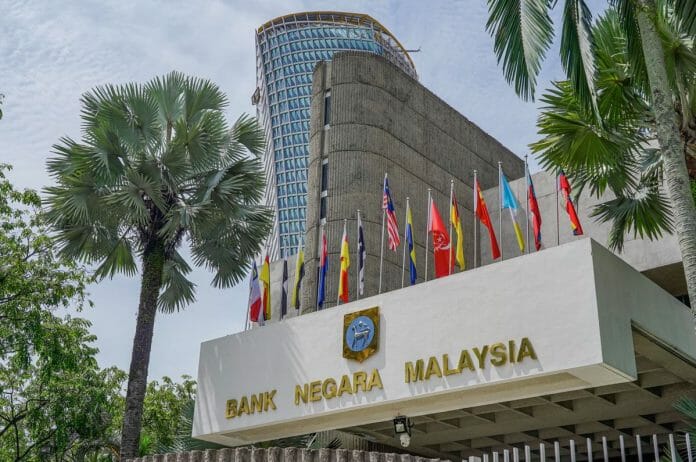
To this point HLIB said, “Against this highly fluid external backdrop of softer underlying growth and higher inflation, we maintain our view that Bank Negara Malaysia will adopt a wait-and-see approach,”
The research house said it expects Bank Negara to keep the overnight policy rate (OPR) unchanged at 2.75% throughout 2026 as the policymakers balance growth risks against inflation pressures.

