


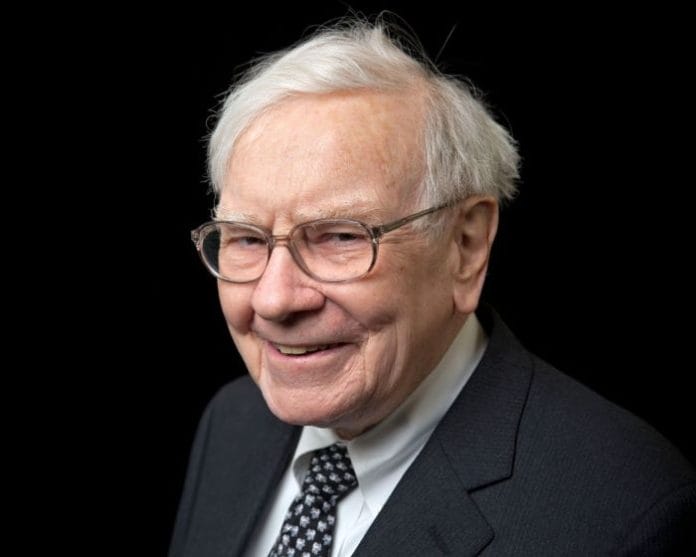
How does a small textile mill transform into an empire that compounds at an astonishing 19.7% annually over six decades?
If you had invested just $1,000 in Berkshire Hathaway in 1965, that single investment would be worth over $60 million by the end of 2025.
To demystify this wealth-building machine, I embarked on a deep journey of research to author my second book, “Buffett’s Biggest Deals” (launched in May 2026). My goal was simple: to study the rationale behind Warren Buffett’s most iconic multi-billion-dollar moves, filter out the noise, and translate these lessons into highly actionable rules for everyday investors. And yes, as a local Malaysian author, to prove that you don’t have to be on Wall Street to master the craft of value investing—Malaysia Boleh!
Here are the 10 core investing lessons I learned from dissecting the billion-dollar wins and mistakes that built Berkshire Hathaway.
Part 1: The Coca-Cola Chronicles (Lessons 1 – 4)
Warren Buffett’s partnership with The Coca-Cola Company is arguably his most famous. Berkshire began accumulating shares in 1988, eventually establishing a position that cost $1.3 billion. Fast forward to December 31, 2025, and that same position has paid out $12.4 billion in cumulative dividends and is valued at $28.0 billion, yielding an Internal Rate of Return (IRR) of 13.6%.
From this legendary deal, we extract four critical lessons:
Lesson 1: Earnings Growth Drives Long-Term Capital Growth
In the long run, a stock’s price is a slave to its business performance. Before Berkshire stepped in, Coca-Cola’s net income was $916 million. Post-acquisition, its earnings expanded to $2.55 billion, and by 2025, it climbed to $13.107 billion. Your capital appreciation is fundamentally driven by this underlying engine of earnings growth.
Lesson 2: Prioritize Long-Term Investing over Macro-Predictions
Over Berkshire’s holding period, the global economy faced Black Monday (1987), the Dotcom Bust, the Global Financial Crisis, and the COVID-19 pandemic. Had Buffett reacted to these short-term “global uncertainties” and sold, he would have sacrificed billions in compounding. Focus on business fundamentals, not macro-forecasts.
Lesson 3: Be Wary of Massive Overvaluation (And Know the Cost of Holding)
During the height of the Dotcom bubble around 1998, Coca-Cola’s P/E ratio spiked to an astronomical 45 to 50. At this point, the stock price had aggressively outrun its $3.5 billion in earnings. Consequently, investors who bought at the peak suffered a long period of flat-to-no capital growth. Years later, even when earnings rose to $9 billion, the P/E ratio normalized back to a healthier 16 to 20. Valuation always matters.
Lesson 4: Retail Investors Have Distinct Advantages over Institutional Giants
Many ask: If Coke was so overvalued in 1998, why didn’t Buffett sell? This highlights the unique advantage you have as a retail investor:
- No Market Panic: If Berkshire tried to liquidate its 8% stake in Coke in 1998, it would have sent shockwaves through Wall Street. You can buy and sell instantly without moving the market.
- Freedom from the Spotlight: No media outlet or shareholder base is scrutinizing your portfolio on a daily basis.
- No Relationship Conflicts: Buffett maintains close personal friendships with corporate management, making major divestments socially and professionally complex. You have total autonomy.
- Part 2: The GEICO Rescue & Roll-up (Lessons 5 – 8)
GEICO is the cornerstone of Berkshire’s insurance empire, but the relationship was a multi-decade journey filled with missed opportunities and brilliant turnarounds.
Lesson 5: The Cost of Selling Too Early (Focus on Long-Term Holding)
Buffett actually discovered GEICO in 1951, buying 350 shares for $10,282. He turned a quick profit, selling them a year later in 1952 for $15,259. However, had he simply held those 350 shares until the 1970s, they would have been worth over $1.3 million (more than 100x his money). This rookie mistake solidified Lesson 1: keep your winners for the long term.
Lesson 6: In Insurance, Profitability Rules Over Volume
In the mid-1970s, GEICO’s management began aggressively chasing market share and volume. They underpriced their insurance policies and catastrophically underestimated claim costs. The result? GEICO recorded a massive $126.4 million loss in 1975, and its stock price collapsed from $58 to just $2 per share.
Lesson 7: Crises Often Present the Ultimate Investment Opportunities
With GEICO on the brink of bankruptcy, a new CEO named Jack Byrne took the helm. Byrne ruthlessly prioritized underwriting profitability over volume. Recognizing GEICO’s inherent cost-effectiveness as a direct-to-consumer insurer, Buffett stepped in during this crisis. He invested $45.7 million for a 50.2% stake at an average P/E of just 3.8. By 1995, this stake had rocketed to $2.392 billion—a massive 50x return (excluding dividends) with an IRR of 23.2%.
Lesson 8: Invest Based on Valuation, Not Price
In 1995-1996, Berkshire decided to buy the remaining 50% of GEICO for $2.3 billion—vastly more than the $45.7 million paid for the first half. Was it worth it?
- The Math: Cost per share was $70.00, against an EPS of $2.97 (a P/E of 23.57).
- The Growth: GEICO’s EPS was growing at 19.1% per year.
Because GEICO’s intrinsic value had grown exponentially, the $2.3 billion price tag was actually a fair valuation. Since that acquisition, GEICO has generated a staggering $38.1 billion in cumulative pre-tax underwriting profits (1996-2025). - Part 3: Modern Tech Battles: Apple vs. IBM (Lessons 9 – 10)
Buffett was historically famous for avoiding technology stocks, but his actions over the last decade show how his framework adapts to modern giants.
Lesson 9: Temperament is More Important than Intelligence
To illustrate this, we look at the legendary investor Carl Icahn versus Warren Buffett in Apple Inc.:
Metric / Question Carl Icahn Warren Buffett Who had the intelligence to invest first? ?? (Bought in 2013) (Bought in 2016) Who had the temperament to hold? Sold in 2015 Held to Present (2026) Holding Period 2+ Years 10 Years Capital Gains ~$2 Billion (~48-50%) >$100 Billion (>5x)
Intelligence helps you identify a winner, but temperament is what gives you the emotional stability to sit tight and hold that winner for the long haul.
Lesson 10: Cut Losses Quickly When You Recognize a Mistake
Value investing is not about being right 100% of the time; it is about recognizing when your original thesis is broken. When Buffett realized his investment in IBM was a mistake—as the company’s transition to cloud and services failed to keep pace with competitors—he didn’t let pride get in the way. He systematically sold his position and cut his losses, freeing up capital to redirect into better opportunities like Apple.
Conclusion: The Roadmap to Smarter Investing
Studying Warren Buffett’s biggest deals reveals that successful investing isn’t about finding complex, secret formulas. Instead, it is built on a few deeply disciplined habits:
- Identify high-quality businesses with growing earnings.
- Buy them at attractive valuations, particularly during market crises.
- Cultivate the emotional temperament to hold onto your winners for decades, while remaining humble enough to cut your losses when you make a mistake.
Whether you are starting with a few thousand Ringgit or managing millions, these ten lessons are your compass to navigating the stock market.
By Ian Tai Financial Content Machine. Dividend Investor. Produced 500+ Financial Articles featured in KCLau.com in Malaysia and the Fifth Person, Value Invest Asia, and Small Cap Asia in Singapore


