


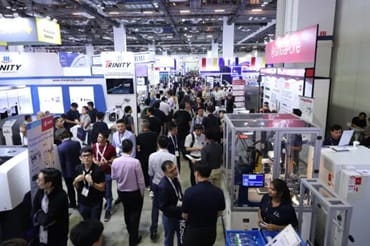
Malaysia is strengthening its position in the global semiconductor ecosystem as the industry shifts towards higher-value segments such as advanced packaging, IC design, intelligent manufacturing and supply-chain integration, according to Kenanga Research.
In a report following the SEMICON Southeast Asia 2026 event, Kenanga said advanced packaging has become a critical technology area as semiconductor companies seek to overcome challenges from the slowing pace of Moore’s Law and rising demand from artificial intelligence (AI) and high-performance computing (HPC) applications.
The research house noted that advanced packaging is no longer viewed as a traditional back-end assembly process, but has evolved into a strategic layer that determines semiconductor performance by improving memory bandwidth, reducing latency, enhancing power efficiency and managing thermal challenges.
“Advanced packaging is now a key enabler for next-generation semiconductor performance, particularly as AI and HPC workloads become increasingly constrained by memory and power requirements,” Kenanga analysts said.
The report highlighted that the strongest value creation opportunities are expected to come from AI and HPC-related technologies, including flip-chip ball grid array (FCBGA), 2.5D and 3D chip integration, high-bandwidth memory (HBM), hybrid bonding, high-end substrates and future glass substrate technology.
Kenanga said Malaysia’s opportunities remain selective but promising, particularly in areas such as outsourced semiconductor assembly and test (OSAT), automation, testing, precision engineering, photonics packaging and semiconductor process infrastructure.
The formation of the Malaysia Advanced Packaging Consortium (MAPC) was viewed as a positive strategic development, with the consortium targeting a roadmap from pilot validation in 2026, C4 bumping capabilities by 2027 and 2.5D packaging capability by 2028.
Among companies linked to the advanced packaging theme, Kenanga highlighted MAPC members including SkyeChip, Inari Amertron Berhad, FusionAP Sdn Bhd, Pentamaster Corporation Berhad and NSW Automation Sdn Bhd.
Despite the positive long-term outlook, Kenanga maintained a “Neutral” stance on the semiconductor sector, citing uncertainties around demand recovery and global market conditions.
The research house continued to favour companies with stronger order visibility, margin resilience and exposure to AI and front-end semiconductor trends, naming Kobay Technology Berhad, UWC Berhad, Frontken Corporation Berhad and Infomina Berhad as its preferred picks.
Kenanga added that it remained cautious on electronics manufacturing services (EMS) players due to softer end-market demand and foreign exchange sensitivity.
The report concluded that Malaysia’s semiconductor industry is entering a new phase, where growth opportunities will increasingly depend on moving up the value chain into advanced technologies rather than relying solely on conventional assembly and testing activities.


