


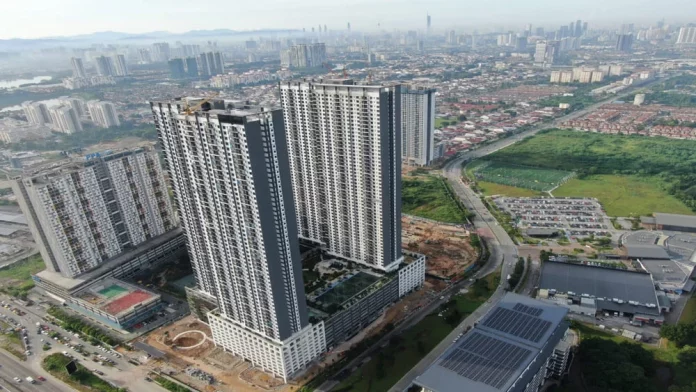
High-rise residential developments such as condominiums and serviced apartments have become a dominant feature of Malaysia’s urban housing landscape, offering a solution to land constraints caused by rapid urbanisation.
However, as the country faces growing concerns over energy security and rising living costs, a new analysis by the Khazanah Research Institute highlights a critical challenge: many existing vertical residential buildings may not be designed to reduce energy consumption or adapt easily to renewable energy transition.
The article titled “Cabaran Kediaman Vertikal Menangani Krisis Tenaga: Tiga Titik Buta Sektor Perumahan Malaysia” by Muhammad Nazhan Kamaruzuki published in notes that high-rise housing has expanded significantly, particularly in Kuala Lumpur.
According to the study, apartments and condominiums now account for around 45% of housing units in Kuala Lumpur, while serviced apartments represent another 20%. Since 2015, apartment and condominium supply in the capital has increased by 103%, while serviced apartment supply has grown by more than 400%.
While vertical housing improves land efficiency, the research cautions that energy consumption in such buildings is heavily dependent on fixed mechanical and electrical systems that cannot easily be reduced or replaced.
Energy Use Locked into Building Systems
Unlike landed properties where residents have greater control over their own energy usage, occupants in high-rise buildings rely on shared systems such as lifts, water pumps, ventilation systems and other essential facilities.
These systems must operate continuously to maintain safety and functionality.
For example, lifts are required to ensure mobility for residents, while water pumps must continuously supply water to upper floors. Reducing their operation is often not feasible without affecting building performance and safety.
The research points out that many building systems are also difficult to upgrade after construction. Unlike household appliances that can be replaced with more energy-efficient models, major infrastructure such as lift machinery and building-wide electrical systems requires extensive technical and regulatory considerations.
This creates what researchers describe as a “locked-in” energy consumption pattern, where residents have limited ability to reduce overall building energy demand.
Design Choices Increase Energy Dependence
The study also highlights that many high-rise developments prioritise aesthetic appeal and visual design over long-term energy efficiency.
Large glass facades without adequate shading, for example, may increase heat absorption and create greater dependence on air-conditioning systems.
Although such designs may enhance the appearance of buildings, they can increase cooling requirements throughout the day and contribute to higher electricity consumption.
Shared facilities such as swimming pools, gyms and other amenities also contribute to continuous energy demand.
The article argues that these design decisions can limit future opportunities for buildings to adopt renewable energy solutions
Challenges in Renewable Energy Adoption
While some newer high-rise projects incorporate green features such as solar energy systems, retrofitting older buildings remains challenging.
Existing vertical developments face technical limitations, structural constraints and regulatory issues, particularly involving common property ownership and strata management rules.
As a result, many urban residents may find themselves excluded from renewable energy incentives that are more easily adopted by landed property owners.
The study warns that without intervention, a growing segment of urban housing could become affordable to purchase but increasingly expensive to maintain sustainably.
Higher Energy Costs Could Raise Housing Burden
The impact of inefficient energy design extends beyond electricity bills.
As energy costs rise, building management expenses are likely to increase, putting pressure on strata maintenance fees paid by residents.
Even if individual households reduce their own electricity usage, they may still face higher charges due to the overall energy requirements of shared building systems.
The research suggests that housing affordability assessments should consider long-term maintenance costs, as ownership affordability does not necessarily translate into sustainable living affordability.
Policy Changes Needed for Future Housing
The study calls for a shift in how high-rise residential developments are planned and approved.
Future projects should not only be evaluated based on density and economic returns, but also their ability to manage energy consumption, integrate renewable technologies and withstand future energy price pressures.
Among the proposed measures are:
- requiring more energy-efficient building designs as part of development approval criteria;
- improving flexibility for strata management bodies to use sinking funds for energy upgrades;
- reviewing utility tariff structures, particularly for serviced apartments used primarily as residential properties; and
- ensuring renewable energy programmes account for the realities of high-rise living.
The research notes that while vertical housing remains important for controlling urban sprawl and reducing dependence on long-distance commuting, sustainability challenges must be addressed.
High-rise living may solve Malaysia’s land constraints, but without stronger energy planning, it could create a new challenge — homes that are efficient in land use but vulnerable to rising energy costs and climate pressures.

