



I drove the Toyota bZ4X knowing it carries a bit of history with it. This is Toyota’s first fully battery electric vehicle (EV), and it arrives in Malaysia as part of the brand’s “bZ” (Beyond Zero) direction, an idea that goes beyond emissions reduction and into how the car is designed to add value in everyday use.
The name bZ4X breaks down simply: “bZ” stands for Beyond Zero, Toyota’s electric vision centred on emissions-free mobility, while “4X” identifies it as a compact crossover SUV.
Priced at RM220,000, it serves as Toyota’s statement EV, built around a 73.1kWh large-capacity battery with a claimed range of up to 525km, and a clear emphasis on everyday usability rather than outright theatrics.
A familiar SUV reworked for electric duty
From the outside, I find the bZ4X immediately recognisable as a Toyota, but not one I’ve seen before. The “Hammerhead” front design and aerodynamic surfacing give it a futuristic edge.
What matters more in daily use is what sits underneath that shape. The e-Toyota New Generation Architecture EV platform gives it a low centre of gravity and a planted stance that I notice more when driving than when looking at it.
It doesn’t feel like a converted SUV; it feels designed from the ground up for electrification.
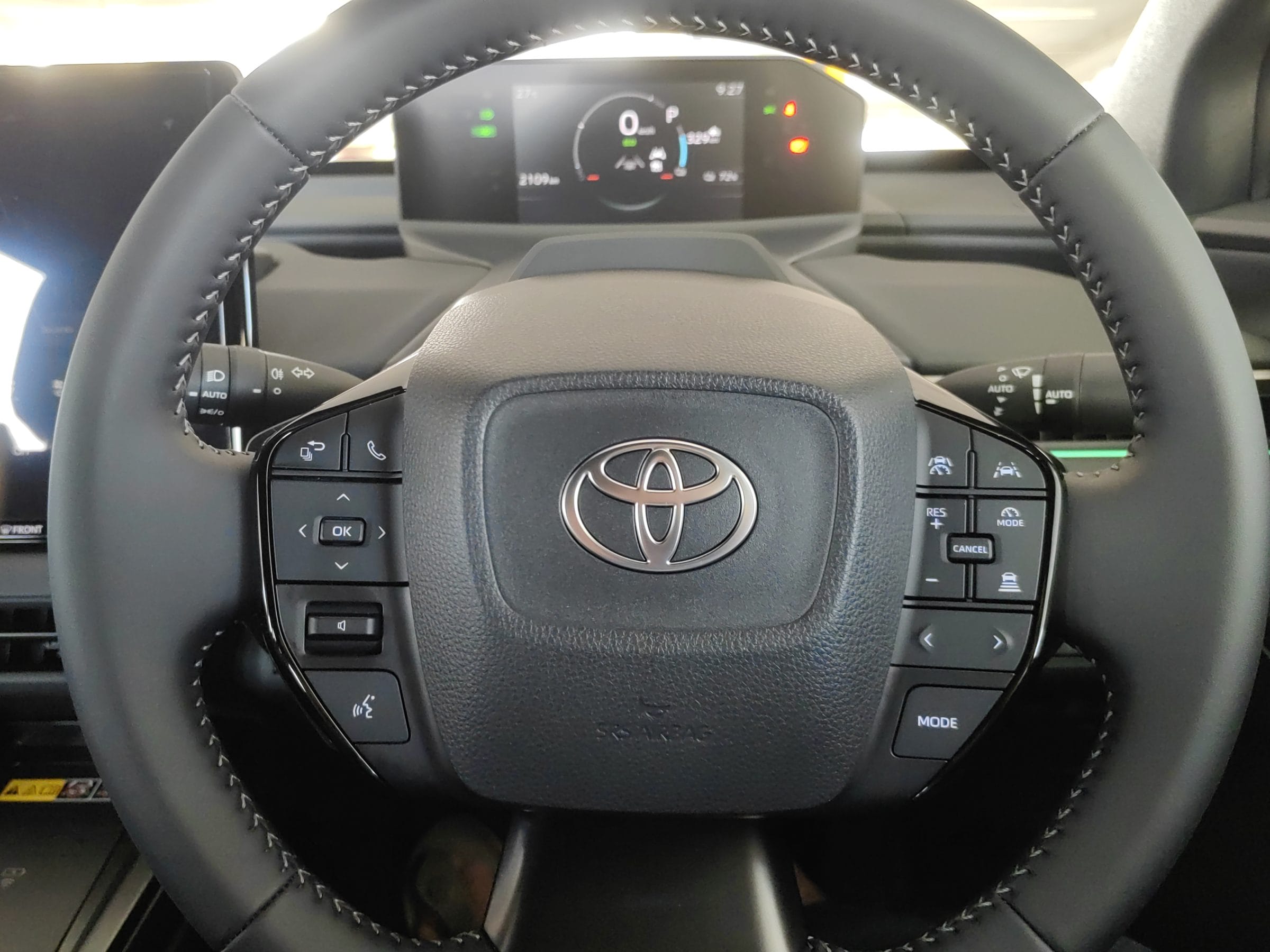
Inside, I get a cabin that is deliberately minimal but not sparse. The layout feels open, almost lounge-like, with a low-set dashboard that improves forward visibility.
The main interface is a 14-inch infotainment screen that handles most functions, while a seven-inch graphic meter sits lower in the driver’s line of sight. This is where I hit my first real quirk — the placement.
Depending on my seating position, the steering wheel can partially obstruct the view of the digital cluster, which takes some adjustment.
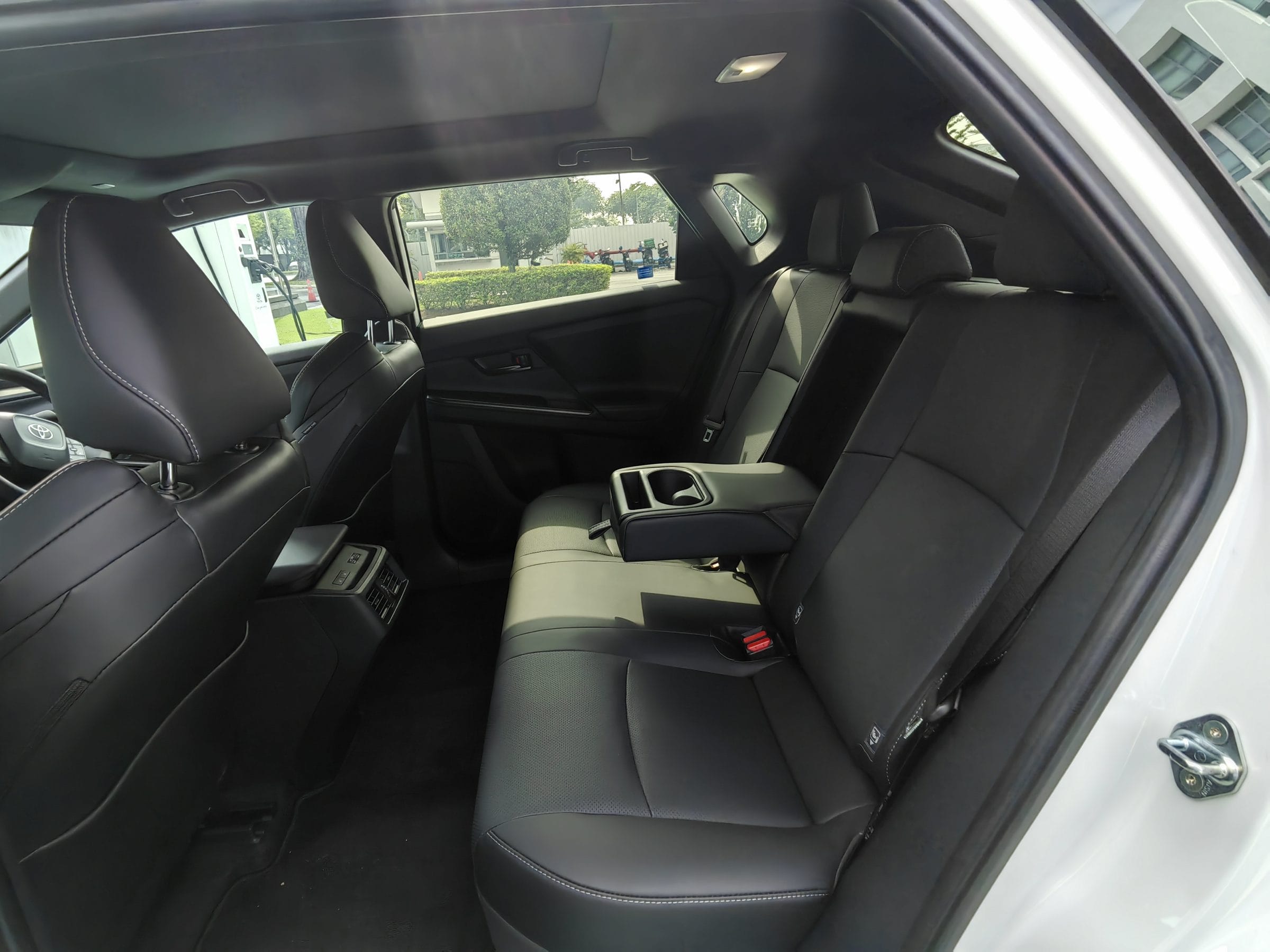
There’s also a mix of thoughtful and slightly misplaced features, such as the seat warmer function, which, for example, feels unnecessary in Malaysia’s climate. On the other hand, the ventilated seats are genuinely effective and quickly become something I rely on in traffic.
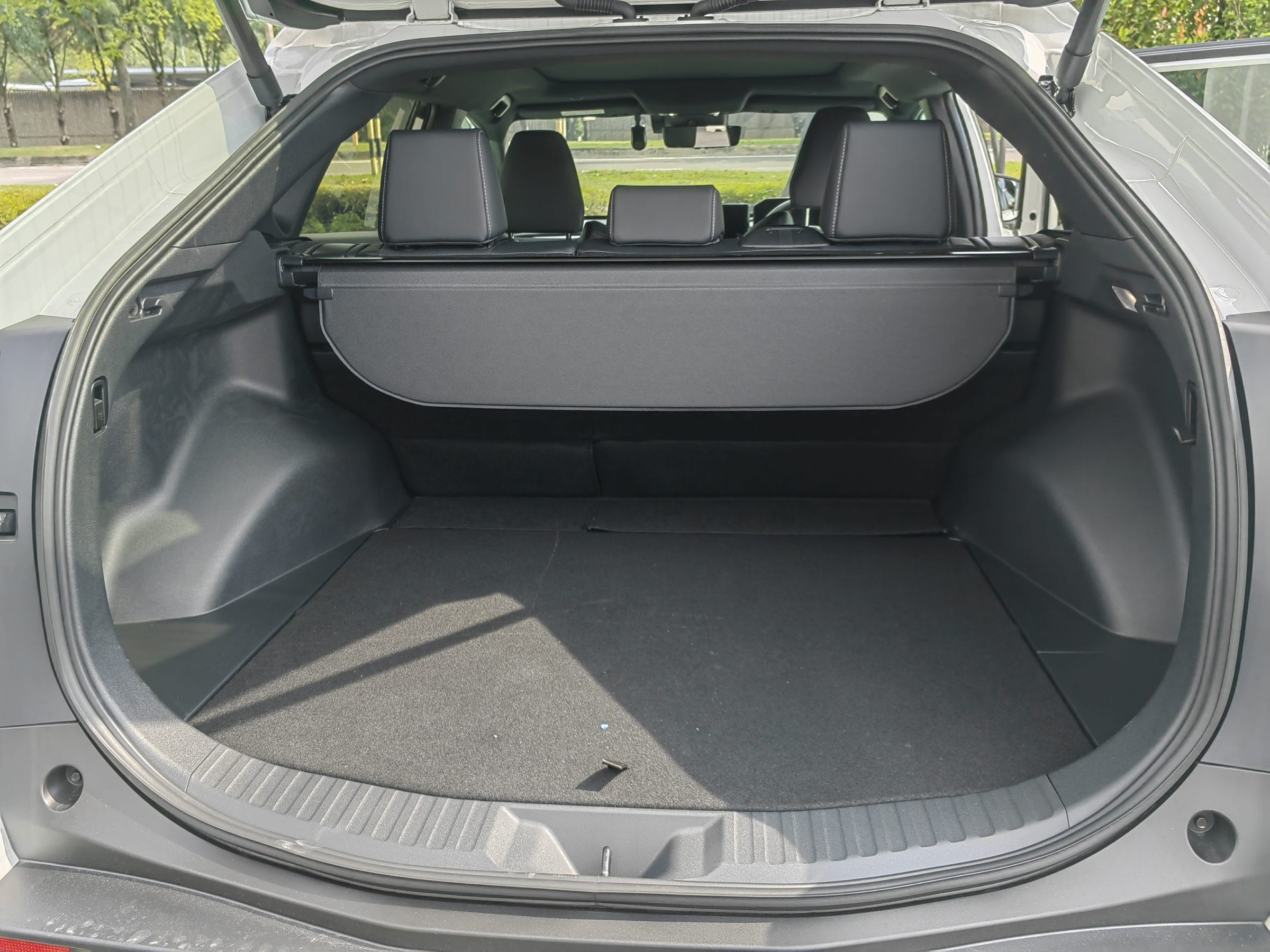
Storage, meanwhile, is practical, as the 452-litre rear boot space is genuinely usable. I can see it working well for airport runs, golf bags or a family weekend trip without needing to play packing Tetris.
Driving the bZ4X
On the move, the bZ4X is not trying to impress me with aggression. The single-motor setup delivers smooth, predictable acceleration that feels tuned for real-world driving rather than headline sprint figures.
The large 73.1kWh battery gives it a sense of long-legged confidence, and the power delivery is linear rather than sudden. It’s not a fast EV in the modern benchmark sense, but it is an easy one to live with.
What stands out more is refinement. Road imperfections are absorbed cleanly and the cabin remains quiet even when speeds build up. It feels like Toyota has prioritised stability and comfort over chasing outright performance numbers.
Regenerative braking can be adjusted via steering paddles, which lets me fine-tune how the car slows down. Once set, it becomes second nature in city driving.
Everyday Usability
Meanwhile, Toyota has clearly designed the bZ4X around routine ownership rather than novelty. The infotainment system supports Apple CarPlay and Android Auto, and while the interface isn’t the most cutting-edge in the segment, it is straightforward to operate without a learning curve.
The safety suite is comprehensive, with adaptive cruise control, lane tracing assist, blind spot monitoring and a full suite of driver assistance features that work quietly in the background rather than feeling intrusive.
Charging capability and range are competitive enough for daily and intercity use, especially as Malaysia’s charging infrastructure continues to expand.
Final Verdict
What I take away from the Toyota bZ4X is not excitement in the traditional EV sense, but reassurance.
It doesn’t try to overwhelm with speed or tech overload. Instead, it focuses on being predictable, comfortable and built for long-term use — very much in line with Toyota’s reputation for durability.
Yes, there are quirks. The seat warmer feels out of place here. The seven-inch meter placement could be better thought out. And some rivals offer faster charging and more aggressive performance.
But the trade-off is a car that feels familiar very quickly. And for a first EV from Toyota, that familiarity might be the most important feature of all.

