In Teach You A Lesson, a 2026 Korean action-drama, schools in South Korea have reached a breaking point. Teachers have lost authority, student gangs operate with growing influence and powerful parents are able to bend disciplinary outcomes to their will. As violence, corruption and misconduct spiral beyond the control of individual schools, the Ministry of Education establishes a specialised intervention unit known as the Educational Rights Protection Bureau.
The bureau is deployed into schools where internal systems have failed. Led by former Special Forces captain Na Hwa-jin, the unit handles cases involving gang violence, illicit gambling, drug misuse, false accusations against teachers and political interference in school discipline. As the series progresses, what begins as case-by-case intervention gradually unravels into a deeper conspiracy, pushing the team to operate beyond formal boundaries in pursuit of accountability.
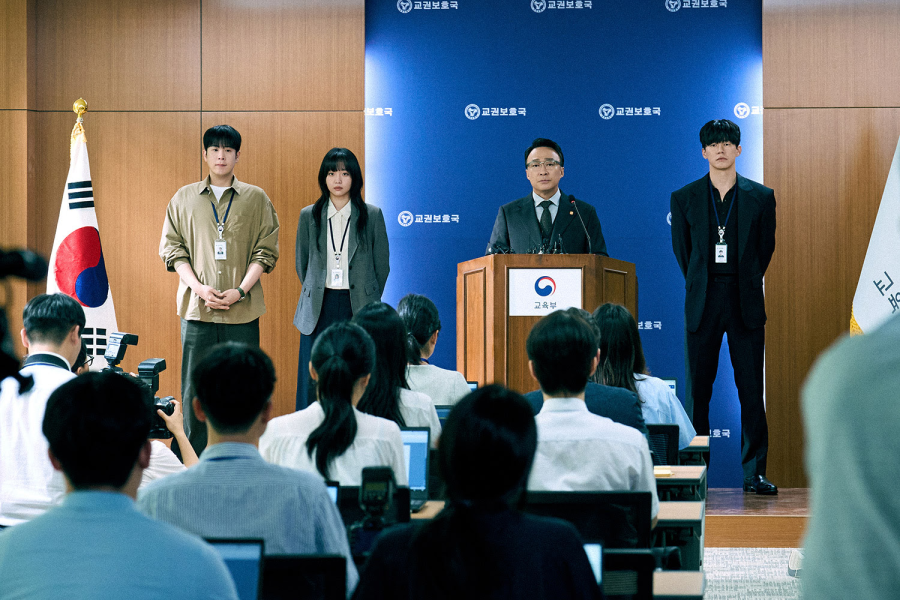
Beyond its action-heavy premise, Teach You A Lesson has also been widely read as a social commentary on education systems under strain.
As writer and educator Alwyn Lau noted in a reflection on the series, its initial appeal lies in stylised action and high-intensity storytelling, but its deeper impact emerges through its depiction of systemic breakdown within schools.
Adapted from the Naver webtoon Get Schooled, the series centres on a special unit under South Korea’s Ministry of Education tasked with responding to extreme school crises, ranging from bullying and addiction to violence and institutional failure.
While the action sequences and character portrayals deliver immediate entertainment value, Lau argued that the narrative gradually expands into a broader commentary on how education systems reflect wider societal conditions. Schools become a microcosm of social tension, where students, parents, teachers and administrators are locked in overlapping cycles of pressure, expectation and conflict.
He added that the series’ portrayal of bullying, parental obsession and institutional strain resonates strongly across many Asian societies, where education is closely tied to social mobility and family aspiration.
The premise is fictional, but the question it raises is real: when school systems reach a point of structural breakdown, should governments respond with a dedicated enforcement-style intervention body?

Against this backdrop, BusinessToday sat down with education expert Dr Herbary Cheung, Lecturer at the School of Arts and Social Sciences, Monash University, alongside Malaysian teachers, to explore whether such a model has any real-world relevance and what its implications would be for schools, educators and students.
A system under strain, not without structure
According to Dr Herbary, Malaysia’s challenge is not a lack of disciplinary systems, but how those systems function when pressure builds.
“The central issue is not that Malaysian schools lack disciplinary mechanisms, but that interventions often occur only after problems have escalated,” he said.
He explained that breakdowns usually occur when early warning signs are missed, victims are reluctant to report incidents or communication between teachers, counsellors, administrators and parents becomes fragmented.
Bullying, he added, is often treated as an isolated disciplinary issue rather than a broader social pattern shaped by peer groups, family dynamics and wider community behaviour. By the time external intervention becomes necessary, institutional trust has often already eroded.
This raises the central tension reflected in the drama itself: should education systems respond to breakdowns with stronger enforcement bodies, or strengthen early intervention so crises do not escalate in the first place?
When fiction feels familiar in classrooms
While set in a fictionalised South Korean context, Teach You A Lesson has struck a chord with Malaysian teachers who say its depiction of school pressure feels unexpectedly close to reality.
One primary school teacher said several episodes reflected familiar day-to-day challenges, particularly in managing parental expectations alongside administrative demands.
“A lot of the episodes resonate with me as a teacher,” the teacher said. “Parents often message at night over very minor issues, like asking for assignments to be rechecked even when their child completed them independently.”
The teacher added that while school management often stresses the need for students to be more resilient, the operational burden frequently falls on educators.
“There is pressure from management that students need to ‘toughen up’, but in practice that pressure often falls on teachers themselves.”
In the same experience, the teacher noted that while physical violence is relatively uncommon in primary school settings, other forms of conflict remain persistent.
“For primary schools, physical violence is rare, but issues like verbal abuse, slander and emotional bullying are still very real.”
Beyond individual accounts, broader online discussions among teachers and viewers reflect similar sentiments, with many saying the series mirrors aspects of their own working environments.
A recurring theme is the growing intensity of parent communication, particularly outside school hours, alongside rising expectations for teachers to manage both academic performance and behavioural issues.
Educators also pointed to the position teachers often find themselves in, caught between institutional expectations, parental influence and student welfare responsibilities.

Across these discussions, many described a blend of frustration, empathy and reflection, noting that while physical violence may be less visible in some schools, emotional strain, verbal conflict and reputational pressure remain everyday challenges.
Others highlighted structural tensions within school systems, where disciplinary decisions can be shaped by external influence or where teachers may feel constrained in acting decisively due to concerns over complaints and administrative scrutiny.
At the same time, some educators offered more balanced reflections, noting that despite these pressures, meaningful teacher-student relationships can still form when clear boundaries are maintained alongside empathy and mutual respect.
Overall, these responses suggest a shared takeaway: while the series is fictionalised and dramatised, many educators recognise fragments of their own professional reality within it, particularly in the evolving dynamics between teachers, parents and institutional authority.
Organised behaviour and digital spillover
One of the drama’s defining elements is its portrayal of bullying as structured, group-based behaviour rather than isolated incidents. While Malaysia does not show evidence of systematic coordination on a national scale, Herbary noted that bullying increasingly operates through peer networks.
These networks can reinforce exclusion, intimidation and group-based aggression, making intervention more complex than traditional one-on-one disciplinary models.
He also highlighted the growing role of digital platforms.
Bullying no longer ends at the school gate. Messaging apps and social media extend harassment beyond physical spaces, creating continuous pressure on victims and making it harder for schools to track and intervene effectively.
“This makes bullying more difficult to detect and intervene in, as it blurs the boundaries between school life and digital spaces,” he said.
Current disciplinary frameworks, he added, remain largely focused on individual perpetrators, which may be insufficient when behaviour is shaped by group dynamics and online ecosystems.

Teacher authority: collapse or transformation?
In Teach You A Lesson, teachers are frequently portrayed as powerless figures caught between aggressive students, influential parents and administrative fear of backlash. In Malaysia, Herbary said the reality is more nuanced.
Rather than a collapse of authority, he described it as a reconfiguration of how authority is exercised.
Teachers today operate within a more complex ecosystem shaped by stronger parental engagement, greater accountability requirements and increased visibility through digital communication channels.
“The challenge is not restoring authority, but balancing accountability with professional trust,” he said.
This tension is reflected in lived classroom experiences. Teachers increasingly find themselves managing not only students, but also parental expectations that can escalate quickly, even over minor academic concerns.
Beyond administrative pressure, teachers also point to emotional strain caused by verbal conflict, slander and peer-to-peer student behaviour that may not always escalate into physical violence but still affects classroom wellbeing.
Transparency, reporting gaps and institutional pressure
Another recurring theme shared between the drama and real-world systems is the issue of reporting and institutional transparency.
Malaysia has established formal disciplinary reporting channels through schools, state education departments and the Ministry of Education. However, Herbary noted that effectiveness depends heavily on implementation and trust in the system.
Schools may also face pressure to maintain a perception of order and safety, which can unintentionally discourage full disclosure or lead to delays in escalating cases.
This creates a gap between formal policy and lived experience, where incidents may be underreported or inconsistently documented depending on institutional culture and resources.
Strengthening transparency, he said, is less about introducing new systems and more about ensuring existing ones are consistently applied and trusted.

Parental influence and perceived fairness
The drama also highlights how influential parents can shape disciplinary outcomes, raising concerns about fairness and equity.
Herbary said there is limited evidence of systemic bias in Malaysia’s disciplinary system, but perceptions of unequal treatment remain a serious concern.
“When students, teachers or parents believe that disciplinary decisions are influenced by social status or connections, trust in the system is undermined,” he said.
He stressed that fairness is maintained not by restricting parental involvement, but by ensuring consistent procedures, clear documentation and transparent decision-making.
When escalation becomes necessary
While schools are expected to manage most disciplinary issues internally, Herbary said escalation beyond the school level becomes necessary in cases involving repeated misconduct, serious violence or persistent bullying.
Malaysia already has referral pathways involving counsellors, education departments, child protection agencies and law enforcement, but their application varies across institutions.
He said a clearer multi-agency framework is needed, one that balances accountability with rehabilitation rather than defaulting to punishment.

Psychological bullying and invisible harm
Beyond physical violence, Teach You A Lesson highlights emotional manipulation, exclusion and psychological abuse as central forms of harm.
Herbary said Malaysian schools are generally more equipped to identify physical bullying than psychological forms, which are more subtle, cumulative and harder to detect.
Teachers also note this gap in practice, where emotional harm and social exclusion are often harder to formally document despite their significant impact on student wellbeing.
Strengthening teacher training, counsellor capacity and early reporting systems, he said, is critical to addressing these less visible forms of harm.

Enforcement models and the MARA question
The idea of enforcement-led school intervention is not entirely fictional. In Malaysia, MARA’s pilot programme involving retired military and police personnel in MRSM hostels reflects a similar logic of discipline through structured authority.
Herbary said such personnel can be useful in supervision and crisis management, particularly in residential environments where discipline challenges may escalate quickly.
However, he cautioned against expanding enforcement-heavy models across the broader education system.
“Schools are fundamentally educational institutions rather than security institutions,” he said.
Over-reliance on enforcement, he added, risks weakening trust and failing to address the root causes of behavioural issues.

Punishment versus rehabilitation
Across the drama, disciplinary cases are often resolved through decisive punishment or removal of offenders. Herbary said Malaysia’s approach should instead prioritise rehabilitation, especially for adolescents.
While suspension or expulsion may be necessary in severe cases, he said these should remain last-resort measures.
Restorative practices, counselling, behavioural interventions and family engagement are more sustainable approaches for addressing underlying causes while maintaining school safety.
If Malaysia built its own EPRB equivalent
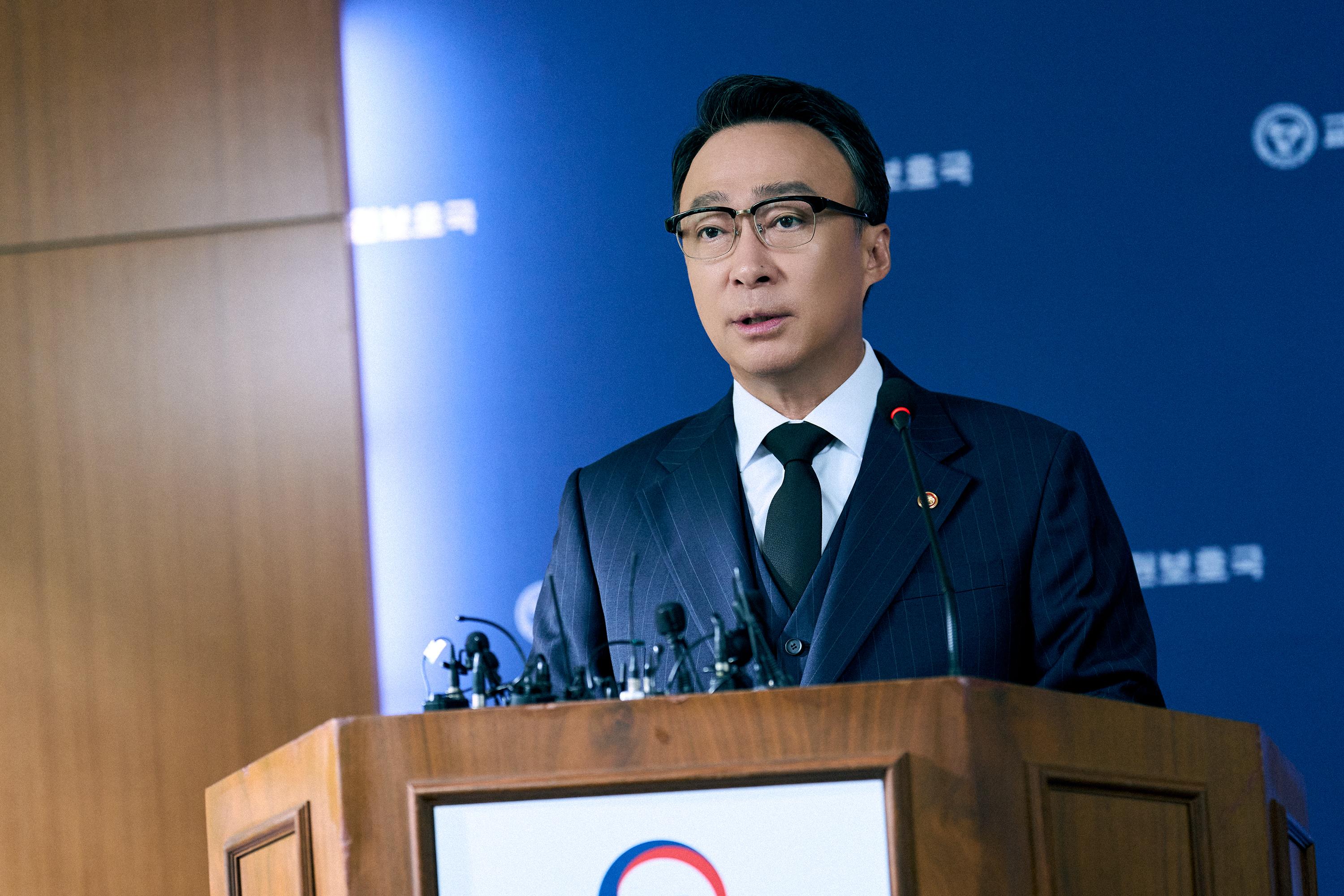
If Malaysia were to design a real-world equivalent of the Educational Rights Protection Bureau, Herbary said it should not function as an enforcement agency.
Instead, it should operate as an independent oversight and support body focused on crisis intervention, mediation, training and systemic improvement.
Such a body would require multidisciplinary expertise spanning education, counselling, law and child protection, alongside strong legal safeguards to prevent overreach.
Its role would be to strengthen schools rather than replace them, ensuring consistent standards while supporting early intervention and accountability.
Conclusion: beyond enforcement, toward trust
While Teach You A Lesson leans into dramatic enforcement and vigilante-style resolution, the Malaysian reality points to a more layered institutional challenge.
Schools are not struggling due to the absence of discipline frameworks, but due to the increasing complexity of expectations placed upon them by students, parents, administrators and society.
As Herbary suggested, the long-term solution is not the creation of a new enforcement agency, but strengthening early intervention systems, improving coordination and rebuilding trust across the education ecosystem.
Ultimately, schools remain more than sites of discipline. They are environments where authority, care and responsibility must coexist if learning is to function meaningfully and sustainably.