


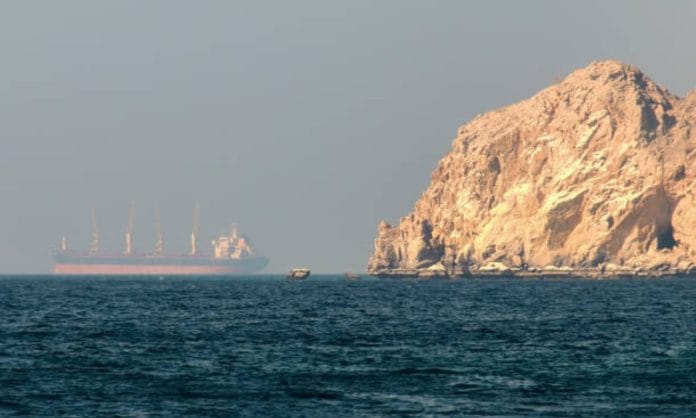
Oil prices extended their decline on Thursday, drifting closer to pre-conflict levels as shipping activity resumed through the Strait of Hormuz following an initial agreement aimed at ending the US-Israeli war with Iran.
The easing of tensions allowed stranded tankers to move again through the key energy chokepoint, reducing fears of supply disruption from one of the world’s most critical oil routes.
Brent crude futures for August delivery fell 40 cents, or 0.54%, to $73.34 a barrel as of 0004 GMT, while US West Texas Intermediate dropped 27 cents, or 0.38%, to $70.07.
The backwardation in the Brent curve, with August trading below September at $73.59, pointed to expectations of ample near-term supply as flows from the Middle East normalise faster than previously expected.
Market sentiment has shifted quickly. IG analyst Tony Sycamore said the pace of the decline has surprised traders, with pricing now reflecting a faster-than-expected return of regional supply.
Oil had already come under pressure a day earlier, with Brent falling more than $3 and WTI also sliding nearly $3 as concerns over disruption eased.
US Energy Secretary Chris Wright said flows through the Strait of Hormuz were now close to pre-war levels, with at least 20 million barrels moving through in the past 24 hours. He added that full normalisation could still take a few weeks due to demining work required in the waterway.
An initial accord reached last week to end the conflict, which began on February 28, has reopened maritime routes and established a 60-day negotiation window covering broader issues including Iran’s nuclear programme.
Oman has also opened temporary routes to help speed up tanker movement, with the International Maritime Organization coordinating alongside local authorities. Qatar’s prime minister has visited Oman for talks with regional counterparts on longer-term management of the strait.
Despite the easing in oil markets, US crude inventories fell to their lowest level since 1984 last week, according to the Energy Information Administration. However, traders largely ignored the data as focus remained on developments in the Strait of Hormuz.
Reuters


