This commentary article was contributed by Tey Eng Xin, a financial columnist and co-author of an international academic journal about investor sentiment
In the world of capital, luxury is usually defined by access: The private lounge, the chauffeured arrival and the concierge who anticipates your needs. Yet, across the urban sprawl of Southeast Asia, a subtler, more pragmatic form of luxury is emerging. It is not poured from a champagne bottle; it is the simple ability to recover, even briefly, while in the middle of motion.
Enter Rest N Go, a business built on vending massage chairs placed in malls, airports and highway rest stops seems almost too simple to command serious investor attention. But in consumer infrastructure, simplicity is often where the most durable economics hide.
Here is why a distributed comfort network might just be the region’s next great, unglamorous cash engine.
The Economics of the Waiting Room
The modern consumer economy has spent decades teaching people to move faster, inadvertently turning the city itself into one giant waiting room. Families wait outside clinics; travellers linger at transit hubs; shoppers pause in mixed-use mega-malls.
Rest N Go’s core insight is that waiting time is not dead time. On the contrary, it is monetisable, measurable and highly predictable.
Operating since 2009, the company should not be viewed merely as a massage chair operator. They are building a repeatable layer of everyday wellness infrastructure. A bottle of water at the right airport gate is not merely water; it is a response to immediate thirst. Similarly, a resting chair placed exactly where fatigue naturally accumulates operates on the exact same logic.
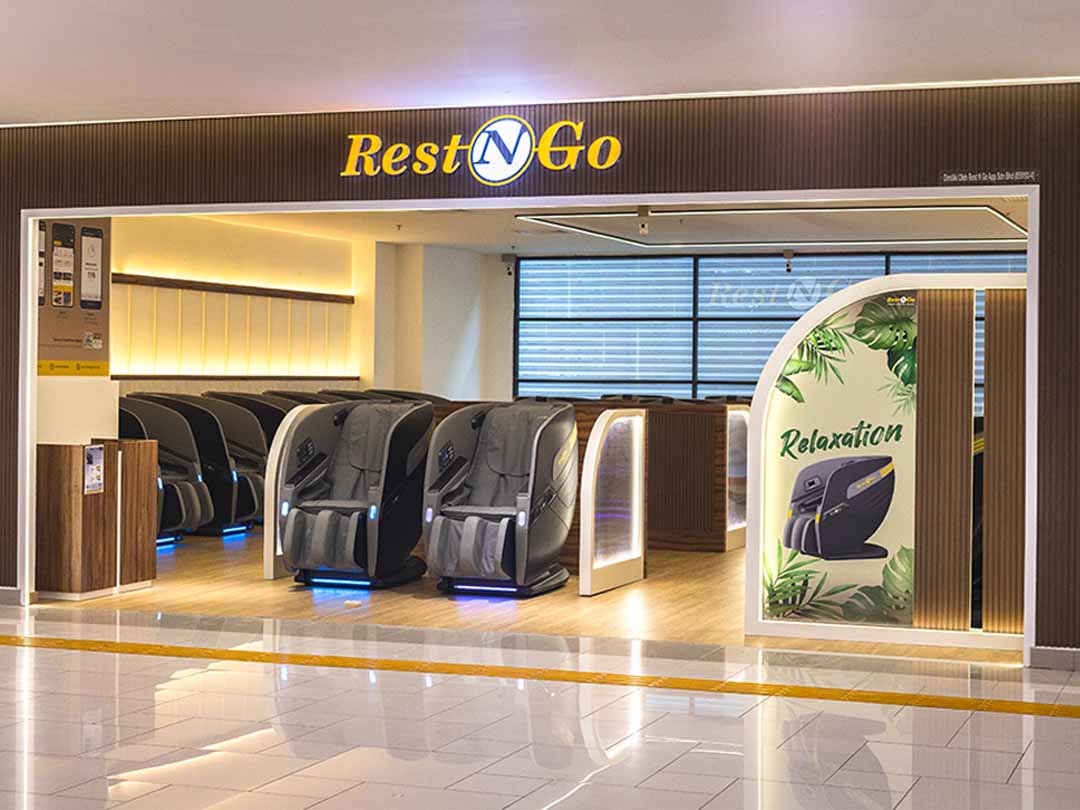
A chair in the wrong corridor is just furniture. A chair in the right corridor, carrying a familiar brand, monitored digitally and supported by deep landlord relationships is infrastructure.
Rest N Go does not need to manufacture demand from nothing; it simply places itself near a recurring human condition. But scaling that placement requires more than just leather and motors.
In a market where companies often use “digital transformation” as window dressing, Rest N Go’s technology stack is strictly, aggressively operational on two fronts:
- The Meter Reading System (MRS): Integrated with IoT boards, this allows management to monitor live machine status, usage rates and hardware performance.
- The RNG App: Beyond a payment gateway, it functions as a location-discovery and customer retention platform.
This is not artificial intelligence theatre. It is pragmatic tech used to solve the vital questions of distributed retail: Which locations work? Which chairs are idle capital? Where should we redeploy our assets?
The difference between a profitable network and a sprawling mess of broken chairs comes down to this daily execution.
Reading the Valuation: Expansion vs Margin
The broader macro tailwinds are heavily supportive. Notably, Southeast Asia is rapidly urbanising into a region of hyper-commercialised public spaces. Consumers are moving through them more often, but rarely with more energy. The wellness sector is shifting from formal, scheduled hours at a spa to casual, ten-minute increments of recovery.
However, translating that macro trend into an IPO requires a sober look at the numbers. The prospectus reveals a company that has grown revenue meaningfully, climbing from RM13.9 million in the financial year ended 2022 (FY22) to RM49.3 million in FY25. Yet, this trajectory has not been without the friction of physical expansion. Profit after tax peaked in FY24 and declined in FY25 alongside compressed gross margins. The margin compression is not a mystery: New overseas operations, higher depreciation and increased headcount cost money.
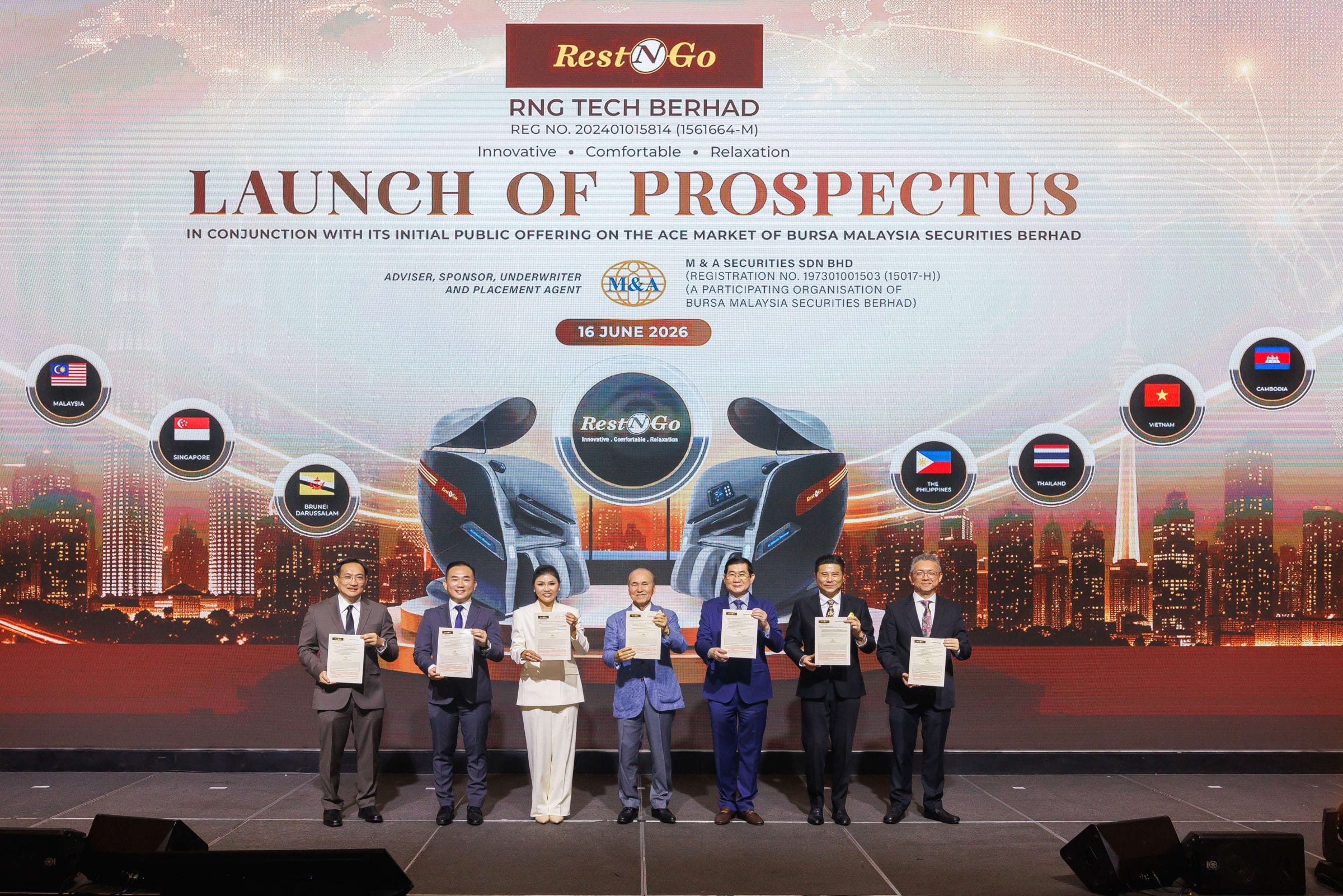
The IPO price of 13 sen per share, which implies a market capitalisation of approximately RM102.4 million, must be assessed through the lens of transition. If FY25 represents a permanent margin reset, investors should tread carefully. But if it represents a necessary investment year, absorbing the costs of new chairs and market entry before the benefits of scale kick in, the company may be entering a highly lucrative earnings phase.
Friction as a Moat
The vending massage chair business looks deceptively easy from the outside. The reality is that the barrier to entry is zero for one chair, but remarkably steep for a managed regional network.
Undeniably, anyone can buy hardware. Very few can secure prime high-traffic locations at scale, maintain rigorous hygiene routines, negotiate complex rental structures, and keep a brand acceptable in premium public spaces. This invisible architecture is Rest N Go’s actual moat.
And that moat will be tested regionally. While Malaysia remains the anchor and the highest revenue contributor, the company now operates directly in Singapore, Thailand, Cambodia and Brunei, with licensing models in Vietnam and the Philippines. The test for investors is not just watching the headline chair count grow; it is ensuring disciplined density. Expansion that dilutes margins without maturing into stable rental economics is not value creation.
Ultimately, the company’s future will depend on whether it can maintain three forms of trust simultaneously.
First, customer trust: That the chair is clean, functional, private enough and worth the impulse spend.
Second, landlord trust: Rest N Go improves the amenity value of a location without creating an operational nuisance.
Third, investor trust: That expansion is measured, capital is deployed intelligently and technology is used not as decoration but as an operating discipline.
The Human Transaction
This is not a business that should be oversold as a luxury wellness empire. It is more modest and perhaps more interesting because of that. Rest N Go is attempting to convert overlooked spaces into recurring micro-experiences.
The opportunity lies not in making rest feel extravagant, but in making it frequent. It is not about exclusivity, but familiarity. Rather than selling rest as an occasional indulgence, the real potential is in making it accessible at the exact moment it is needed.
The machine delivers the massage, the app processes the payment and the MRS records the data but the real transaction happens in a tired traveller’s split-second decision to sit down and breathe.
Repeated across thousands of chairs and multiple borders, those small emotional moments become meaningful economics.
The Discipline Behind The Dream
None of this makes execution easy. The company must continue to manage maintenance, hygiene, site economics, app engagement, overseas localisation and capital deployment. Its opportunity is real, but it is not automatic.
Yet these are operational challenges rather than conceptual flaws. If management can preserve discipline while expanding density, the platform may become more valuable than the market initially assumes.
The future of wellness may not always arrive through grand clinics, luxury retreats or expensive subscriptions. It may arrive through smaller moments, repeated thousands of times a day, across the corridors of ordinary life. Rest N Go is built around that possibility.
Which raises the larger question: Is Rest N Go merely a simple massage chair vending machine operator or is it an overlooked consumer infrastructure business hiding in plain sight?