



Weddings at JW Marriott Cam Ranh Bay Resort & Spa are increasingly being shaped less as single-day events and more as multi-day stays, where the environment sets the pace. Along Bai Dai Beach in Cam Ranh, the resort’s layout and setting play a central role in how celebrations are planned, structured, and experienced.
A Coastal Setting That Drives The Format
The resort sits about 15 minutes from Cam Ranh International Airport, close enough for easy access but far enough to shift quickly into a more contained environment once guests arrive.
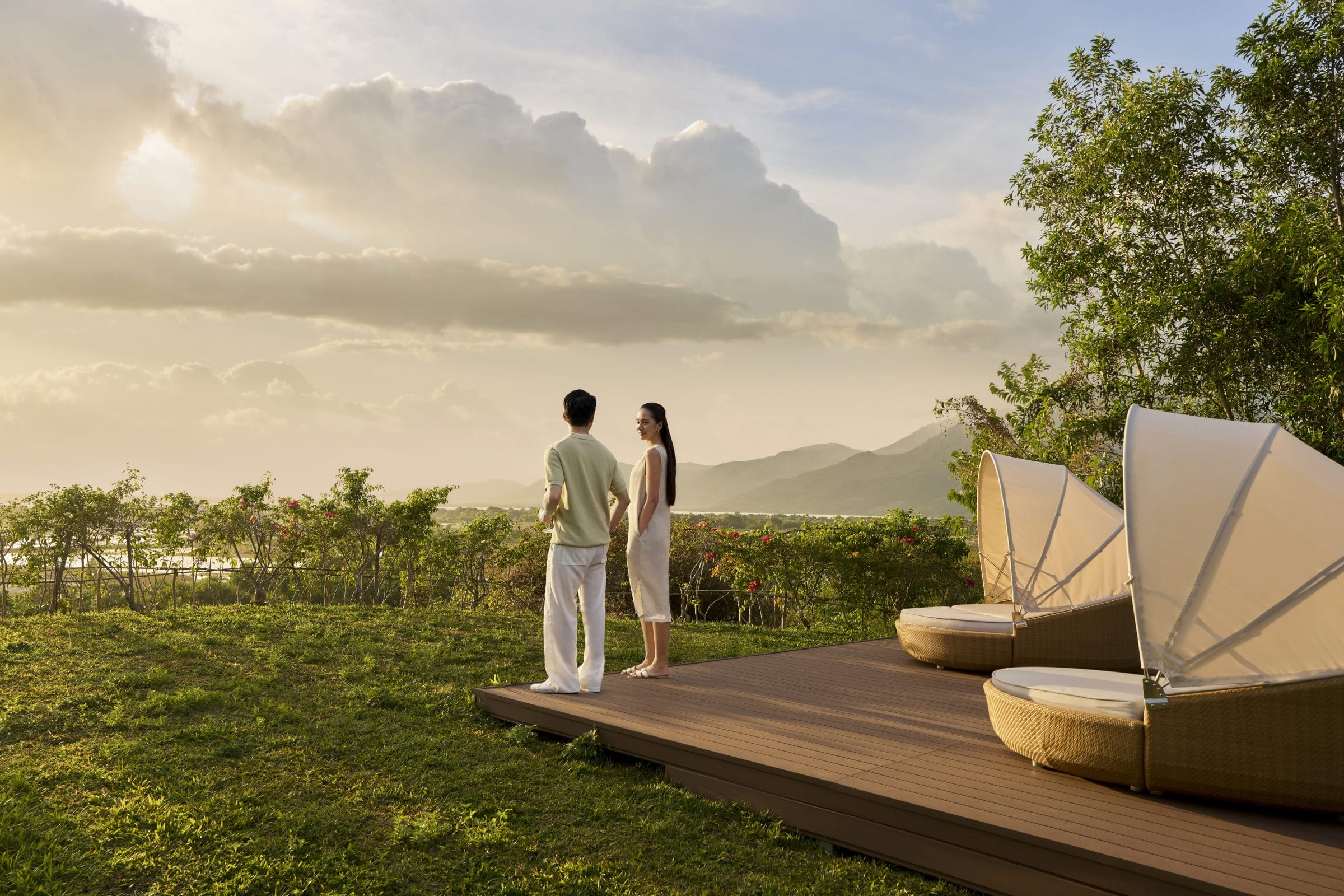
That transition matters for weddings. The coastline is long, open, and relatively quiet, which removes the need for heavy staging in outdoor areas. Spaces such as the beach lawn and Bayside Garden are used in direct relation to their surroundings—sea-facing, open to wind and light, and left largely unobstructed.
As a result, ceremonies tend to be shaped by conditions rather than fixed setups. Timing, layout, and flow are adjusted around daylight and weather, which naturally slows the structure of the day.
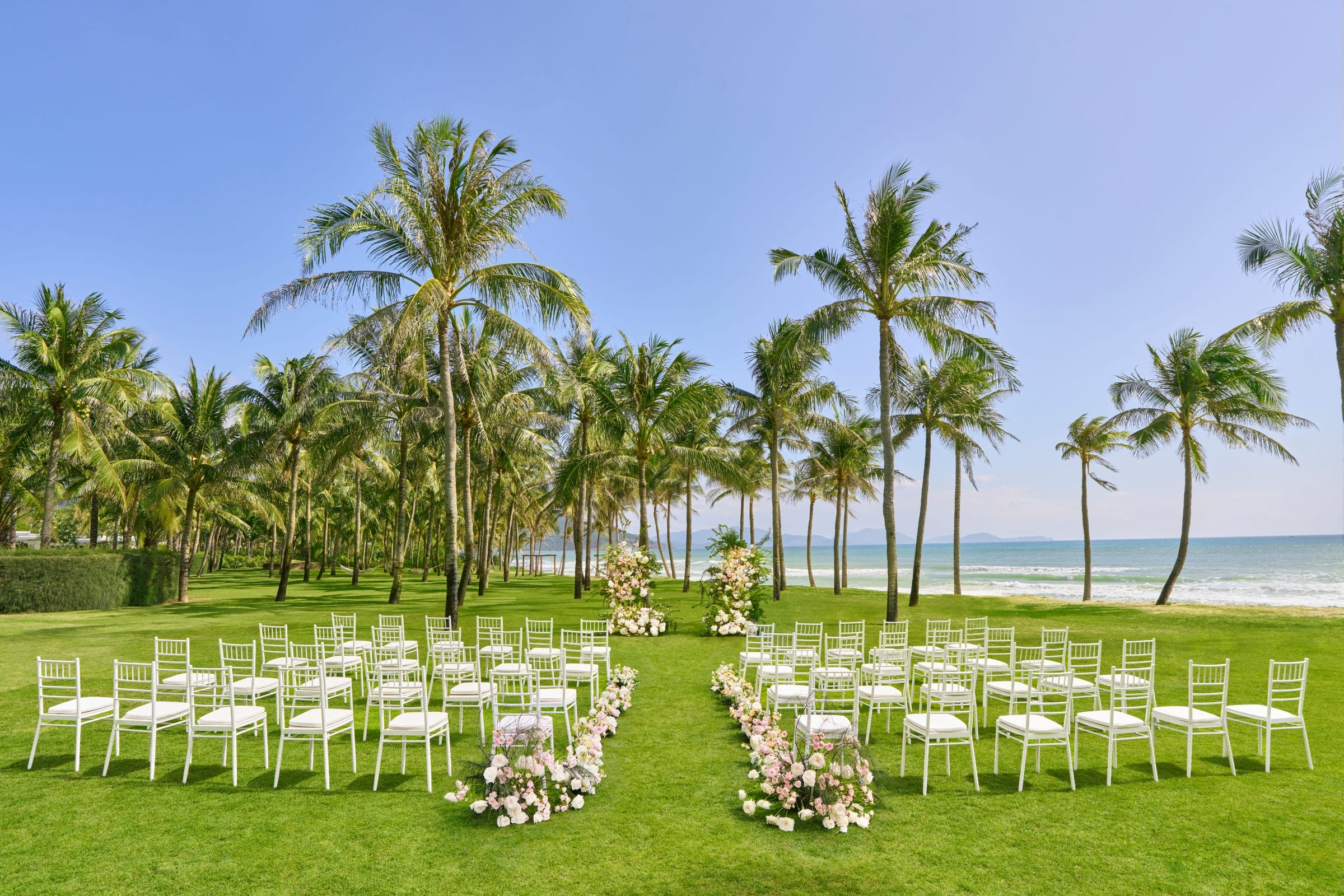
The resort’s outdoor venues are designed to follow the geography rather than compete with it. The beach lawn is used for ceremonies that prioritise openness and uninterrupted views of the horizon. Bayside Garden offers a slightly more structured garden setting while still keeping the sea within sight. Clay Craft Lawn sits closer to landscaped greenery, often used for smaller gatherings or receptions that follow a more informal format.
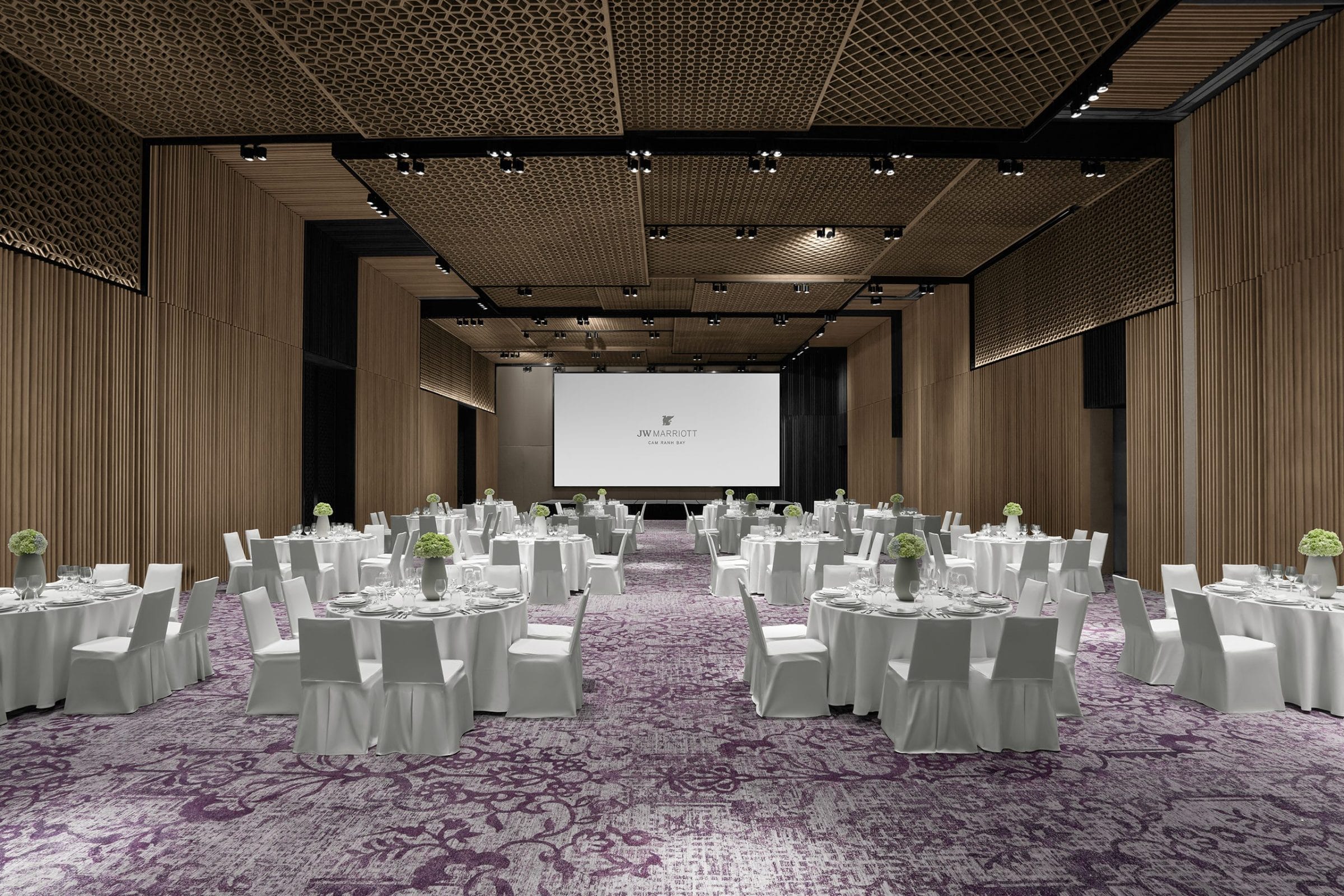
The Grand Ballroom, at 518 square meters, anchors indoor celebrations when scale or weather requires a controlled setting. It is designed to adapt rather than dictate format, accommodating everything from formal receptions to group dinners.
Supporting the ballroom are smaller, flexible event rooms used throughout wedding timelines. These spaces are typically where the less visible parts of a wedding happen—preparation, family gatherings, and transitional moments between ceremony and reception.
Accommodation and Dining That Extends The Celebration
Accommodation plays a central role in how weddings unfold here. The resort offers 203 rooms and private villas, and for many groups, the stay becomes part of the event itself.
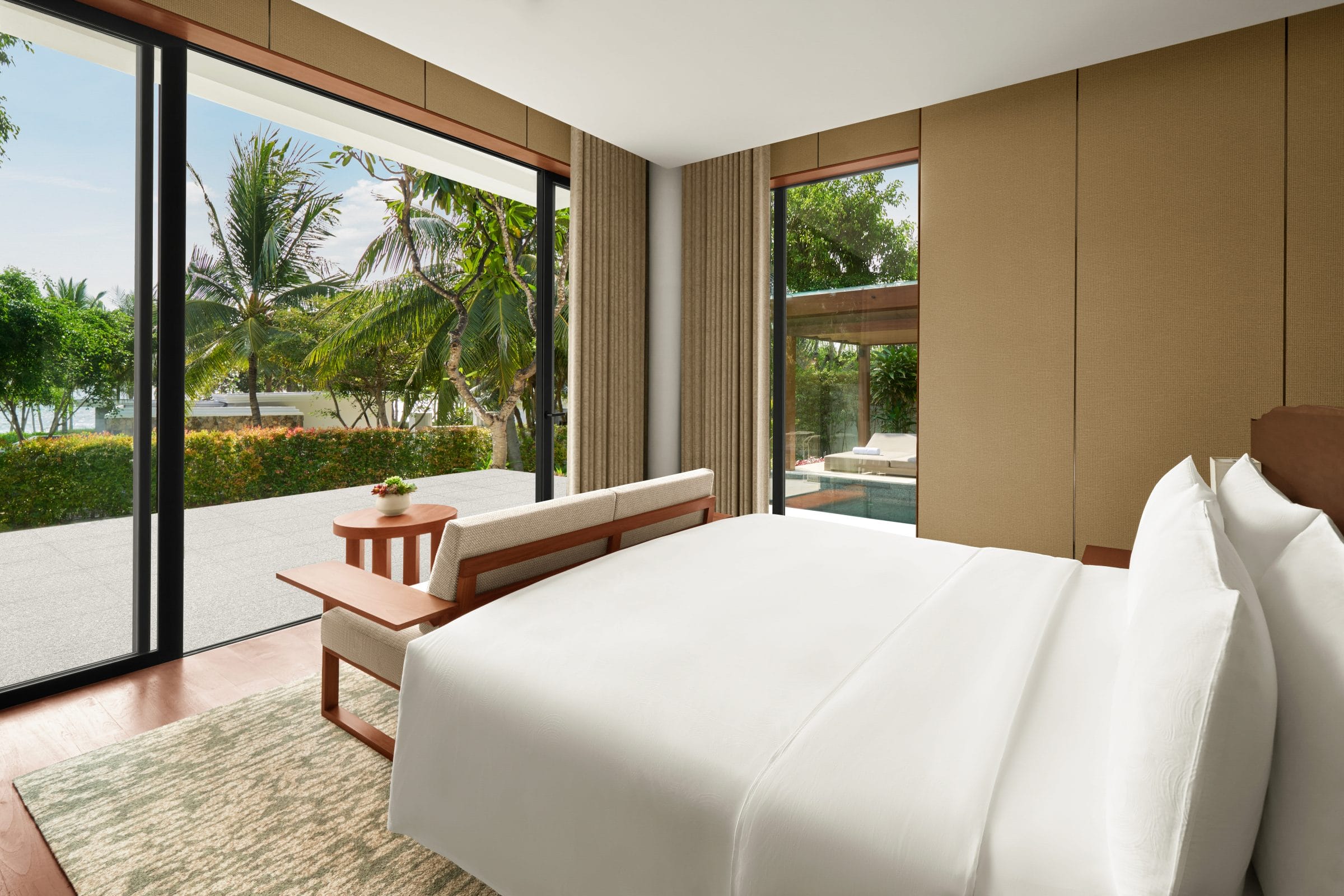
The one- to four-bedroom villas, each with private pools and outdoor terraces, are commonly used by families or wedding parties staying together. This setup reduces separation between wedding moments and downtime, allowing guests to move between shared meals, preparation, and rest without leaving the property.
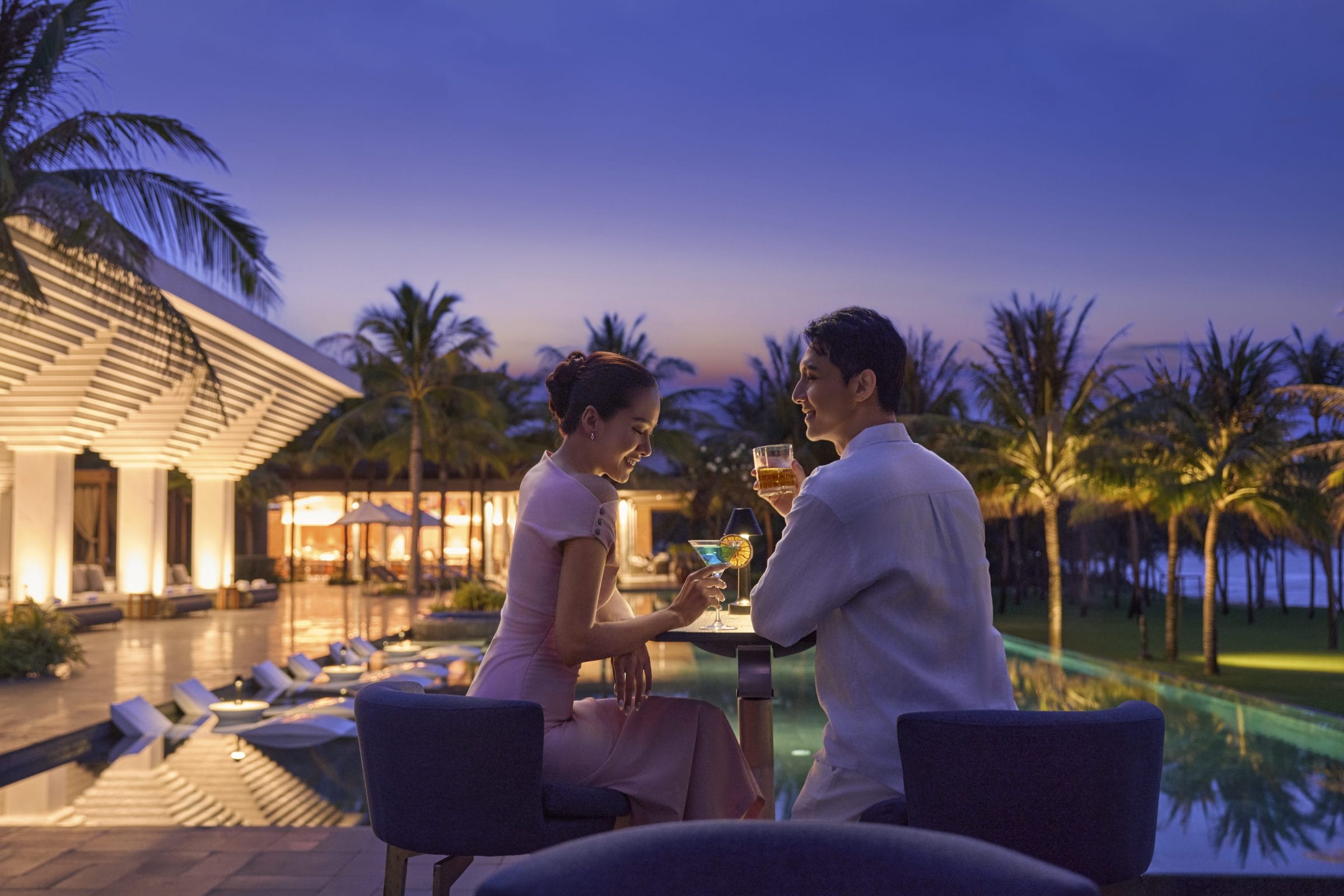
Dining-wise, food at the resort is built around flexibility. Wedding menus are not fixed packages but are shaped around timing, guest preferences, and event format.
Seafood sourced from Cam Ranh Bay and produce from the resort’s own garden form the base of most menus. From there, dishes are adapted across different parts of the wedding—formal dinners, casual gatherings, and post-ceremony meals.
Design That Stays In The Background
Across rooms, villas, and event spaces, the design approach is restrained. Natural materials, neutral tones, and coastal references are used consistently but without a strong thematic direction.
This allows spaces to shift function easily—wedding venue one day, family gathering space the next—without feeling visually overdefined. The emphasis is on usability across different parts of a multi-day stay.
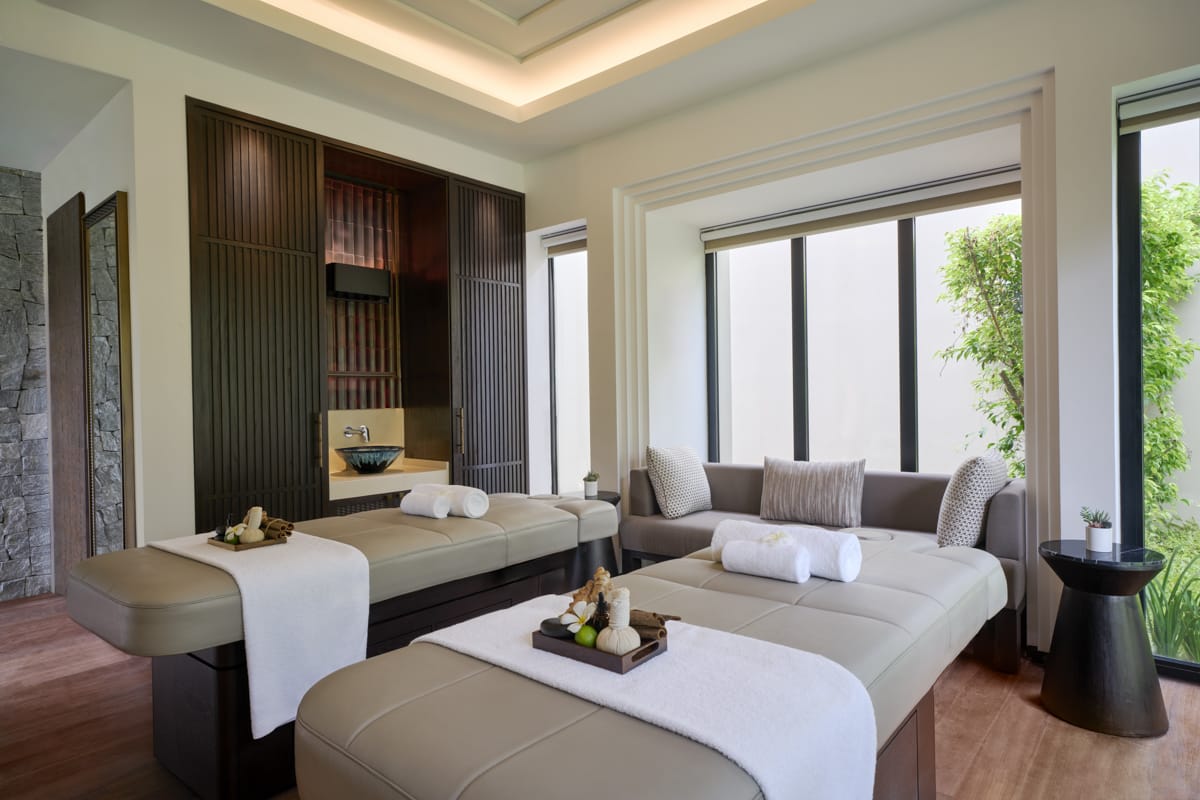
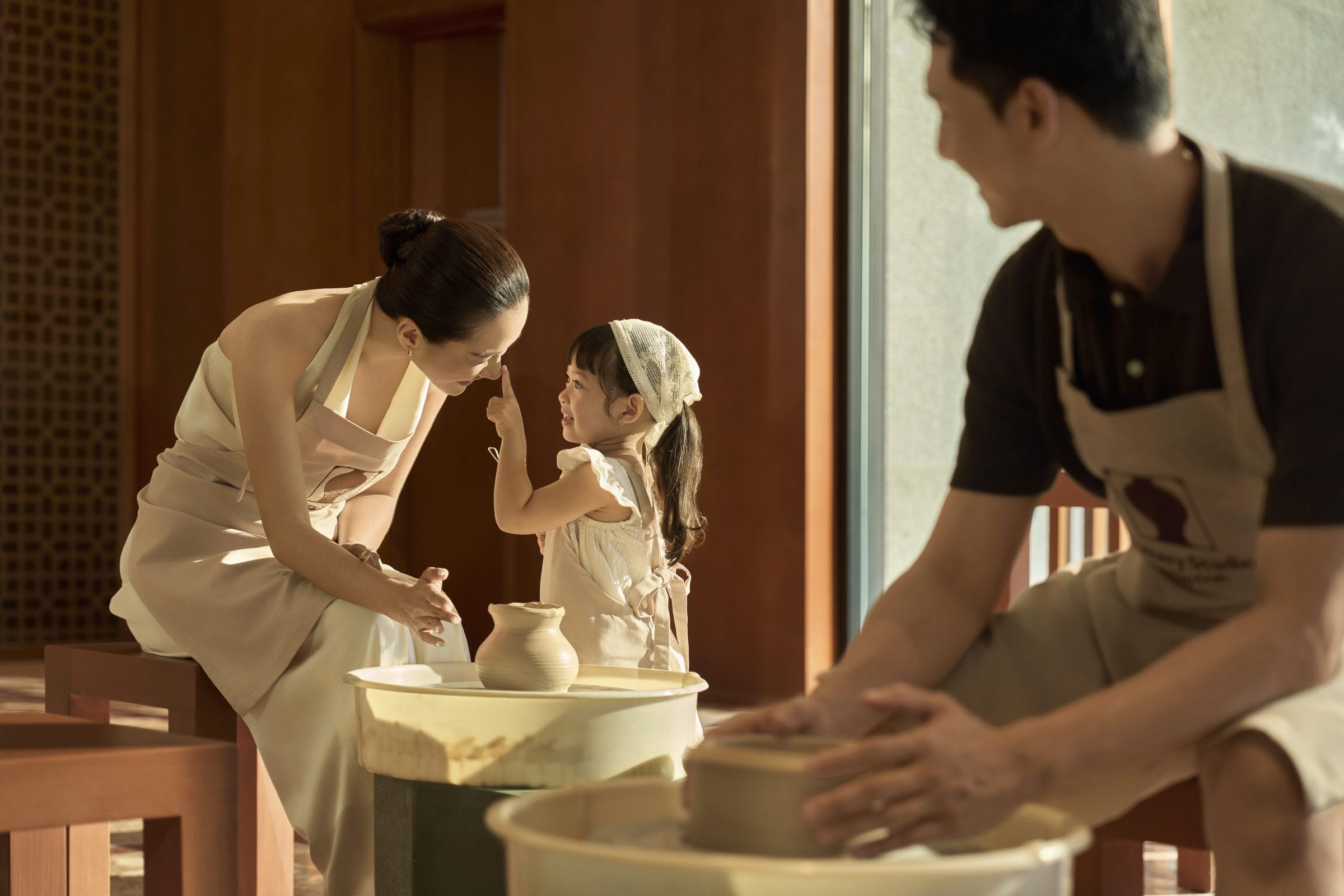
Spa and wellness facilities follow the same logic. They are typically used in the quieter periods around weddings, functioning as recovery spaces rather than standalone experiences. Some couples extend their stay through activities such as the pottery studio, where guests can create pieces together. It is not positioned as a headline experience but often becomes part of the slower moments within a wedding itinerary.
Taken together, the resort functions less as a fixed wedding venue and more as a setting that supports extended, adaptable celebrations.

