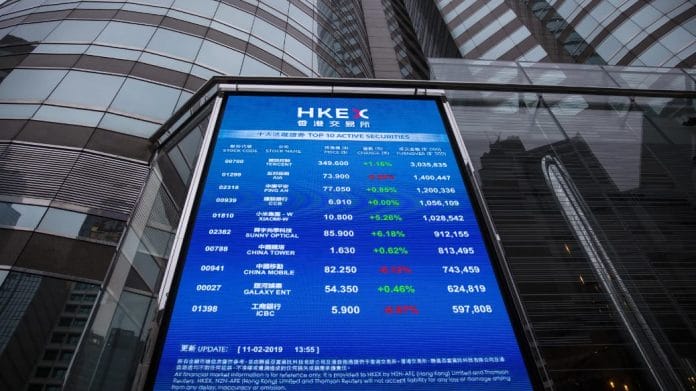
Hong Kong’s equity capital markets have surged to their strongest level in five years, powered by an intense wave of artificial intelligence enthusiasm that has helped listings and share sales clear financing hurdles that might otherwise have slowed deal flow.
Proceeds from initial public offerings, secondary placements and block trades in the Asian financial hub reached roughly US$44 billion in the first half of 2026, marking a 29% increase from a year earlier and the highest mid-year total since 2021, according to data compiled by Bloomberg.
The rebound underscores how AI-linked companies have become the dominant driver of investor demand, even as broader equity market conditions remain uneven and regulatory scrutiny persists.
Much of the momentum has been concentrated in technology issuers and AI-adjacent firms, with investors increasingly willing to absorb valuation risk in exchange for exposure to the sector’s perceived long-term growth trajectory.
That appetite has helped sustain a pipeline of large deals, supporting Hong Kong’s role as a key offshore fundraising hub for Chinese companies at a time when mainland exchanges are also competing for high-growth listings.
The strength of AI-related capital raising has also helped offset episodic headwinds, including periodic volatility in global markets and concerns over the quality and timing of large transactions. Even so, deal activity has remained resilient, with institutional demand often strong enough to clear order books in tight execution windows typical of block trades and follow-on offerings.
At the same time, the market’s reliance on a narrow cohort of AI-driven stories raises questions about sustainability if sentiment toward the sector cools or if earnings fail to keep pace with valuations.
Mainland investor flows have also become more selective, with capital at times rotating away from Hong Kong equities into onshore technology and semiconductor names perceived as offering more direct exposure to AI growth.
For now, however, the AI trade continues to function as a powerful catalyst for Hong Kong’s capital markets revival, reshaping both the scale and composition of share sales in the city.