


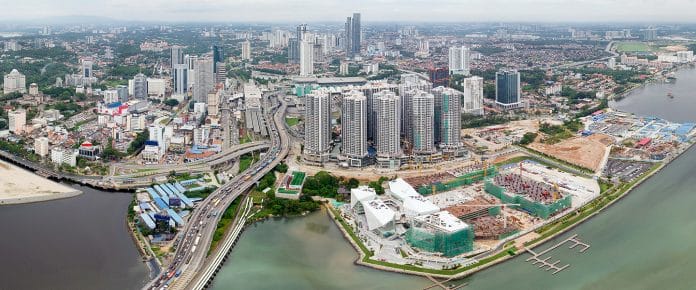
The Johor-Singapore Special Economic Zone (JS-SEZ) is being positioned as a strategic entry point for European companies into ASEAN, with Malaysia sharpening its focus on execution, investment delivery and job creation targets for the cross-border economic corridor.
At the JS-SEZ Executive Forum 2026, policymakers and business leaders were told that the zone is now moving beyond concept-building into implementation, with greater emphasis on converting investment interest into tangible economic outcomes.
A key highlight was the positioning of JS-SEZ as a gateway linking Europe to Southeast Asia, leveraging the combined strengths of Malaysia’s industrial base and Singapore’s financial and logistics connectivity.
Officials said the arrangement is designed to help multinational firms restructure supply chains and diversify production bases as global trade patterns continue to shift.
“JS-SEZ is not merely about geography, nor is it only about moving people and goods more efficiently across borders. It is about bringing together Malaysia’s industrial scale and Singapore’s global connectivity into one competitive platform for investors,” Minister of Economy Akmal Nasrullah Mohd Nasir said.
The forum, attended by more than 250 policymakers, investors and industry stakeholders, also underscored ASEAN’s growing appeal, citing its population of 684.1 million and more than US$3.8 trillion in goods trade recorded in 2024.
Malaysia said JS-SEZ is intended to channel that regional growth through a structured investment platform, particularly for European firms seeking a base to access ASEAN markets.
The government also outlined clearer performance expectations for the project, including a target of 50 high-value investments and 20,000 skilled jobs within five years.
“The real test is whether we can convert policy into execution, investment into skilled jobs, and cross-border cooperation into shared prosperity. The JS-SEZ target of 50 high-value projects and 20,000 skilled jobs within five years must translate into real opportunities for Johor, Malaysian companies and our young talent,” the minister said.
To support execution, Malaysia highlighted the Invest Malaysia Facilitation Centre Johor (IMFC-J) as a central coordination platform for approvals, regulatory processes and post-investment support, aimed at improving efficiency for investors entering the zone.
Malaysia’s broader competitiveness push was also referenced, with the country ranking 15th out of 70 economies in the IMD World Competitiveness Ranking 2026, its highest position in recent years.
The forum included policy discussions and business panels focused on how companies can leverage the Malaysia-Singapore ecosystem for supply chain integration and regional expansion.


