


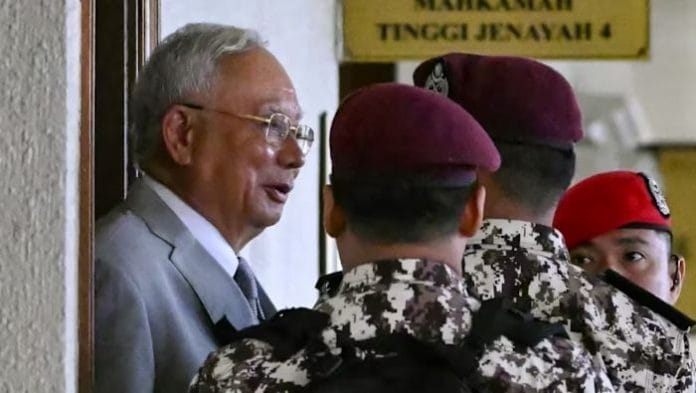
Elections should not be used as a platform to influence or reinterpret legal outcomes, PKR deputy secretary-general Aidi Amin Yazid said, criticising attempts to link the upcoming Johor state election to former prime minister Datuk Seri Najib Razak’s legal situation.
In a statement, Aidi took issue with remarks by Langkawi Umno chief Datuk Nazifuddin Najib, who reportedly suggested that a strong Barisan Nasional performance in the Johor polls would signal public support for Najib and his prospects for a royal pardon.
Aidi argued that state elections are intended to determine the mandate for governance rather than serve as a referendum on any individual’s legal or personal circumstances.
“Johor voters are not casting ballots as a proxy for anyone’s personal circumstances — they are deciding on governance,” he said.
He stressed that the election should instead focus on policy direction, leadership credibility and the ability of political parties to deliver meaningful improvements to people’s lives.
Aidi also pointed to Johor’s voting patterns in the 15th General Election (GE15), where Pakatan Harapan won 14 of the state’s 26 parliamentary seats despite a national voter turnout exceeding 70%.
He said the result demonstrated that Johor voters were making informed decisions based on governance and performance, adding that comparisons with the previous Johor state election, which recorded turnout below 55% before GE15, were no longer relevant due to different political circumstances.
According to Aidi, the Unity Government was formed to provide political stability after years of uncertainty and remains focused on ensuring continuity in governance through the Malaysia Madani agenda.
He said a Pakatan Harapan-led Johor administration would strengthen policy coordination between the federal and state governments, allowing the Madani framework to be implemented more effectively.
Among the coalition’s priorities, he said, are expanding affordable housing for first-time homebuyers, particularly young Malaysians, as well as promoting wage growth through skills development and the creation of higher-value jobs linked to the digital economy and industrial transformation.
Aidi said young voters were seeking opportunities, fairness and policies that reduce inequality rather than political rhetoric or division.
He also criticised what he described as continued attempts by former prime minister Tun Dr Mahathir Mohamad to frame elections through ethnic-based appeals by urging Malay voters to support Malay candidates to safeguard “tanah Melayu”.
Describing such rhetoric as outdated and divisive, Aidi said Malaysia should reject politics based on fear and racial exclusivity.
“Malaysia does not need politics of fear disguised as cultural protection,” he said, adding that voters have repeatedly demonstrated their ability to make electoral decisions based on competence and governance rather than identity politics.
He called for leadership that prioritises accountability, inclusiveness and effective governance over personal narratives and ethnic polarisation.


