Polymer Link Holdings Bhd is making steady progress in deploying the RM24.3 million raised from its IPO, with expansion initiatives in Australia and Malaysia advancing as planned while preparations are underway to enter the Polish market.
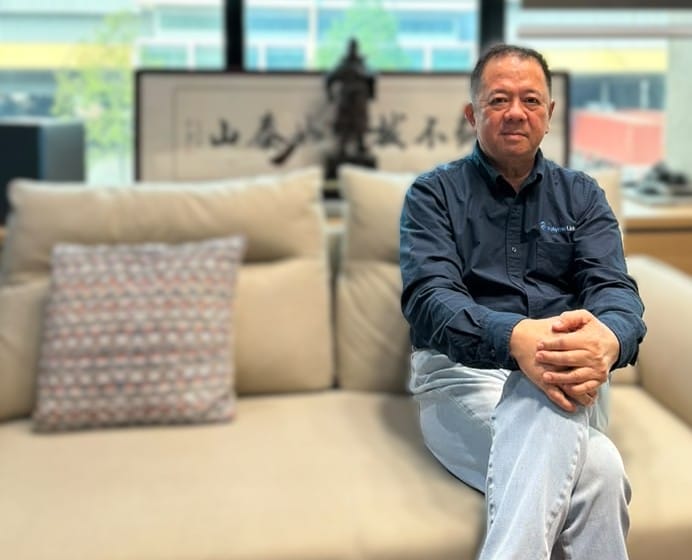
Polymer Link President and Group Chief Executive Officer Eddie Koh Song Heng said the bulk of the IPO proceeds earmarked for Australia has already been utilised to establish the company’s warehouse operations and fund working capital for raw materials, strengthening its presence in one of its fastest-growing overseas markets.
“The IPO proceeds have been deployed largely in line with the original plan,” Koh told BusinessToday in an exclusive email interview.
He said funds allocated for Malaysia have also been channelled towards expansion initiatives, including machinery purchases to support the company’s growth plans.
Polymer Link is primarily involved in the manufacturing and supply of plastic materials to customers across a wide range of industries and international markets. Established in 2011, the company’s operations encompass polymer formulation, compounding and grinding, with a main focus on the manufacturing of plastic powder for rotational moulding, injection moulding and blow moulding applications.
The company was successfully listed on the ACE Market of Bursa Malaysia on Nov 25, 2025, after successfully raising RM24.3 million from its IPO.
As for its entry into Poland, Koh said the company is laying the groundwork, where an agent has been appointed to drive business development.
“An agent has been on-boarded and has been actively and aggressively promoting the company. In parallel, the statutory requirements are being finalised to ensure the first few containers arrive smoothly. Once that milestone is reached, the funds allocated for the Polish project will be drawn down,” he said.
Next Growth Phase: Australia and India
Beyond executing its expansion plans, Koh expects Australia and India to remain key contributors to the company’s growth trajectory.
He noted that Australia has delivered strong growth over the past two years despite the company currently serving only around 6% to 8% of the addressable market.
“We see room to increase revenue by intensifying market-seeding efforts through our Brisbane warehouse operations,” he said.
India, meanwhile, continues to provide a stable growth platform, with customers forecasting stronger demand in the coming months.
“We are preparing our production capacity to support that increase,” Koh added, while highlighting that the Philippines also remains a resilient market, supported by an original equipment manufacturer supplying products to the US as well as domestic manufacturers producing water tanks.
Koh described the US as the company’s largest single market, although demand there remains closely tied to housing, automotive and packaging cycles, making it the company’s most cyclical market.
Export Strategy
With most of Polymer Link’s revenue generated overseas, Koh said the company has deliberately built an export-oriented business model despite the longer working-capital cycle that comes with serving international customers.
He explained that exporting products inevitably extends the cash conversion cycle because of longer shipping lead times, but overseas customers typically require more technically demanding products that command stronger pricing.
“The trade is a deliberate one — slower cash conversion in exchange for higher unit margin, and we manage the working-capital intensity that comes with it accordingly,” he said, while stressing that the export-focused strategy has been in place since the company’s early years, with the Philippines, India and Australia serving as its core overseas markets alongside a smaller domestic customer base.
Weathering Commodity Volatility
Meanwhile, Koh revealed that the company’s operations remained largely unaffected despite heightened geopolitical tensions earlier this year that sent crude oil and petrochemical prices surging.
He attributed the resilience to stronger preparedness across the supply chain compared to the Covid-19 pandemic, with no disruption to shipments or raw material availability.
“Compared to the Covid era, both our customers and our suppliers are noticeably better prepared for this round of global disruption,” he said.
Koh added that customers understood the higher raw material costs and adjusted their purchasing strategies accordingly by maintaining more conservative buffer stock levels rather than chasing spot purchases, allowing the company’s order book to remain intact throughout the price spike.
With crude oil prices having since retreated, purchasing patterns are gradually returning to normal.
“Customers remain cautious with their purchasing, but activity is moving back to the norm,” he said.
Additionally, Koh said the company’s ability to navigate raw material price volatility is underpinned by disciplined supply chain management and transparent pricing with customers.
“Because customers closely monitor resin prices, the company is generally able to pass through fluctuations in raw material costs, allowing margins to remain relatively stable over time.
“However, behind the scenes, Polymer Link carefully coordinates inventory commitments with suppliers and customers to maximise utilisation while ensuring cash-flow efficiency,” he shared.
As for financial reporting, the company adopts the weighted-average cost method, although Koh said it relies on the first-in-first-out approach internally when determining quotations and assessing margins.
“It gives a cleaner read of margin on the stock we actually have on hand, which is what matters when pricing the next shipment,” he said.
As Polymer Link advances its post-IPO expansion, the company is betting that disciplined capital deployment, a higher-margin export strategy and growing demand across Australia, India and new markets such as Poland will underpin its next phase of growth. Coupled with its ability to navigate commodity price volatility, the company appears well-positioned to strengthen its foothold in international markets while delivering sustainable long-term value.