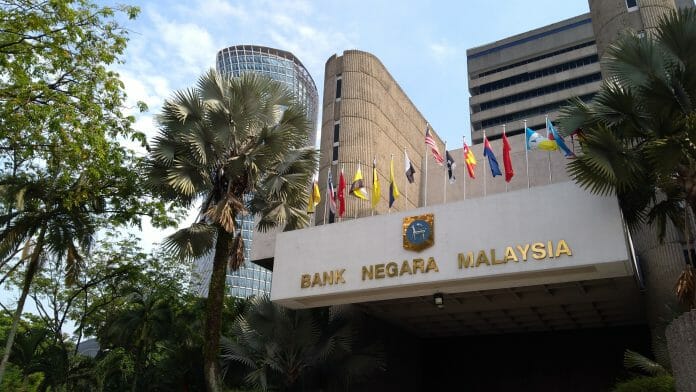
The international reserves climbed to their highest level in more than 12 years at the end of June, supported by stronger foreign currency reserves and renewed foreign inflows into the domestic bond market, according to Kenanga Investment Bank Research.
The research house noted that Bank Negara Malaysia’s (BNM) international reserves increased by US$2.0 billion, or 1.5% month-on-month, to US$132.6 billion as at June 30, marking the highest reserve level since January 2014.
The latest reserve position is sufficient to finance 4.7 months of imports of goods and services, an improvement from 4.6 months in May, while the reserves-to-short-term external debt ratio remained unchanged at 0.9 times.
Kenanga said the increase was largely driven by foreign currency assets, which rose by US$2.5 billion, or 2.2% month-on-month, to US$117.2 billion.
The improvement was likely supported by renewed foreign investor inflows into Malaysia’s bond market, with net foreign exchange reserves reaching US$83.4 billion in May, the highest level in more than four years.
However, the gain was partially offset by a decline in gold holdings, which fell by US$0.6 billion, or 9.5%, to US$5.8 billion following an 11.4% quarter-on-quarter decline in global gold prices.
Other reserve assets, Special Drawing Rights (SDRs) and Malaysia’s reserve position with the International Monetary Fund remained broadly unchanged.
In ringgit terms, total international reserves increased by RM9.8 billion, or 1.9% month-on-month, to RM537 billion, representing a 22-month high.
Despite the stronger reserve position, Kenanga noted that the ringgit weakened against the US dollar during June, reversing gains recorded in May.
The local currency depreciated 2.9% during the month to average RM4.07 against the US dollar compared with RM3.95 in May, as resilient US economic data and hawkish signals from the US Federal Reserve boosted Treasury yields and strengthened the greenback.
The easing of geopolitical tensions surrounding the Strait of Hormuz towards the end of the month was insufficient to reverse the broader US dollar strength, the report said.
Among ASEAN currencies, the ringgit recorded the weakest performance against the US dollar in June, followed by the Indonesian rupiah, Thai baht and Singapore dollar. The Philippine peso was the only major regional currency to post gains during the month.
Looking ahead, Kenanga expects Bank Negara Malaysia to maintain the Overnight Policy Rate (OPR) at 2.75% throughout 2026, supported by resilient economic growth and manageable inflation.
The research house forecasts average inflation of around 2.1% this year, although it cautioned that renewed disruptions around the Strait of Hormuz could pose upside risks through higher imported fuel, fertiliser and logistics costs.
Nevertheless, it believes resilient domestic demand, economic growth tracking towards the upper end of its 4.5% to 5.0% forecast range and contained underlying inflation will allow the central bank to prioritise policy stability and look through temporary supply-driven price shocks.
Kenanga also maintained its constructive medium-term outlook for the ringgit, forecasting the US dollar to ease to RM3.95 by the end of 2026 and RM3.90 by the end of 2027.
It said the outlook is underpinned less by expectations of US interest rate movements and more by a broader softening of the US dollar, alongside supportive domestic fundamentals.
The research house highlighted that foreign currency deposits reached a record RM316 billion in May, suggesting significant potential for future conversion into ringgit assets.
While geopolitical risks in the Middle East remain, Kenanga believes both sides retain incentives to preserve the existing ceasefire framework, with intermittent violations unlikely to derail the broader agreement.