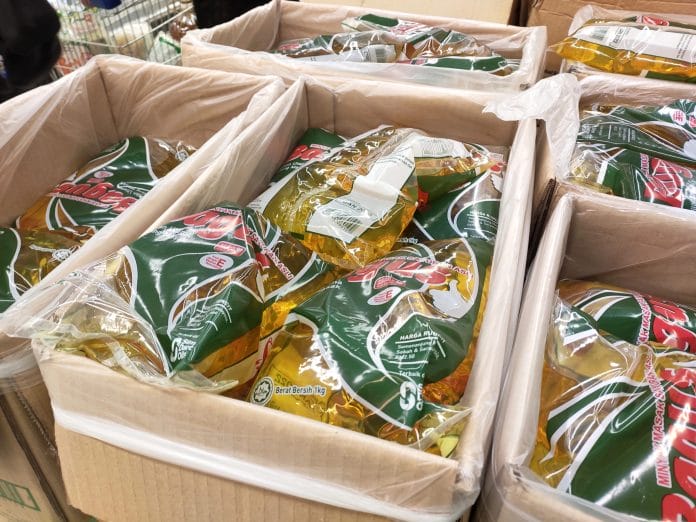
The Public Accounts Committee (PAC) has called on the Ministry of Domestic Trade and Cost of Living to review the entire cooking oil supply chain, including reducing the monthly subsidised cooking oil quota by 60,000 metric tonnes to better reflect actual domestic demand and curb subsidy leakages.
PAC deputy chairperson Teresa Kok said the recommendation was among eight proposed following the committee’s investigation into the management of cooking oil price controls and subsidies. She said the review aims to align the subsidy programme with actual local consumption while reducing wastage of public funds.
According to the PAC, the current Cooking Oil Price Stabilisation Scheme (COSS) quota stands at 60,000 metric tonnes a month, although Malaysia’s actual monthly requirement is estimated at only between 19,000 and 30,000 metric tonnes.
“The absence of a targeted distribution mechanism has caused the government subsidy funds of RM10.879 billion for the period 2019 to February 2025 to not fully reach the target group, where one-kilogramme packets of cooking oil are often misused by ineligible parties, including foreigners and commercial sector operators,” Kok said.
The committee also recommended that the Ministry of Domestic Trade and Cost of Living review the RM600 per metric tonne subsidy paid to packaging companies to ensure it better reflects current operating costs. It further proposed that subsidy payments should only be made for undamaged cooking oil stocks after finding weaknesses in the management of spoiled inventory.
PAC also urged the government to accelerate the transition to a fully digital targeted subsidy system through the eCOSS platform to ensure assistance reaches only eligible Malaysians and to prevent abuse.
Among other findings, the committee said ineffective monitoring had led to stock hoarding, conditional sales and prices exceeding the RM2.50 ceiling. It also found that foreign companies control 67% of the subsidised cooking oil refining quota, while government-linked companies account for only 10.6%.
The recommendations followed 10 proceedings conducted between Aug 5 and Oct 15 last year after the Auditor-General’s Report 2/2025 found shortcomings in the management of the cooking oil price control and subsidy programme.