


The country’s transition towards battery electric vehicles (BEVs) is expected to remain gradual over the next five years despite rapidly growing sales, as infrastructure constraints and subsidised fuel prices continue to favour internal combustion engine (ICE) vehicles, according to Kenanga Research.
The research house said while EV adoption is gaining momentum, widespread electrification of the domestic automotive market is unlikely in the near term, with demand for petrol-powered vehicles expected to remain resilient.
Kenanga noted that locally assembled (CKD) BEVs continue to benefit from tax exemptions until the end of 2027, providing support for vehicle sales and investment in the sector.
“Demand for gasoline vehicles is unlikely to peak within the next five years due to infrastructure challenges and the continued availability of subsidised fuel, which reduces the incentive for middle- and lower-income consumers to switch to electric vehicles,” it said.
Malaysia has recorded a sharp increase in BEV registrations over the past few years. New registrations rose from just 270 units in 2021 to about 2,600 units in 2022, before climbing to 10,000 units in 2023, 21,789 units in 2024 and 44,813 units in 2025.
The research house noted that BEVs accounted for 5.5% of Malaysia’s total industry volume (TIV) last year, while sales reached 20,254 units in the first four months of 2026, indicating continued robust demand.
The government is targeting EVs to make up 20% of new vehicle sales by 2030, with a longer-term ambition for electrified vehicles, including hybrids, to account for 80% of new vehicle sales by 2050.
To support the transition, the government has introduced various tax incentives and continues to promote local EV manufacturing while expanding the country’s charging infrastructure.
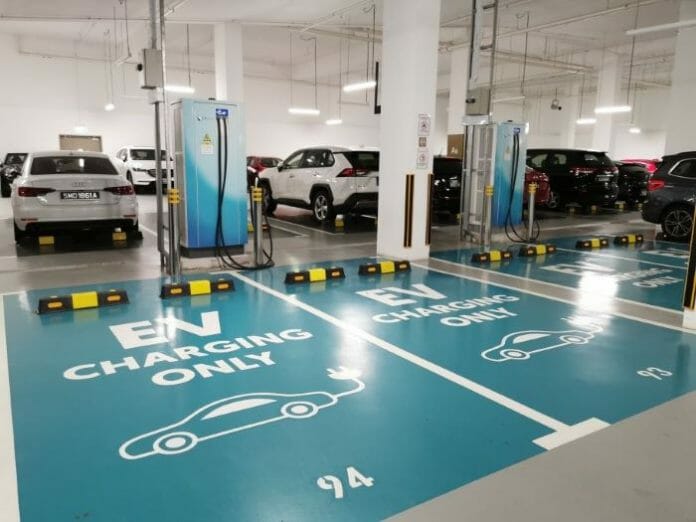
However, Kenanga pointed out that the rollout of public charging stations remains behind schedule. Malaysia had initially targeted the installation of 10,000 public charging points, but only about 5,719 chargers—roughly 57% of the target—had been deployed based on the latest available figures.
The research house noted that no revised completion timeline has been announced, while real-time progress updates are currently unavailable after the relevant monitoring platform was temporarily taken offline.
Despite the slower-than-planned infrastructure rollout, Kenanga expects EV adoption to continue rising steadily as more models enter the market, charging networks expand and government incentives remain in place.
Nevertheless, it believes the domestic automotive market will continue to be dominated by conventional vehicles over the medium term, with the transition towards full electrification occurring at a measured pace rather than a rapid shift.


