


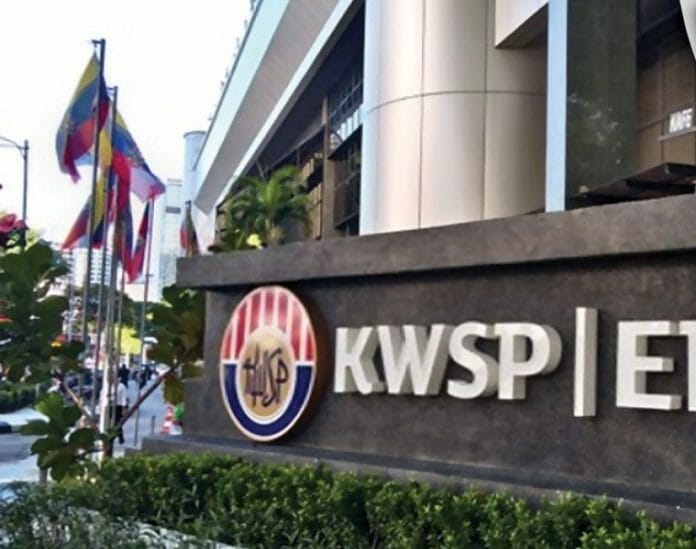
If EPF historically offered more or less 5-6% a year, why invest in dividend stocks?
It is a simple and valid question.
The answer, however, is not as straightforward as Yes or No.
It all depends on our individual circumstances and preferences.
Recently, I chanced upon a podcast that interviewed a successful wealth advisor.
He mentioned that our life purposes should guide our financial decisions.
To which, I agree.
So, in this article, rather than a simple “Yes, you should” or “No, you shouldn’t” answer, I’ll quickly list down six factors that serve as a checklist to approaching the above. They are as follow:
1. Stock Investing Requires Skills
I like to relate stock investing to sports.
They both need skills.
Take badminton for instance.
To enjoy badminton, you need to know how to hold a racquet, serve, stroke, have nice footwork to enhance court coverage, netting, and smashing. You must know its rules and count scores.
The more skills you have, the better you will enjoy badminton games.
Such skills are honed and sharpened over time as you play the game regularly.
It is a lot of fun.
Similarly, you need accounting, valuation and portfolio management skills to enjoy investing.
Without them, investing can be an aimless pursuit.
Personally, I read annual reports of listed companies on a regular basis for a decade. I have built a watchlist of stocks that possess fundamental qualities that I truly admire. From it, I’ve invested and grown my stock portfolio over time.
So, if you are one with the above investing skills, you’ll have more tendency to invest in dividend stocks (or growth stocks) as you enjoy the process of building your own portfolio.
But, if you are one without investing skills, you have two choices.
First, if you are not interested in the game of investing, you’ll likely choose EPF (or FDs).
Second, if you are interested, then, you’ll spend time picking the above skill.
That leads us to:
2. Productive Time
It takes time to learn accounting – the art of reading financial statements.
It takes time to learn valuation metrics – the connection between the asset and its price.
It takes time to find deals, design your own portfolio and tweak it so that it stays relevant.
Are they worth your time?
Is learning how to invest the best return on your time invested?
This depends on our respective careers and potential income trajectories.
Take a surgeon as an example.
If a surgeon has a choice between upskilling his practice versus learning investing, he should go with the former because the potential payout from upskilling can be far greater than investing.
Hence: Upskilling = Boost Active Income.
But, if the surgeon is satisfied with his income level but is unsatisfied with how time-poor he is, I think learning how to invest could make sense. This is because investing is about converting the active income earned into income-productive assets. This adds time-freedom to him and every dividends he receives reduces his dependence on active work.
Hence: Investing = Time Freedom.
So ultimately, the decision to learn investing or EPF depends on how you spend productive time and what you think is a better payout of the time spent.
3. Upsides and Downsides
Stocks are businesses.
In the long run, if businesses increase revenue, profits, and operating cash flows, they would be able to pay out higher dividends. They typically would be revalued upwards (justified by growth in income productivity). As a reward, shareholders would earn more dividends and enjoy capital growth over time.
Combined, they could potentially exceed far beyond 5-6% a year.
On the flip side, businesses could be mismanaged or be operating in a tough environment. That would lead them to deliver lower sales, profits and operating cash flows. Dividends are reduced and such would drive capital losses to these shares.
As such, investors could incur losses from investing in these businesses.
I think such upsides and downsides are part and parcel of the game of investing.
It is, once again, similar to badminton.
I have to accept wins and losses and learn from both of them, be it badminton or investing.
The more skills and experiences acquired over time, the greater my chances of finding winners.
But for EPF, these upsides and downsides are shielded by law.
Yes, equities are a big part of EPF’s investment portfolio.
But, as EPF contributors, we won’t see a 2X jump in our EPF accounts, if the stocks invested had doubled in prices. On the flip side, a massive 50% tumble in the stock market won’t send all EPF accounts down by the same magnitude.
That is a huge certainty and security to EPF contributors.
So, how well can you handle volatility?
That will shape how you choose between EPF versus dividend stocks.
4. Liquidity
Are you above 55 years old?
If so, you have the flexibility to withdraw EPF funds at any time you wish. Liquidity is no issue.
Otherwise, you don’t, especially if you are well below 50 years old. Then, liquidity is an issue.
Imagine you are 35 years old.
You have RM150k in current assets: cash, stocks, unit trusts, Bitcoin, gold bars and anything you can liquidate within 12 months.
And your lifestyle costs RM100k a year: all living expenses and debt commitments.
If you lose your active income, the RM150k will last you for 1.5 years. Not bad.
Now, from the RM150k in current assets, if you contribute RM100k into EPF, your current assets would drop to RM50k.
That is because the RM100k contributed into EPF would be your non-current asset.
You can’t touch it – until you reach 50 years old (partial withdrawal).
So, if you lose your active income, the RM50k could only last you for 0.5 years (six months). This would be a more stressful situation.
What about dividend stocks?
Well, by investing in stocks, your current assets would fluctuate (short-term ups & downs).
But, in times of need, you still can liquidate your stocks to pay bills.
In this sense, dividend stocks are more liquidable than your EPF contribution.
5. Currency Diversification
We can participate in global markets and diversify a portion of personal wealth by investing and owning foreign-listed dividend-paying stocks.
On the other hand, EPF has foreign assets.
However, the exposure is indirect and not something contributors actively manage.
6. Income Tax
Are you a SME owner who earns dividends from your companies?
If so, you’ll be subjected to a 2% tax on dividends exceeding RM100,000 per annum.
For instance, if you earn RM100,000 in dividends from your companies, you will pay a 2% tax on dividends earned from your portfolio of Malaysia-listed stocks.
Conclusion:
The above are six considerations to factor in to decide on how one can invest better.
The factors include our age, investing skills, time, ability to handle volatility, preference to have a meaningful exposure to foreign markets and tax status.
For many, EPF provides stability, simplicity, and peace of mind.
For others, dividend investing offers flexibility, ownership, and growth potential.
For some, they can even consider splitting a portion of capital into their stock portfolios and the remaining into their EPF accounts. Who says we should all choose one over the other.
Ultimately, the choice is not between EPF and dividend stocks.
Rather, it is about understanding ourselves and how both vehicles can serve our needs better
Ian Tai Financial Content Machine. Dividend Investor. Produced 500+ Financial Articles featured in KCLau.com in Malaysia and the Fifth Person, Value Invest Asia, and Small Cap Asia in Singapore.


