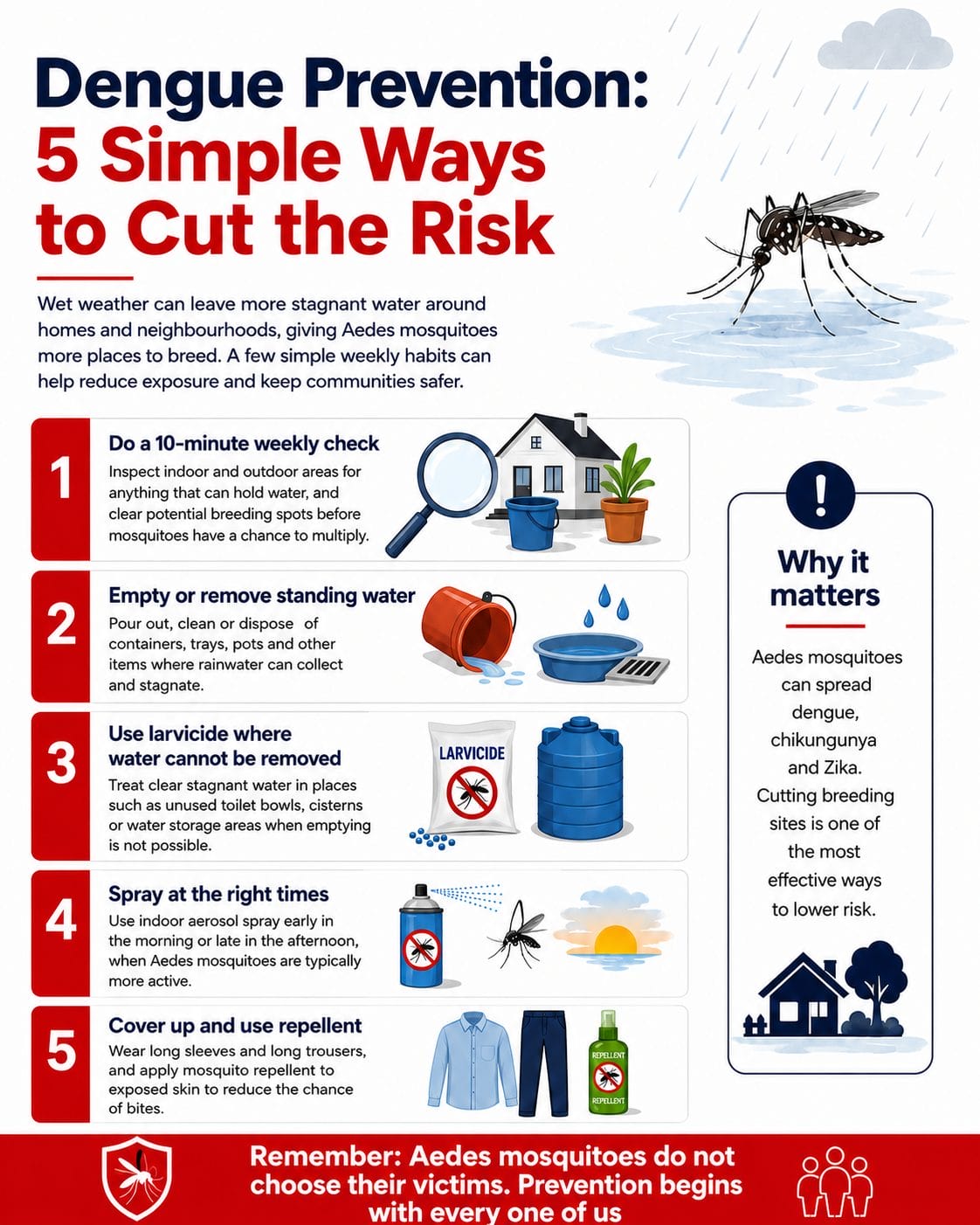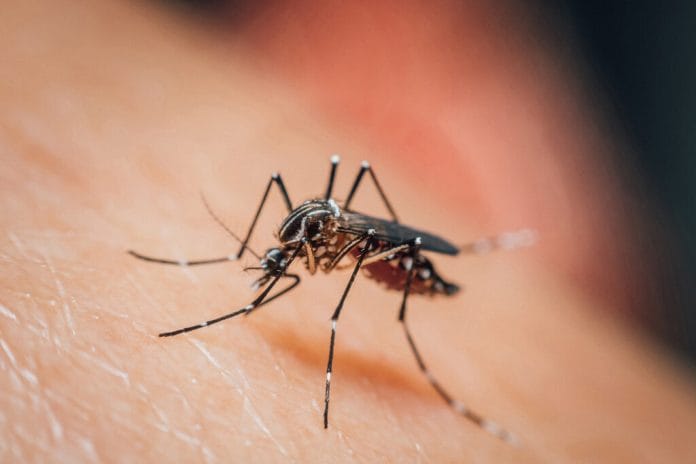
The rainy season brings more than just wet weather — it can also create the perfect conditions for Aedes mosquitoes to breed. With more stagnant water around homes and public spaces, dengue cases can increase if preventive steps are not taken.
Dengue is a mosquito-borne disease spread by Aedes mosquitoes, which can transmit the virus from one person to another. In severe cases, dengue can be life-threatening.
The good news is that simple weekly habits can help reduce the risk.
Here are the steps to take:
- Spend 10 minutes every week to search and destroy potential Aedes breeding sites — check both indoor and outdoor areas for containers or items holding stagnant water.
- Remove standing water wherever possible — empty, clean or dispose of anything that can collect rainwater, such as unused containers, flower pots and other water-holding items.
- Use larvicide where needed — place mosquito larvicide in clear stagnant water that cannot be removed, such as unused or damaged toilet bowls, toilet cisterns or water storage areas.
- Use aerosol sprays indoors at the right times — spray early in the morning or late afternoon when Aedes mosquitoes are most active.
- Protect yourself from mosquito bites — wear long-sleeved clothing and long trousers, and apply mosquito repellent on exposed skin.
Remember: Aedes mosquitoes do not choose their victims. Prevention begins with every one of us.